
The best bedroom lighting for rest and relaxation is warm, dim and easy to control: a few soft lamps instead of one bright overhead light, warm bulbs in the evening, dimmers you can reach from bed, and real darkness when it’s time to sleep. Good bedroom lighting helps you wind down at night and wake up more easily in the morning.
Light does more than help you see. It’s one of the strongest signals your body uses to decide when to feel alert and when to feel sleepy, so the lights you use in the hour before bed can make settling down easier or harder. Bright, cool light at 10 p.m. tells your brain it’s still daytime, even if the clock says otherwise.
The Homey Hygge approach is simple: light your bedroom for how you actually use it, from reading and getting dressed to winding down and finding your way to the bathroom at 2 a.m. This guide walks through ten practical ways to create bedroom lighting that feels cozy, supports rest and still works for real life.
TL;DR: The Best Bedroom Lighting for Rest and Relaxation
The best bedroom lighting uses several soft light sources instead of one bright ceiling light, with warm bulbs around 2700K or lower in the evening. Put lamps and overhead lights on dimmers, choose bedside lamps at the right height for reading, and keep a directional light for reading in bed. Use dim amber or red night lights for nighttime trips, block outside light while you sleep, and let in bright daylight in the morning.
10 Ways to Light Your Bedroom for Better Rest
You don’t need to rewire your bedroom or buy all new fixtures. Most of these ideas start with the lamps and bulbs you already have.
Bedroom Lighting Ideas at a Glance
- Understand how light affects rest.
- Layer your bedroom lighting.
- Choose warm bulbs for the evening.
- Put every light on a dimmer.
- Get bedside lamps right.
- Light reading in bed properly.
- Rethink the overhead light.
- Add soft accent light.
- Plan for nighttime trips.
- Make mornings bright.
Understand How Light Affects Rest
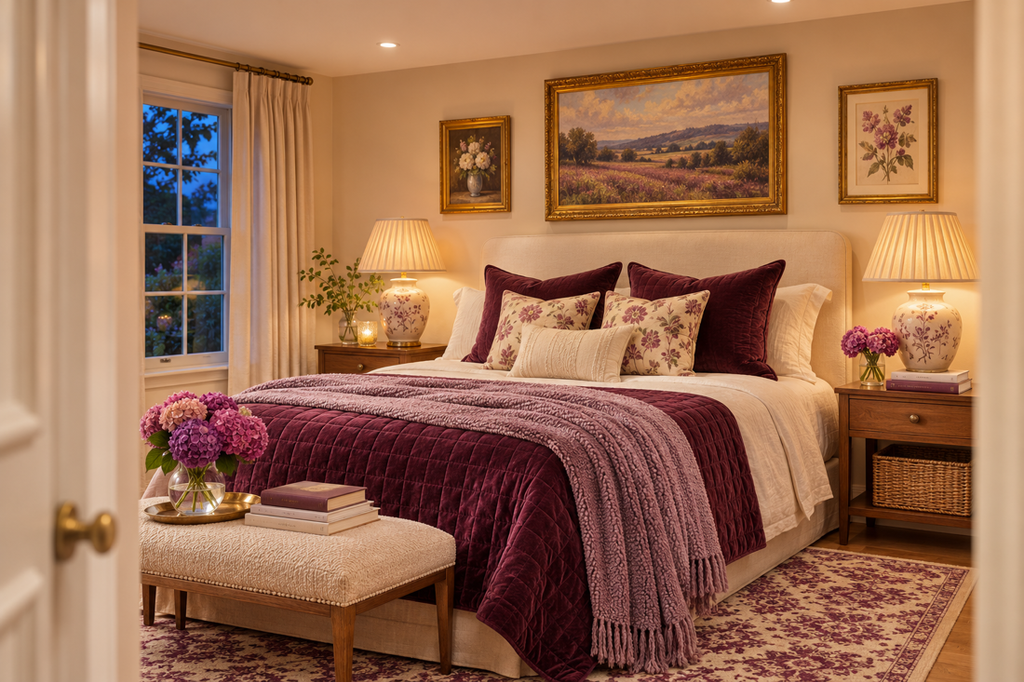
Light is one of the main signals your body uses to set its internal clock, telling you when to feel alert and when to feel sleepy. Bright or cool light in the evening can delay that sleepy feeling, while dim, warm light helps you wind down.
How does light affect sleep?
Light exposure slows or stops your body’s production of melatonin, a hormone that helps you feel drowsy, while darkness lets it rise. According to the Sleep Foundation, light also helps regulate your circadian rhythm, the roughly 24-hour clock that shapes when you sleep and wake.
Not all light has the same effect. Harvard Health Publishing notes that blue wavelengths, which are helpful during the day, seem to be the most disruptive at night. Many LED bulbs and screens give off a good amount of blue light, which is one reason a bright, cool bulb can make it harder to settle down.
Even fairly dim light can matter. Harvard Health reports that as little as eight lux, a brightness exceeded by most table lamps and about twice that of a night light, can affect melatonin and your body clock. That’s why the goal isn’t just less light before bed, but softer, warmer and lower light.
This doesn’t mean you need to sit in the dark every evening. It means shifting gradually: brighter, cooler light during the day, then warmer, dimmer light as bedtime gets closer, and as much darkness as possible while you sleep.
What Supports Better Rest
- Bright light by day: daylight and brighter bulbs in the morning and afternoon.
- Warmer light by evening: soft white bulbs and lamps instead of cool overhead light.
- Dimmer light before bed: lowering brightness in the last hour or two.
- Fewer screens late: Harvard Health suggests avoiding bright screens two to three hours before bed.
- Darkness for sleep: blocking outside light and switching off glowing gadgets.
Homey Hygge Tip
Tonight, notice which lights are on in your bedroom during the hour before bed. If the brightest light in the room is overhead or a screen, that’s the first thing to change.
Layer Your Bedroom Lighting
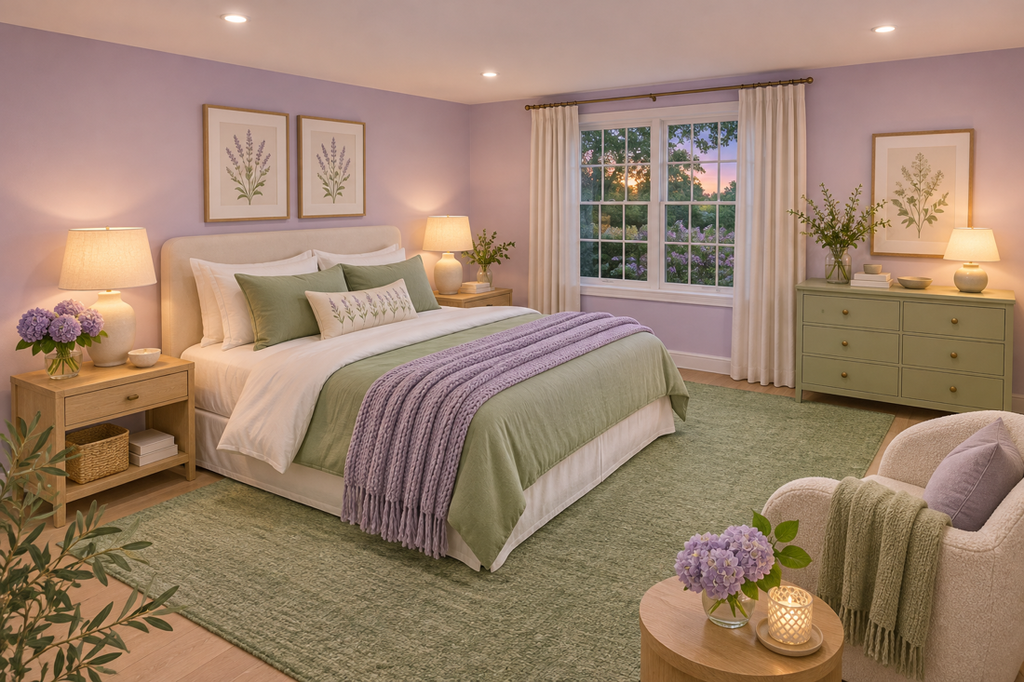
A restful bedroom uses several layers of light instead of relying on one ceiling fixture. Ambient light for getting ready, task light for reading and accent light for atmosphere let you match the light to what you’re doing.
How do you layer lighting in a bedroom?
Most bedrooms work best with three layers: soft ambient light for general visibility, task lighting such as bedside lamps or reading lights, and gentle accent light for atmosphere. Having all three lets you keep bright light for getting dressed and soft light for winding down.
A single overhead light is either on or off, and when it’s on, it lights the whole room from above at the same brightness. That’s useful for finding a lost sock under the bed, but not for winding down. Several smaller light sources give you options.
Think about everything that happens in your bedroom: getting dressed, reading, folding laundry, talking at the end of the day and finally falling asleep. Each one needs a slightly different kind of light, and layering makes it easy to switch between them.
You probably already have some layers in place. A ceiling light and one bedside lamp are a start, and adding a second lamp or a small accent light can make the room feel much more relaxing in the evening. For a deeper look at layering light throughout your home, see our guide to Hygge Lighting: How to Create a Warm, Cozy Glow at Home.
Bedroom Lighting Layers
- Ambient light: recessed lights, a flush-mount fixture or a floor lamp for overall glow.
- Task light: bedside lamps, swing-arm sconces and reading lights.
- Accent light: a small lamp on a dresser, a picture light or a soft glow on a shelf.
- Natural light: windows with curtains you can open wide in the morning.
- Night light: a dim, warm light for nighttime trips.
Homey Hygge Recommendation
Walk into your bedroom tonight and try setting three different moods: getting ready, reading and winding down. If you can’t create all three with the lights you have, add one lamp or swap one bulb to fill the gap.
Choose Warm Bulbs for the Evening
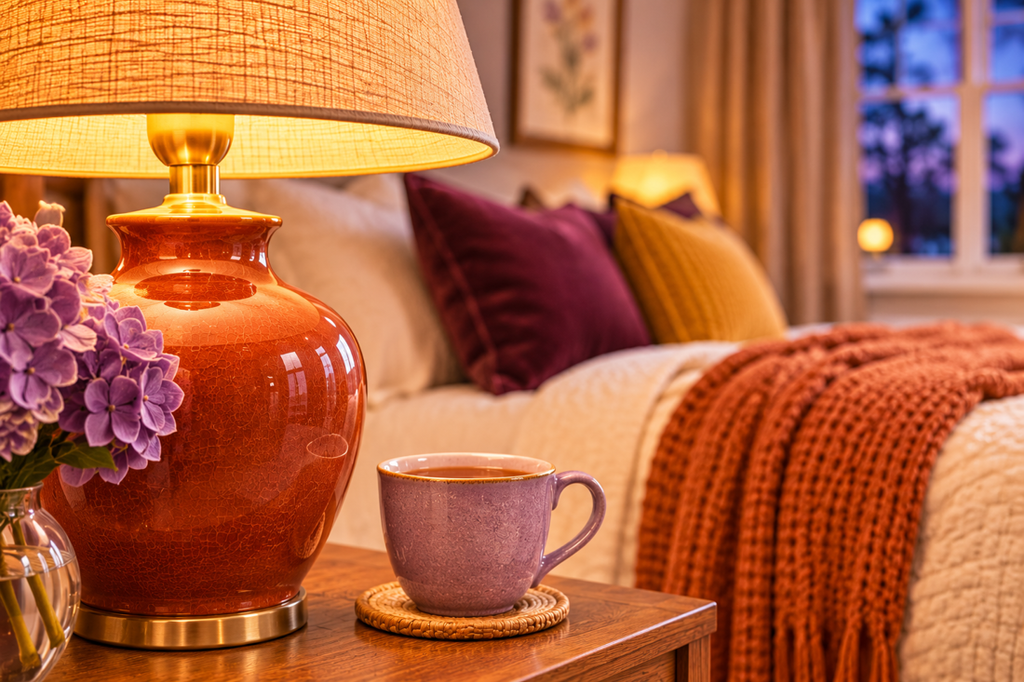
Warm bulbs with a golden glow are the best choice for bedroom lighting in the evening. Look for bulbs labeled soft white or warm white, around 2700K or lower, and save cooler daylight bulbs for spaces you use during the day.
What color light is best for the bedroom at night?
Warm light in shades of yellow, orange and red is best in the hours before bed. The Sleep Foundation explains that these warmer hues are preferable to cooler, bluer light before sleep, and recommends keeping evening light dim with low brightness and a warm color temperature.
Bulb color is measured in Kelvin, shown as a number followed by K on the package. Lower numbers give a warmer, more golden light, while higher numbers look whiter and bluer. Bulbs around 2700K are labeled soft white or warm white, while 5000K and above are usually labeled daylight.
For a bedroom, 2700K is a comfortable everyday choice, and an even warmer 2200K or amber setting works beautifully for the last hour before bed. Daylight bulbs can make a bedroom feel more like an office at night, which isn’t exactly the mood most of us are going for at 10 p.m.
Check the bulbs you already have before buying new ones. Many homes have a mix of warm and cool bulbs picked up over the years, and simply swapping the cool ones in your bedroom can change how the room feels overnight.
Bulb Colors for Bedrooms
- 2000K–2200K: very warm, candlelike glow for winding down.
- 2700K: soft white, the classic cozy bedroom choice.
- 3000K: warm white, a little crisper for reading and getting ready.
- 4000K and up: cool white, better for daytime spaces than bedrooms at night.
- 5000K and up: daylight bulbs, best avoided in the bedroom after dark.
Homey Hygge Tip
Take a quick inventory of every bulb in your bedroom and check its Kelvin number. If any are 4000K or higher, swap them for 2700K bulbs first. It’s one of the cheapest bedroom lighting upgrades you can make.
Put Every Light on a Dimmer
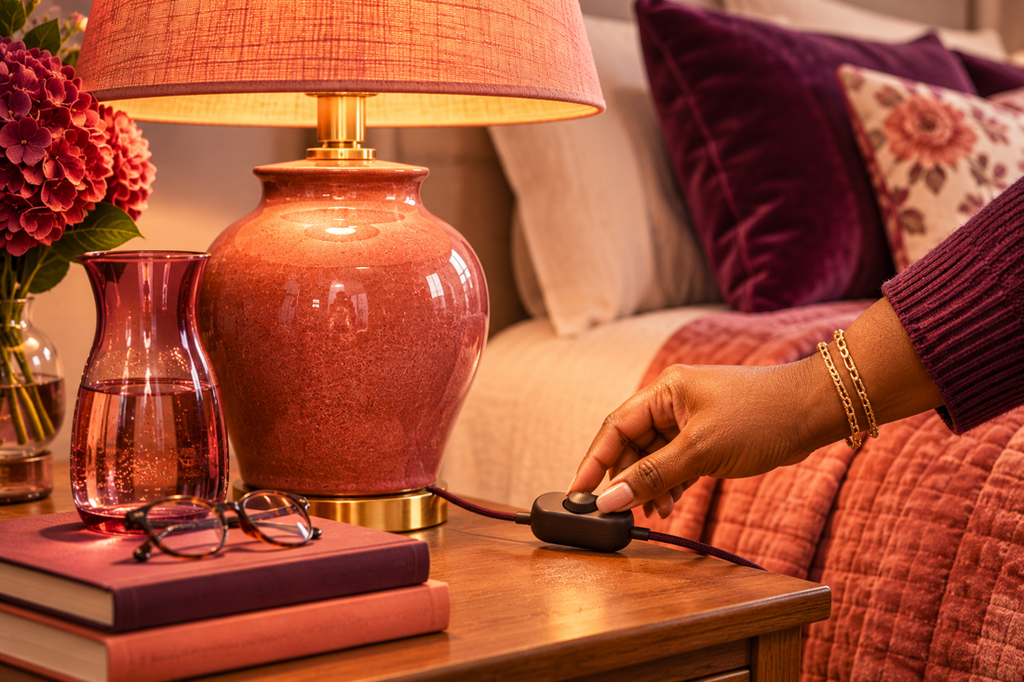
Dimmers let you lower your bedroom lighting gradually in the evening instead of jumping from bright to dark. Dimmer switches, lamps with built-in dimmers and smart bulbs all make it easy to wind down in stages.
Are smart bulbs good for bedroom lighting?
Yes, smart bulbs can be very helpful in a bedroom. Many let you adjust both brightness and color temperature, so you can use brighter, cooler light in the morning and shift to warm, dim light in the evening, often on an automatic schedule.
In our bedroom, the lamps on the nightstands have built-in dimmers and color-adjustable smart bulbs. I enjoy natural sunlight during the day, so the lamps are mostly an evening habit, and I lower the light in stages as bedtime gets closer. That gradual dimming is one of the easiest ways I know to tell my brain the day is winding down.
You don’t need smart bulbs to get the same effect. A plug-in lamp dimmer, a wall dimmer switch for the overhead light or a lamp with a built-in dimmer all work. Just make sure your bulbs are labeled dimmable, especially LEDs, so they don’t flicker or buzz.
If you have a partner who goes to bed at a different time, dimmable bedside lamps on each side let one person read while the other winds down. It’s a small detail that can make evenings feel more relaxed for everyone.
Ways to Add Dimming
- Lamps with built-in dimmers: a simple choice for nightstands.
- Plug-in lamp dimmers: add dimming to lamps you already own.
- Wall dimmer switches: for overhead and recessed lights.
- Smart bulbs: adjust brightness and warmth, often by schedule or voice.
- Dimmable bulbs: check the label so they work with your dimmer.
Homey Hygge Recommendation
If you use smart bulbs, set a nightly schedule that warms and dims your bedroom lights about an hour before your usual bedtime. Letting the lights shift on their own takes one more decision off your plate at the end of the day.
Get Bedside Lamps Right
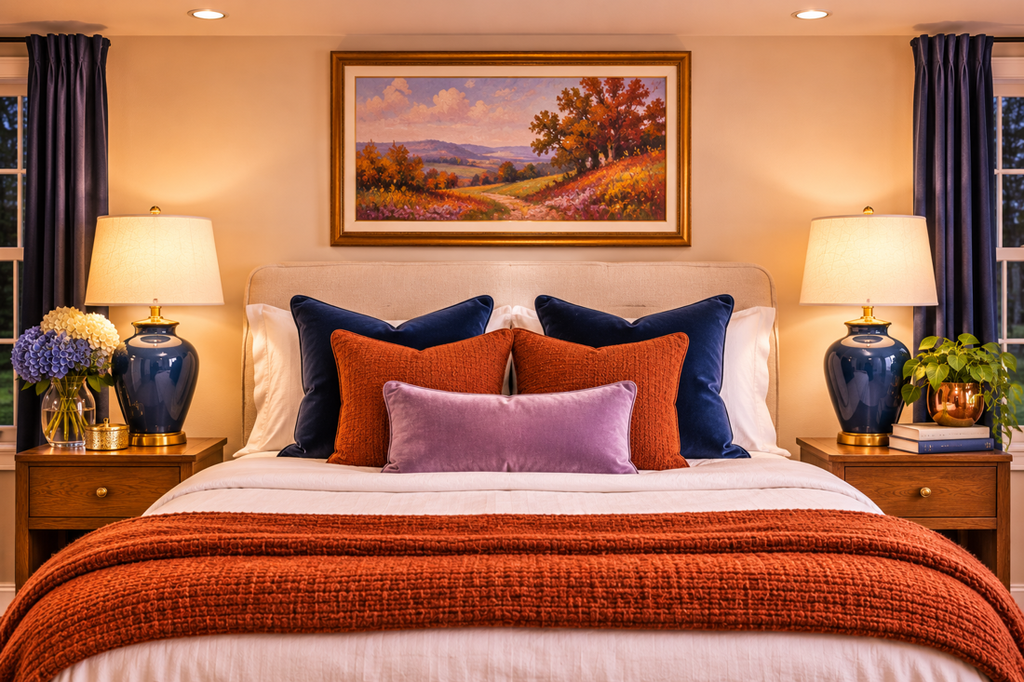
Bedside lamps are the most important lights in a restful bedroom. The right height, a soft shade and a switch you can reach without getting up make the difference between a lamp you love and one you avoid.
How tall should a bedside lamp be?
A common rule of thumb is that the bottom of the lampshade should sit at about eye level when you’re sitting up in bed. Depending on your bed and nightstand, that often means a lamp around 20 to 28 inches tall, but measuring your own setup is the most reliable guide.
If a lamp is too tall, you end up looking straight into the bulb. If it’s too short, the shade blocks the light and leaves your book in shadow. Sitting up in bed, measuring from the top of your nightstand to your eye level and choosing a lamp to match takes two minutes and saves a lot of squinting.
Height is personal, too. I’m tall, so a lamp that works perfectly for an average-height reader can leave the light hitting my chin instead of my book. A taller lamp, an adjustable one or a slightly higher nightstand can fix that.
Shades matter as much as height. Fabric or linen shades in white, cream or a soft color diffuse light gently, while opaque or dark shades push the light up and down for a cozier glow. A colored shade, such as lavender, sage or warm terracotta, can tint the light and add personality, so check it in the evening before committing.
Bedside Lamp Checklist
- Shade at eye level: when you’re sitting up in bed.
- Easy-to-reach switch: on the base, the cord or a touch control.
- Dimmable: a built-in dimmer or a smart bulb.
- Diffusing shade: linen or fabric to soften the light.
- Room on the nightstand: for a book, water glass and glasses.
- One for each side: if two people share the bed.
Homey Hygge Tip
Before buying a new lamp, sit up in bed and have someone measure from the top of your nightstand to your eye level. Take that number shopping, and look for a lamp whose shade bottom lands at or just below it.
Light Reading in Bed Properly
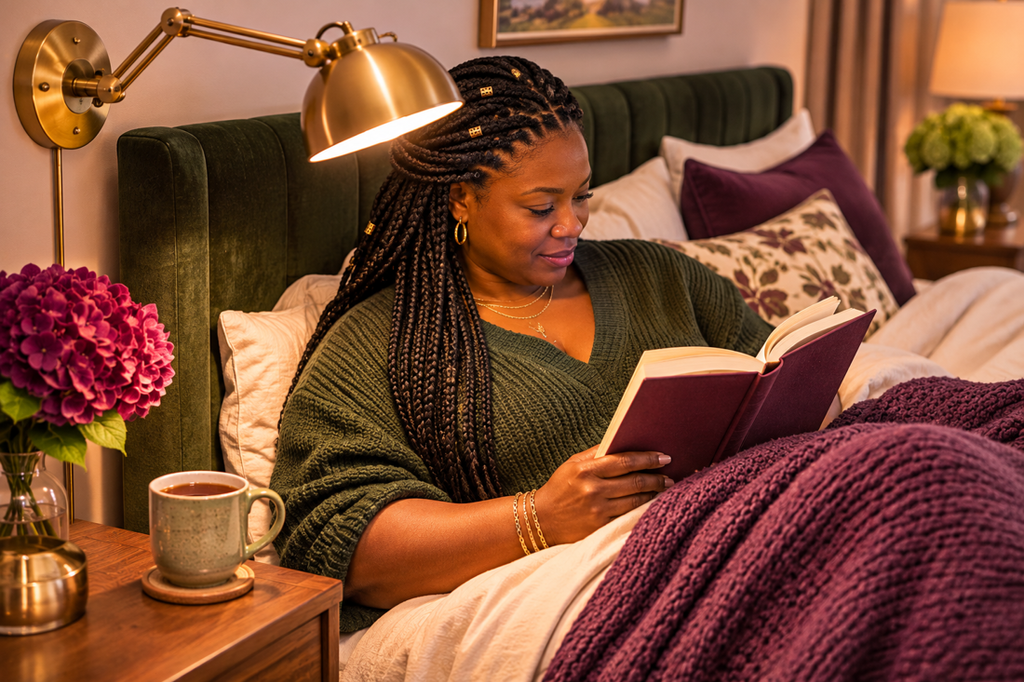
Reading in bed needs focused, directional light aimed at your page rather than a bright light that fills the whole room. A swing-arm sconce, an adjustable lamp or a small book light lets you read comfortably without lighting up your partner’s side of the bed.
What is the best light for reading in bed?
An adjustable bedside lamp, a swing-arm wall sconce or a clip-on book light works best, because each can be aimed at the page. Many lighting guides suggest roughly 450 to 800 lumens for comfortable reading, ideally from a warm or warm-neutral bulb you can dim afterward.
The best reading light comes from the side or slightly behind your shoulder, so it falls across the page without glaring back at you or casting your shadow over the words. A lamp placed too far forward can shine straight into your eyes, while one too far back leaves you reading in your own shadow.
Swing-arm wall sconces are especially useful in small bedrooms, because they free up the nightstand and can be pushed out of the way when you’re done. Plug-in versions are available, too, which makes them a good option for renters.
If you share a bed with someone who goes to sleep earlier, a narrow, focused reading light keeps the glow on your side. A clip-on book light is the most discreet option of all. For more ideas on creating a cozy spot to read anywhere in your home, see our guide to How to Create a Cozy Reading Nook in Any Space.
Reading Light Options
- Adjustable bedside lamp: with a head or arm you can aim.
- Swing-arm wall sconce: hardwired or plug-in, frees up the nightstand.
- Clip-on book light: small, warm and partner-friendly.
- Smart bulb reading setting: a little brighter for reading, then dimmed for sleep.
- Warm or warm-neutral bulb: easier on the eyes in the evening.
Homey Hygge Recommendation
When you finish reading, dim the light or switch to a warmer setting for a few minutes before turning it off. That small pause makes the shift from reading to sleeping feel gentler.
Free 7-Day Printable
Make Your Home Feel Cozier in 7 Days
Softer bedroom light is one of the easiest ways to wind down. The free 7-Day Homey Hygge Home Reset gives you one small, doable step a day to make your whole home feel this calm and cozy.
Cozy emails, no clutter. Unsubscribe anytime.
Rethink the Overhead Light
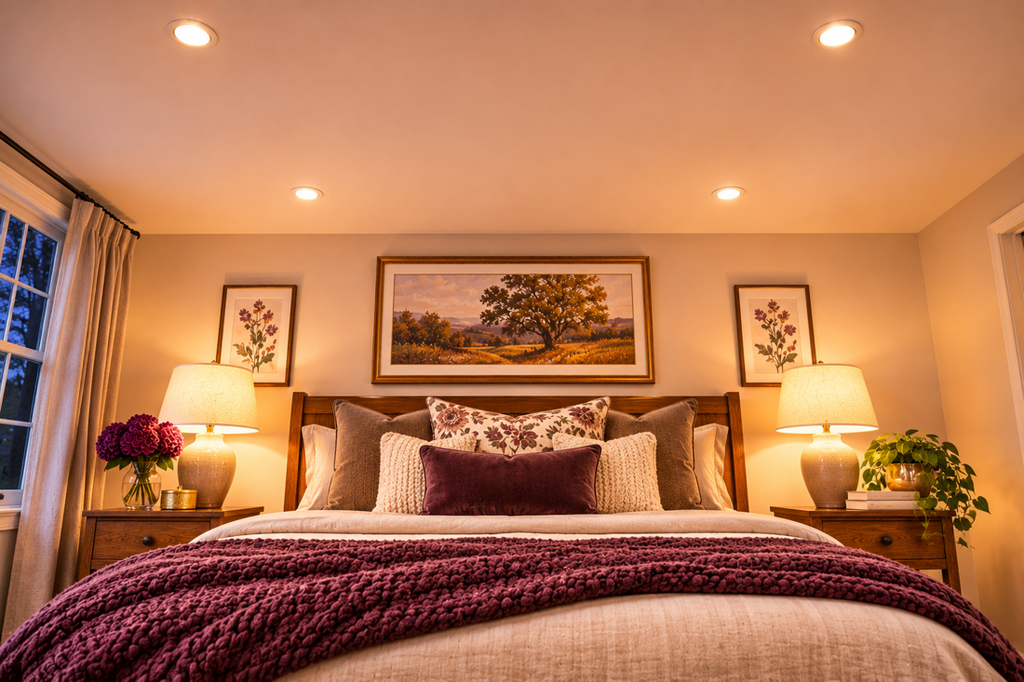
Overhead lighting is useful in a bedroom for cleaning, getting dressed and finding things, but it shouldn’t be the light you rely on in the evening. Putting it on a dimmer and switching to lamps after dinner makes the room feel far more restful.
Should you use overhead lights in a bedroom at night?
It’s best to limit overhead lighting in the hour or two before bed. Bright light from above fills the whole room at once, while lamps at lower heights create a softer, more relaxing glow that’s easier to dim gradually.
I’m tall and have bumped into my share of low-hanging light fixtures, so I prefer recessed lighting overhead. It gives the room good general light without anything dangling, and on a dimmer it can drop down to a soft background glow.
Whatever overhead light you have, a dimmer is the single most useful upgrade. A flush-mount fixture, recessed lights or even a ceiling fan light becomes much more bedroom-friendly when it can be turned down instead of only on or off.
The simplest habit of all is to use the overhead light for tasks, then switch it off for the evening. Folding laundry? Overhead on. Settling into bed with a book? Lamps only.
Overhead Lighting Options
- Recessed lights on a dimmer: clean, even light without anything hanging low.
- Flush-mount fixtures: soft, close to the ceiling and good for lower rooms.
- Ceiling fan lights: add a dimmable warm bulb if your fan allows it.
- Wall dimmer switches: the biggest single upgrade for overhead light.
- Warm bulbs: 2700K so even overhead light feels softer.
Homey Hygge Tip
Make a simple rule: the overhead light goes off after dinner. If something genuinely needs bright light later, turn it on just for that task, then switch back to your lamps.
Add Soft Accent Light
Accent lighting adds a gentle glow that makes a bedroom feel cozy and welcoming in the evening. A small dresser lamp, a picture light or a soft warm glow behind the headboard can be enough, as long as it’s switched off for sleep.

What is accent lighting in a bedroom?
Accent lighting is a small, low light used mainly for atmosphere rather than visibility. In a bedroom, it might be a little lamp on a dresser, a light over a piece of art or a warm glow on a bookshelf, all of which help the room feel softer before bed.
Accent lights are often the most overlooked layer, yet they do a lot for the mood. A small lamp glowing across the room balances out bedside lamps, so you’re not sitting in a bright pool of light surrounded by darkness.
In our living room, the light on my plant stand turned out to be one of the coziest accent lights in the house, which taught me that accent light doesn’t have to come from something sold as a lamp. A softly lit shelf, a small lamp in a corner or a warm light tucked behind a headboard can all work.
The key in a bedroom is keeping accent lights warm, low and off at bedtime. Cool or colorful LED strips can look fun, but warm white or amber keeps the room restful, and any light left on while you sleep can disrupt rest.
Accent Lighting Ideas
- A small dresser lamp: low wattage with a soft shade.
- A picture light: over a favorite piece of art.
- A lit shelf: a small lamp or warm puck light among books.
- Warm light behind the headboard: dimmable and on a switch or timer.
- A plant light: a soft glow that does double duty for your plants.
Homey Hygge Recommendation
Put one accent light on a timer or smart plug that turns on in the early evening and off at your usual bedtime. Your bedroom will feel warm and welcoming when you walk in, and you’ll never fall asleep with it on.
Plan for Nighttime Trips
A dim, warm night light lets you get up safely during the night without flooding your eyes with bright light. Keeping the rest of the room as dark as possible while you sleep supports deeper, more restful sleep.

What color night light is best for sleep?
A dim red or amber night light is the best choice. Harvard Health Publishing recommends dim red lights for night lights, since red light is less likely to shift your body clock or suppress melatonin than other colors.
Flipping on a bright overhead light at 2 a.m. is the quickest way to feel wide awake when all you wanted was a glass of water. A low, warm night light along the path to the door or bathroom gives you just enough light to see without waking your whole system up.
Placement matters. Night lights work best close to the floor, where they light your path rather than shining into your eyes. Motion-activated night lights are especially handy, since they turn on only when you need them and switch off on their own.
The rest of the room should be as dark as you can comfortably make it. The Sleep Foundation suggests sleeping in as much darkness as possible, and notes that blackout curtains block most outside light. Glowing chargers, clocks and electronics can add up, too, so cover or turn away any bright little lights you notice.
Nighttime Lighting Essentials
- A dim red or amber night light: low to the floor along your path.
- Motion-activated lights: on only when you get up.
- Blackout or room-darkening curtains: to block streetlights and early sun.
- Covered gadget lights: tape or turn away glowing chargers and clocks.
- A dimmable bedside lamp: set to its lowest warm setting if you need it.
Homey Hygge Tip
Tonight, turn off every light in your bedroom and look around for anything that still glows. Cover or move the brightest culprits, and you’ll be surprised how much darker and calmer the room feels.
Make Mornings Bright
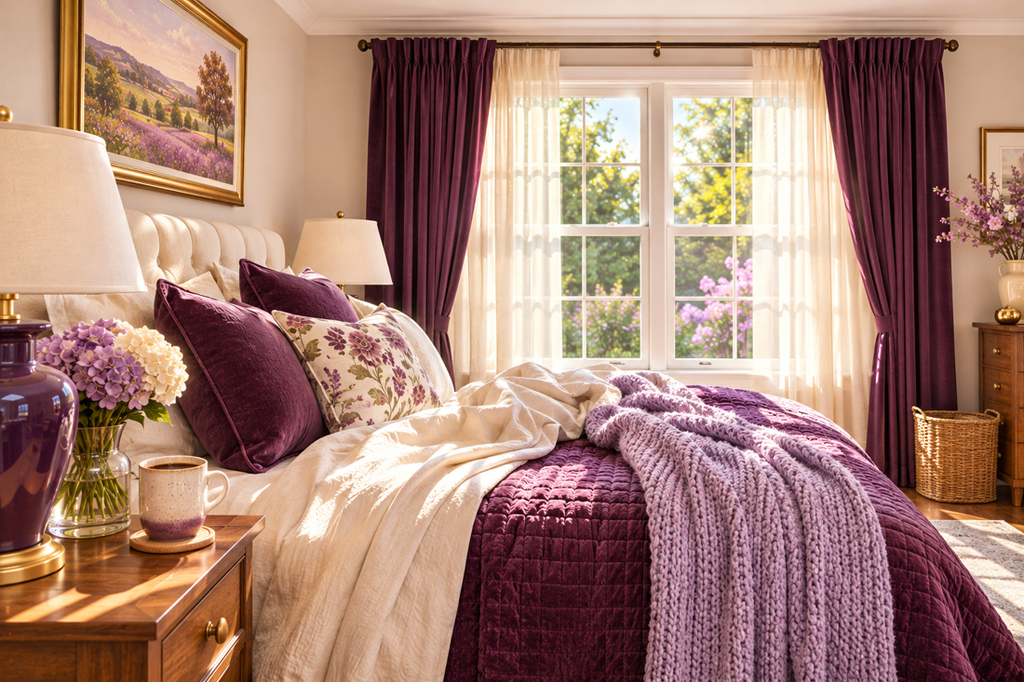
Restful bedroom lighting isn’t only about the evening. Bright light in the morning helps set your body clock for the day, which can make it easier to feel sleepy at night.
Does morning light help you sleep better at night?
It can. The Sleep Foundation notes that bright light during the day supports a healthy sleep-wake cycle, while too much light at night can interfere with sleep. Harvard Health also suggests getting plenty of bright light during the day to support sleep, mood and alertness.
I love natural sunlight, so the first thing I want in the morning is open curtains and daylight pouring in. It wakes the room up in a way no lamp can match, and it makes the evening glow of lamps feel even cozier by contrast.
If you use blackout curtains for sleep, layering them with sheers gives you both: real darkness at night and soft daylight once the heavier panels are open. On dark winter mornings, a brighter, cooler light setting or a sunrise alarm clock that gradually brightens before you wake can help. Research on these alarms suggests modest benefits for some people, so think of them as a gentle helper rather than a cure.
The pattern to aim for is simple: bright and cool in the morning, warm and dim at night. For more ways to make the whole room feel restful, see our guide to Hygge Bedroom Ideas for a Peaceful, Cozy Retreat.
Morning Light Habits
- Open the curtains first thing: let daylight in as soon as you’re up.
- Layer sheers with blackout curtains: darkness at night, daylight by morning.
- Use brighter light to get ready: a cooler smart-bulb setting or overhead light.
- Try a sunrise alarm: helpful on dark winter mornings.
- Step outside: a few minutes of morning daylight helps, too.
Homey Hygge Recommendation
Pair your evening and morning light into one routine. If you use smart bulbs, set a bright, cooler scene for the first hour after you wake and a warm, dim scene for the last hour before bed, so your bedroom lighting follows the day for you.
Frequently Asked Questions About Bedroom Lighting for Rest
What is the best lighting for a bedroom?
The best bedroom lighting combines soft ambient light, task lighting such as bedside lamps and gentle accent light, all with warm bulbs around 2700K and dimmers. This lets you use brighter light when you need it and warm, dim light to wind down.
What color temperature is best for bedroom lighting?
Around 2700K, often labeled soft white or warm white, is a comfortable choice for most bedrooms. For the last hour before bed, an even warmer 2200K or amber setting can feel more relaxing, while 5000K daylight bulbs are best kept out of the bedroom at night.
Is it better to sleep in complete darkness?
For most people, yes. The Sleep Foundation recommends sleeping in as much darkness as possible, since light during sleep can disrupt sleep cycles. If you need a night light, choose a dim red or amber one placed low to the floor.
How bright should a bedside reading lamp be?
Many lighting guides suggest about 450 to 800 lumens for comfortable reading. A dimmable lamp is ideal, so you can turn it up to read and down afterward.
Are LED bulbs bad for sleep?
LED bulbs aren’t bad on their own, but many produce a fair amount of blue light, which can be more disruptive at night. Choosing warm LEDs around 2700K or lower and dimming them in the evening helps.
Where should lamps go in a bedroom?
Place a lamp on each nightstand for reading and winding down, then add a soft accent light elsewhere in the room, such as on a dresser or shelf. This balances the light so the room doesn’t feel dark everywhere except the bed.
Light Your Bedroom for the Life You Actually Live
Restful bedroom lighting isn’t about buying the perfect fixture. It’s about soft, warm light in the evening, focused light when you want to read, real darkness while you sleep and bright daylight when you wake up.
Start with the easiest changes: swap any cool bulbs for warm ones, turn off the overhead light after dinner and make sure you can dim the lamps beside your bed. Notice how the room feels at the end of the day, and let that guide what you change next.
Continue Creating Your Homey Hygge Home
Once your bedroom lighting feels right, bring the rest of the room along. Read Hygge Bedroom Ideas for a Peaceful, Cozy Retreat for layered bedding, calming colors and screen-free habits that make your bedroom a true place to rest.