Scandinavian Christmas tree decorations are simple, natural and full of handmade charm, like woven paper hearts, straw stars, wooden ornaments, felt figures and little flag garlands on a fresh green tree glowing with warm white lights. The look is calm rather than crowded, so every ornament has room to shine.
Across Denmark, Sweden and Norway, the Christmas tree is the heart of the holiday. Many families still make some of their own ornaments each year, and traditions like dancing around the tree on Christmas Eve or “plundering” it in January give the tree a story that goes far beyond decoration.
The Homey Hygge approach is to borrow the warmth and simplicity of a Nordic tree while making it your own, whether you stick to classic red and white or weave in colors you love. This guide walks through ten ways to trim a cozy Scandinavian tree, from choosing the tree itself to the ornaments, lights and traditions that make it feel special. For the wider Nordic look, see our guide to Scandinavian Christmas Decorations: How to Get the Cozy Nordic Look.
To create a Scandinavian Christmas tree, choose a simple, natural tree and light it with warm white lights. Weave Danish paper hearts, hang straw stars and goats, and add wooden and felt ornaments. String a little flag garland, tuck in edible touches like paper cones and gingerbread, and top the tree with a simple star. Keep a calm color story, whether classic red and white or your own colors, and enjoy the Nordic traditions of gathering around the tree.
You don’t need every idea on this list. Start with a natural tree, warm lights and a few handmade ornaments, then add more each year until your tree tells your family’s story.
- Choose a simple, natural tree.
- Light it with warm white lights.
- Weave Danish paper hearts.
- Hang straw stars and goats.
- Add wooden and felt ornaments.
- String a flag garland.
- Add edible touches.
- Top it with a simple star.
- Keep a calm color story.
- Celebrate around the tree.
Choose a Simple, Natural Tree
A Scandinavian Christmas tree starts with the tree itself. A fresh spruce or fir with a natural shape and a little space between the branches gives handmade ornaments room to hang and shine.
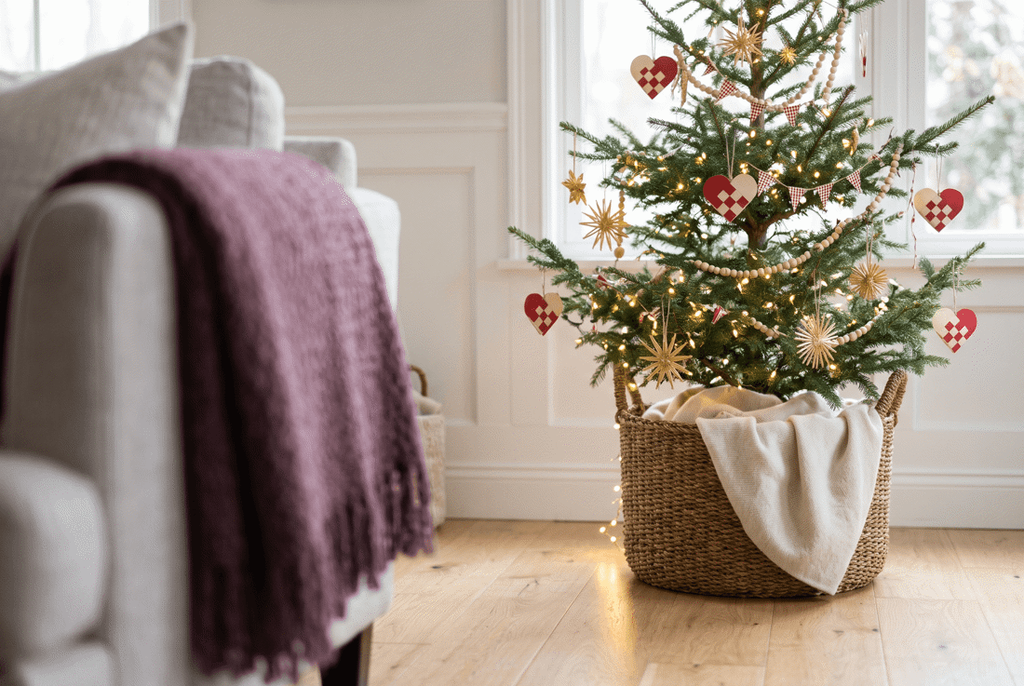
Norway spruce is the classic Scandinavian Christmas tree, and Nordmann fir has become very popular because it holds its needles well. Denmark is one of Europe’s biggest Christmas tree exporters, selling more than 9 million trees in 2024, according to the Danish Christmas Tree Association.
The Christmas tree tradition came to Scandinavia from Germany in the early 1800s, and today it’s at the center of the holiday in Denmark, Sweden and Norway. Nordic trees tend to look natural rather than sheared into a perfect cone, with an airy shape that lets you see ornaments from every side.
That open, slightly wild look is part of the charm. A tree with gaps between its tiers is easier to decorate with delicate paper and straw ornaments, which can get lost on a very dense tree.
If a real tree isn’t right for your home, a faux tree with a natural shape works beautifully too. Look for one with realistic, slightly uneven branches rather than a perfectly full, shiny silhouette.
What to Look For in a Nordic-Style Tree
- A natural shape: slightly airy, with space between branches.
- Spruce or fir: Norway spruce for tradition, Nordmann fir for lasting needles.
- Sturdy branches: strong enough for wooden and straw ornaments.
- The right height: a slimmer tree suits smaller rooms.
- A simple stand or basket: woven baskets look especially Nordic.
Homey Hygge Tip
Set your tree in a woven basket or wrap the stand in a cream wool blanket instead of a traditional tree skirt. It’s a simple, natural finish that looks right at home with Scandinavian ornaments.
Light It With Warm White Lights
Warm white lights give a Scandinavian tree its soft, candlelike glow. Choosing fewer, warmer lights and weaving them deep into the branches creates a gentle shimmer instead of a bright blaze.
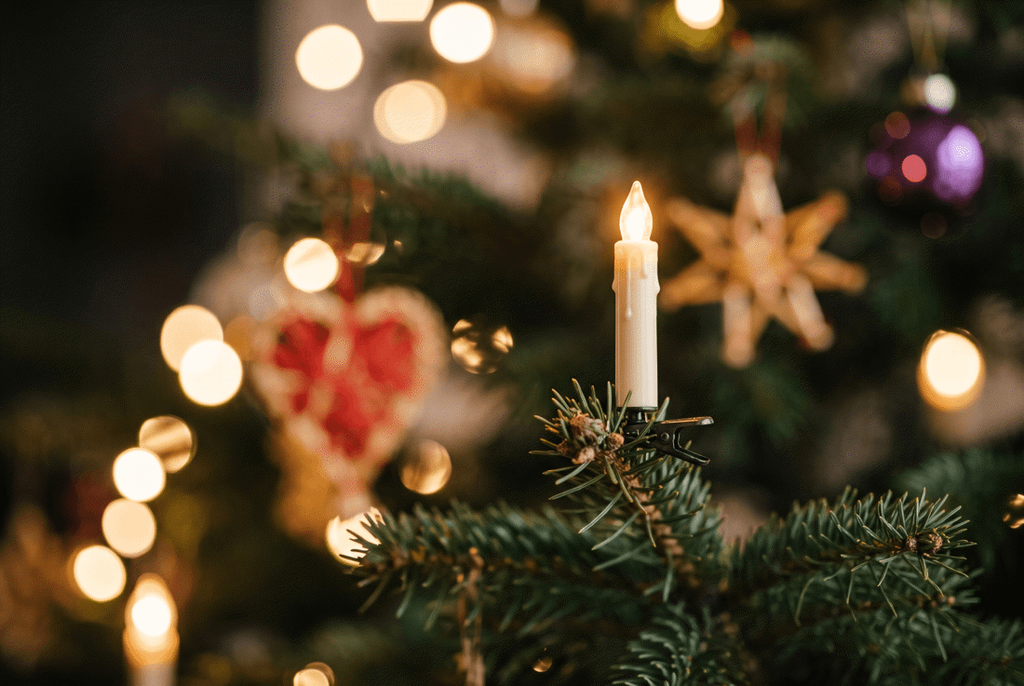
Yes. Traditional Scandinavian trees were lit with real candles, and some Danish families still use them today. For safety, though, the National Fire Protection Association advises never using lit candles to decorate a tree, so warm white electric lights are the safest way to get that candlelike glow.
A Nordic tree glows rather than sparkles. Warm white bulbs, around 2700K, mimic the color of candlelight, while cool white or multicolored lights can look busy next to natural straw and paper ornaments.
Weave your lights in and out along each branch, starting close to the trunk and working out toward the tips. Lights tucked deeper into the tree create a soft inner glow that makes the whole tree feel warm and dimensional.
Candles are the traditional heart of a Scandinavian Christmas, but I’m allergic to traditional candles, so electric lights and flameless candles are how I get the glow at home. Clip-on LED candle lights are a lovely way to get the classic Nordic look without a real flame.
- Warm white string lights: around 2700K for a candlelike glow.
- LED candle clips: the traditional candle look, safely.
- Lights woven deep into the branches: for a soft inner glow.
- Fewer, warmer lights: a gentle shimmer instead of a blaze.
- A timer: so the tree glows every evening on its own.
Homey Hygge Recommendation
Try clip-on LED candle lights on just the outer branches, paired with warm string lights inside. Together they recreate the classic candlelit Scandinavian tree with none of the fire risk.
Weave Danish Paper Hearts
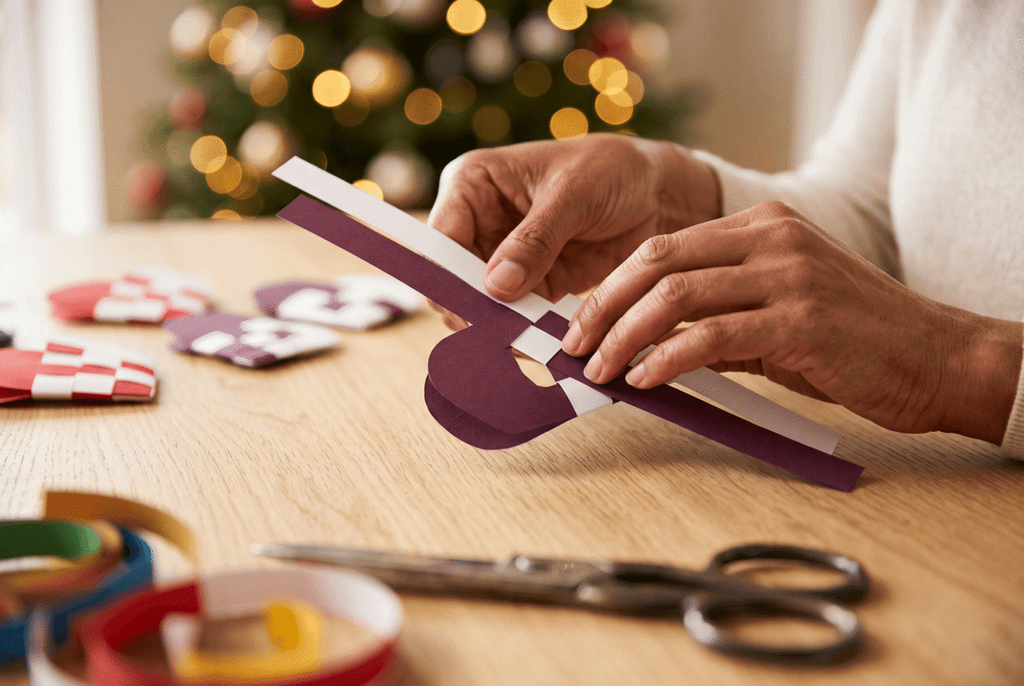
Woven paper hearts, called julehjerter in Danish, are one of the most beloved Scandinavian Christmas ornaments. Made from two colors of paper woven together, they form little baskets you can hang on the tree and fill with treats.
Who invented the Danish woven Christmas heart?
The oldest known woven paper heart was made by the Danish author Hans Christian Andersen in 1860, and it’s now in the Hans Christian Andersen Museum in Odense. The oldest known picture of a Christmas tree decorated with woven hearts dates from 1901.
Woven hearts became widespread in Denmark in the early 1900s, and many Danish families still make them together every December. The classic version uses red and white paper, the colors of the Danish flag, but you can use any two colors you love.
Each heart is made from two folded pieces of paper, cut into strips and woven together to form a heart-shaped pocket with a handle. On Danish trees, the pockets are often filled with small sweets, which makes them both a decoration and a little treat.
Weaving hearts is a cozy activity for a December evening, with or without kids. Once you’ve made a few simple hearts, you can try more intricate patterns with extra strips. For more paper craft ideas, see our guide to Cozy Hobbies for Homebodies: Screen-Free Ways to Slow Down.
How to Weave a Simple Paper Heart
- Choose two colors: red and white for tradition, or two you love.
- Fold and cut: fold each paper in half and cut matching strips from the fold.
- Round the tops: trim the open ends into a rounded shape.
- Weave the strips: slide strips through and around each other in alternating rows.
- Add a handle: glue on a paper strip so you can hang it.
Homey Hygge Tip
Tuck a small chocolate or a sprig of evergreen into each woven heart before hanging it. It’s a sweet Danish touch, and guests love discovering the little surprises.
Hang Straw Stars and Goats
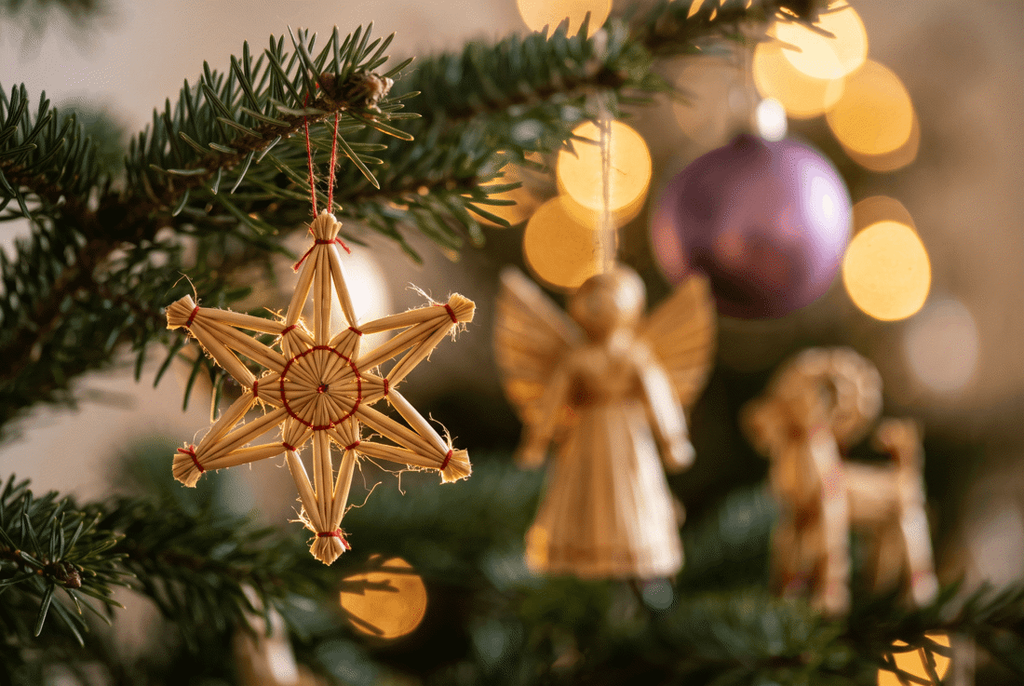
Straw ornaments are a classic part of Scandinavian trees, especially in Sweden. Golden straw stars, angels and tiny goats tied with red thread add natural texture and glow beautifully under warm lights.
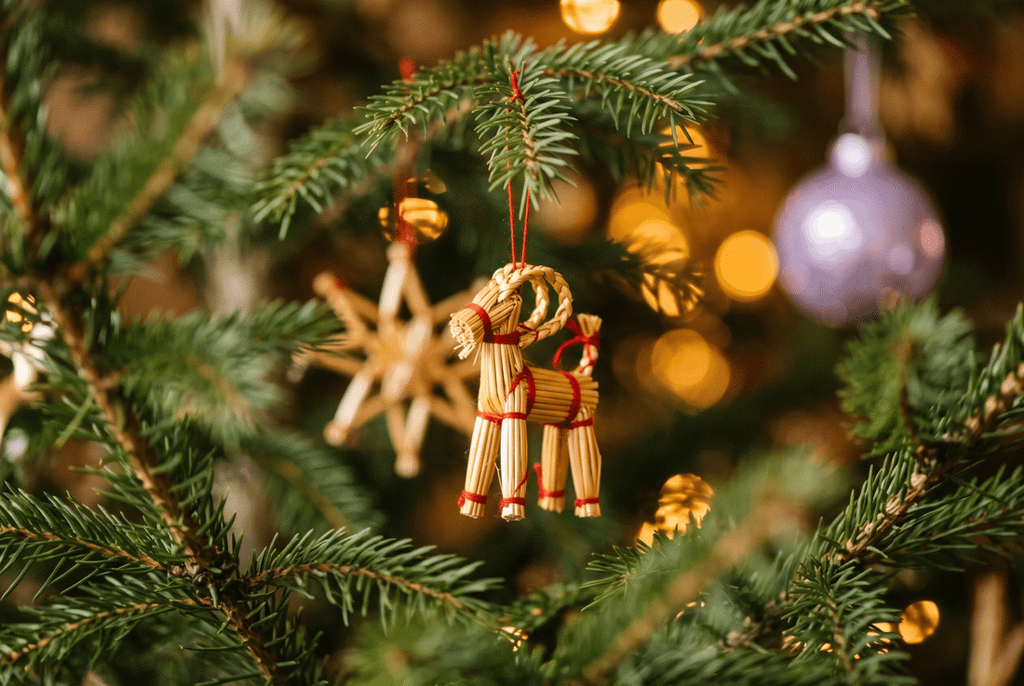
Scandinavian straw ornaments are made from dried straw that’s woven, tied or folded into shapes like stars, angels, hearts and small goats, then accented with red thread or ribbon. Straw has long symbolized the manger in the Christmas story.
Straw ornaments are light enough to hang on the thinnest branch tips, and their pale gold color shines against dark green needles. Straw stars are the most classic shape, from simple six-pointed stars to intricate snowflake-like designs.
Tiny straw goats are a sweet nod to the julbock, Sweden’s straw Christmas goat. A few small goats tucked among the branches, paired with a larger goat under the tree, ties the whole look together.
Because straw is so neutral, it mixes easily with other ornaments. A tree trimmed in straw, red ribbon and paper hearts looks classically Scandinavian, while straw paired with plum or berry ornaments feels fresh and personal.
Straw Ornaments to Look For
- Straw stars: the most traditional shape.
- Mini straw goats: a nod to the Swedish julbock.
- Straw angels: delicate and timeless.
- Straw hearts: simple and sweet.
- Straw snowflakes: intricate and lacy.
Homey Hygge Tip
Hang straw ornaments near the outer tips of the branches, where the light catches them best. Their golden glow is most beautiful when they’re close to the warm lights.
Add Wooden and Felt Ornaments
Wooden and felt ornaments bring warmth, texture and a handmade feel to a Scandinavian tree. Carved birds, painted wooden hearts, bead garlands and little felt figures make the tree feel cozy and collected.
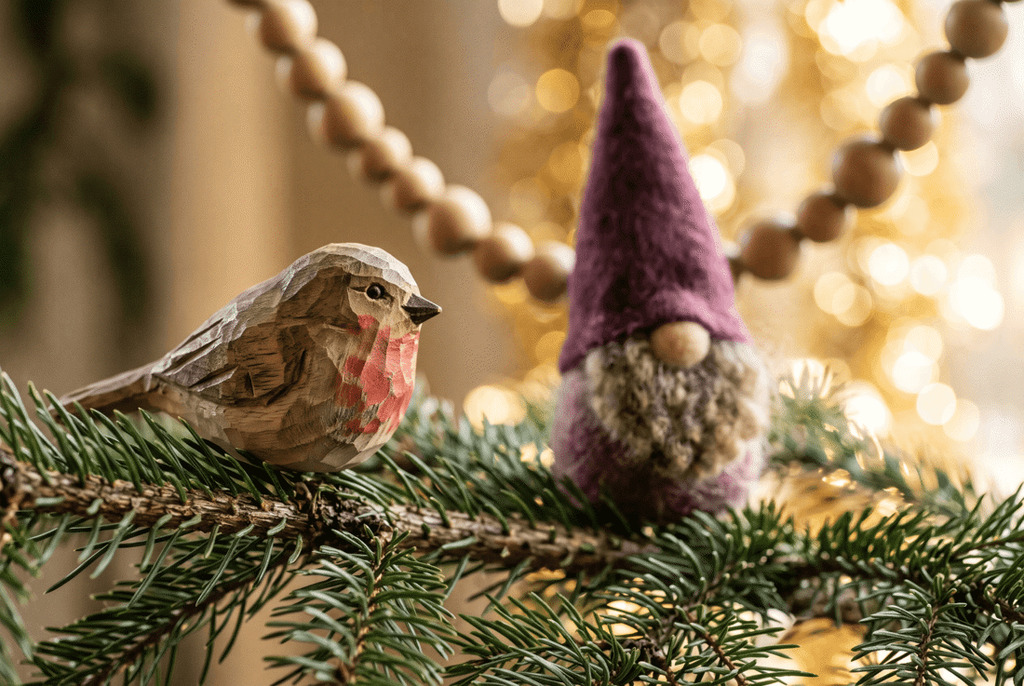
Traditional Scandinavian ornaments include woven paper hearts, straw stars and goats, wooden ornaments, felt figures, small flags, paper cones and simple glass baubles. Natural materials and handmade pieces are at the heart of the look.
Wood fits naturally into a Nordic tree. Carved wooden birds, simple painted hearts, small Dala horses and wooden bead garlands add a warm, earthy contrast to paper and straw. Unpainted wood looks calm and natural, while red or white painted pieces echo the classic Scandinavian palette.
Felt ornaments add softness and personality. Little felt tomte or nisse figures, mice, birds, hearts and stars feel playful and cozy, and they’re sturdy enough to survive curious pets and small hands.
Mixing a few textures, like paper, straw, wood and felt, is what makes a Scandinavian tree feel rich even when it’s simple. No single material dominates, and every ornament looks like it was chosen with care.
Wooden and Felt Ornament Ideas
- Carved wooden birds: perched on the branches.
- Wooden bead garlands: natural or painted, looped loosely.
- Painted wooden hearts: red, white or a color you love.
- Felt tomte or nisse: playful little figures for the tree.
- Felt stars and hearts: soft, sturdy and pet-friendly.
Homey Hygge Recommendation
Drape a wooden bead garland in loose, gentle swoops rather than tight spirals. The relaxed lines look more natural and let your other ornaments take center stage.
String a Flag Garland
Small flag garlands are one of the most distinctive Scandinavian tree traditions, especially in Denmark. Strings of tiny red-and-white flags wrapped around the tree add instant festive color and a sense of celebration.
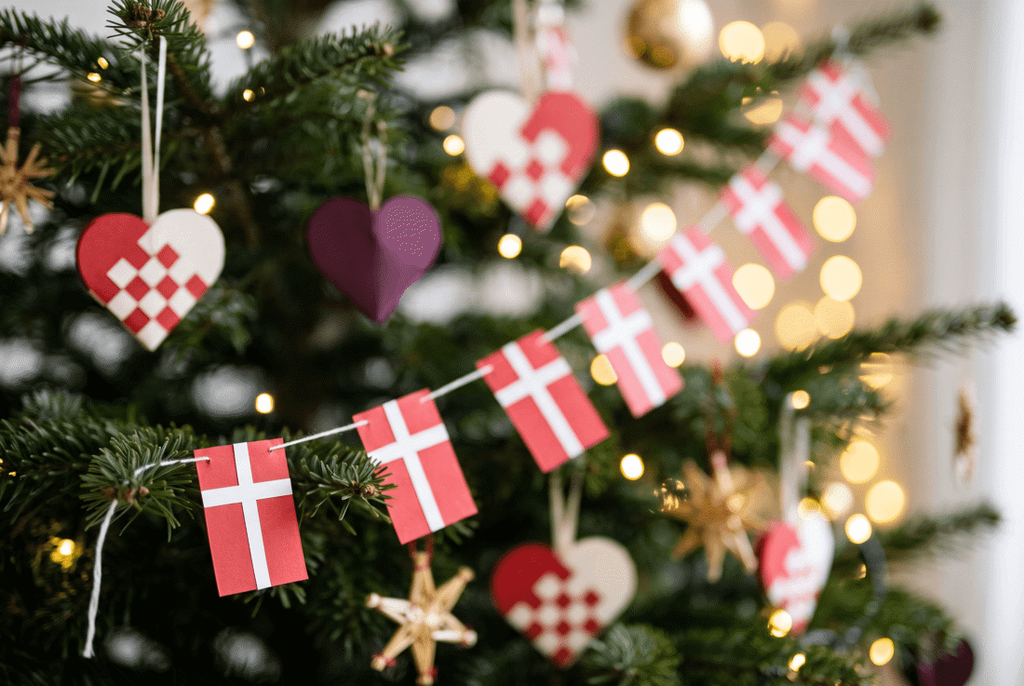
Why do Danes put flags on their Christmas trees?
Danes have decorated Christmas trees with the Danish flag, called Dannebrog, for generations, and according to the Royal Danish Library, Denmark is one of the only countries in the world that uses its national flag on the Christmas tree. The flags represent celebration and togetherness.
Flag garlands are usually small paper or fabric flags strung together and wrapped around the tree in loose rings. In Denmark, the red-and-white Dannebrog is the classic choice, and Norwegian and Swedish families sometimes use their own flags too.
The garland adds a cheerful pop of red that ties together woven hearts, straw stars and wooden ornaments. It’s especially lovely if you have Scandinavian roots and want a tree that honors your family’s heritage.
If flags don’t feel personal to you, a garland of small paper hearts, felt stars or red-and-white bunting creates a similar effect. The idea is a light, festive line of color wrapping around the tree.
Garland Ideas for a Nordic Tree
- Danish flag garlands: the classic red-and-white Dannebrog.
- Norwegian or Swedish flags: to honor your own heritage.
- Paper heart garlands: a sweet alternative to flags.
- Felt star garlands: soft and cozy.
- Red-and-white bunting: festive without flags.
Homey Hygge Tip
Wrap your garland in loose, evenly spaced rings from top to bottom, letting it dip slightly between branches. A relaxed drape looks more natural and Scandinavian than a tight spiral.
Add Edible Touches
Edible ornaments are a sweet Scandinavian tradition. Paper cones filled with treats, gingerbread hearts and small red apples bring color, scent and a little bit of old-fashioned charm to the tree.
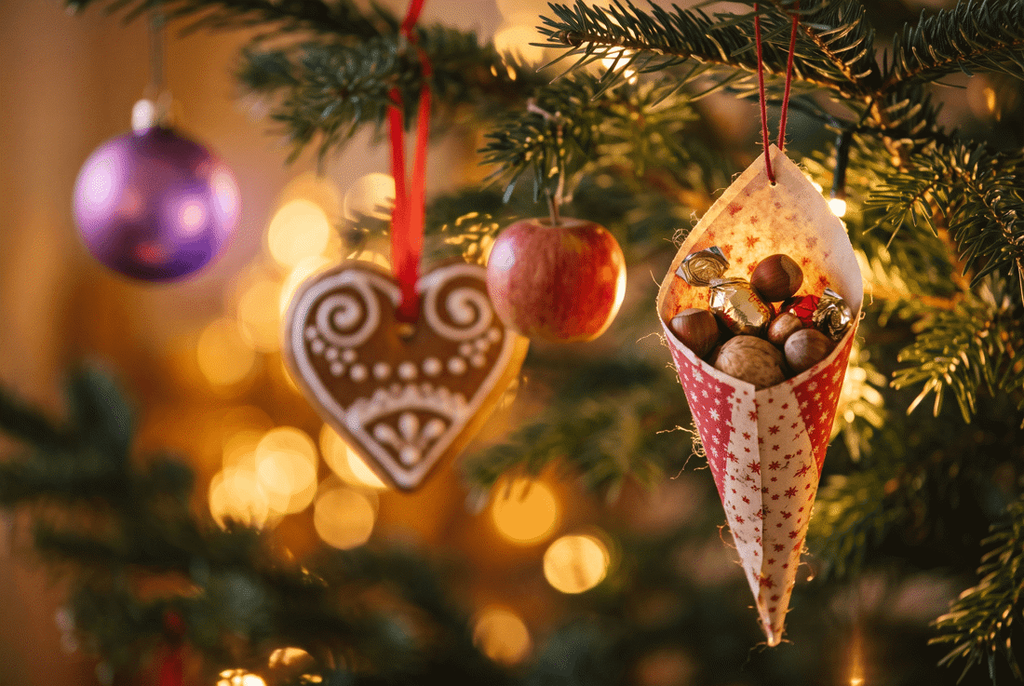
Scandinavian trees have long included edible decorations like gingerbread cookies, small apples and paper cones or woven hearts filled with sweets. According to the Royal Danish Library, edible tree decorations once doubled as the children’s Christmas presents.
Paper cones, called kræmmerhuse in Danish, are simple cones of colored or patterned paper with a little handle, filled with sweets, nuts or small treats. They hang easily from sturdy branches and add a playful, old-fashioned touch.
Gingerbread is another favorite. Thin, spiced gingerbread hearts and stars tied with red ribbon look lovely on the tree and make the whole room smell like Christmas. Small red apples, a tradition on early Scandinavian trees, add bright, natural color.
Edible ornaments are also part of the fun of taking the tree down. In Sweden, the sweets left on the tree are traditionally eaten when the tree is “plundered” in January, which gives everyone something to look forward to.
Edible Ornament Ideas
- Paper cones (kræmmerhuse): filled with sweets or nuts.
- Gingerbread hearts and stars: tied with red ribbon.
- Small red apples: bright, natural color.
- Woven hearts with treats: a sweet Danish surprise.
- Dried orange slices: fragrant and glowing in the light.
Homey Hygge Recommendation
Bake a batch of gingerbread hearts and let them cool completely before tying them to the tree with ribbon. Hang them on the inner branches, away from pets, so they stay intact through the season.
Free 7-Day Printable
Make Your Home Feel Cozier in 7 Days
A few handmade ornaments on a glowing tree are a lovely place to start. The free 7-Day Homey Hygge Home Reset walks you through one small, doable step a day to make your whole home feel warmer, calmer and more like you, and none of it starts with shopping.
Cozy emails, no clutter. Unsubscribe anytime.
Top It With a Simple Star
A simple star is the classic finishing touch for a Scandinavian tree. Straw, paper, wood or brass stars keep the top of the tree light and natural, in keeping with the rest of the decorations.
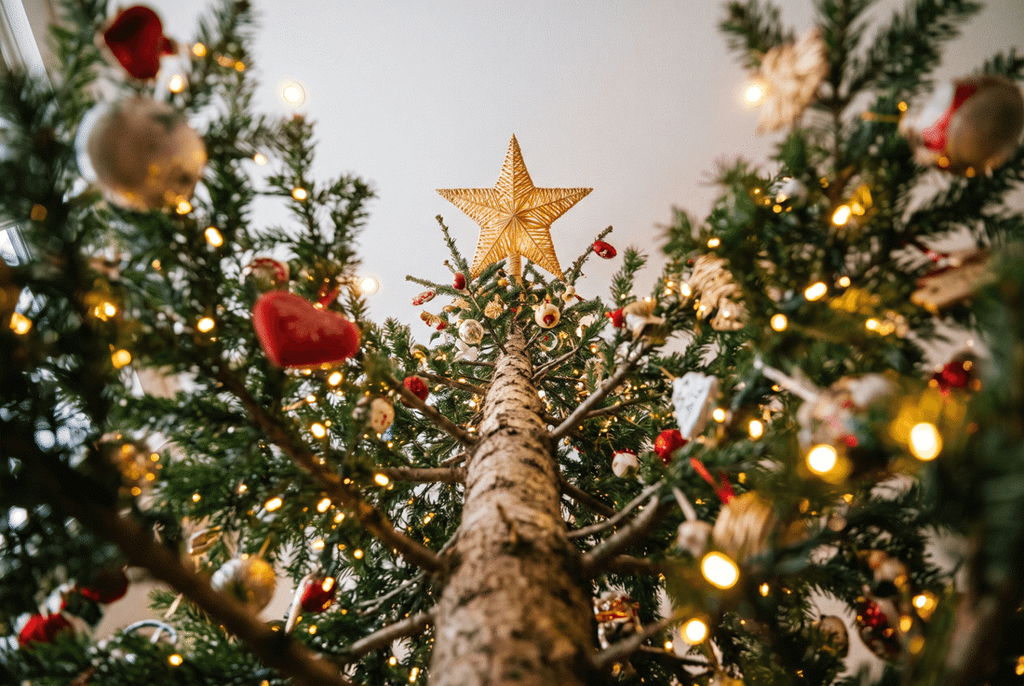
Most Scandinavian trees are topped with a simple star made of straw, paper, wood or metal. Stars recall the Star of Bethlehem and fit the calm, natural look of a Nordic tree better than an elaborate topper.
A large woven straw star is the most traditional choice and looks beautiful against dark green branches. Paper stars, including ones like the glowing Advent stars Scandinavians hang in their windows, make a soft, airy topper.
Brass or gold stars add a little warm shimmer, while a simple wooden star looks rustic and cozy. Whichever you choose, keep it in proportion to the tree so it finishes the look without overwhelming it.
If you love a bit of color, a star in plum, berry or deep red paper can echo the ornaments below and make the topper feel personal.
Star Topper Ideas
- A large straw star: the most traditional Nordic choice.
- A paper star: soft, airy and lightweight.
- A brass or gold star: a warm shimmer at the top.
- A wooden star: rustic and natural.
- A colored paper star: plum, berry or deep red.
Homey Hygge Tip
Secure your star with a few twist ties or a small piece of floral wire so it stays straight all season. A slightly tilted star is the one detail everyone notices.
Keep a Calm Color Story
A calm color story is what makes a Scandinavian tree feel peaceful. Red and white is the classic Nordic palette, but natural tones or your own favorite colors can work just as beautifully.
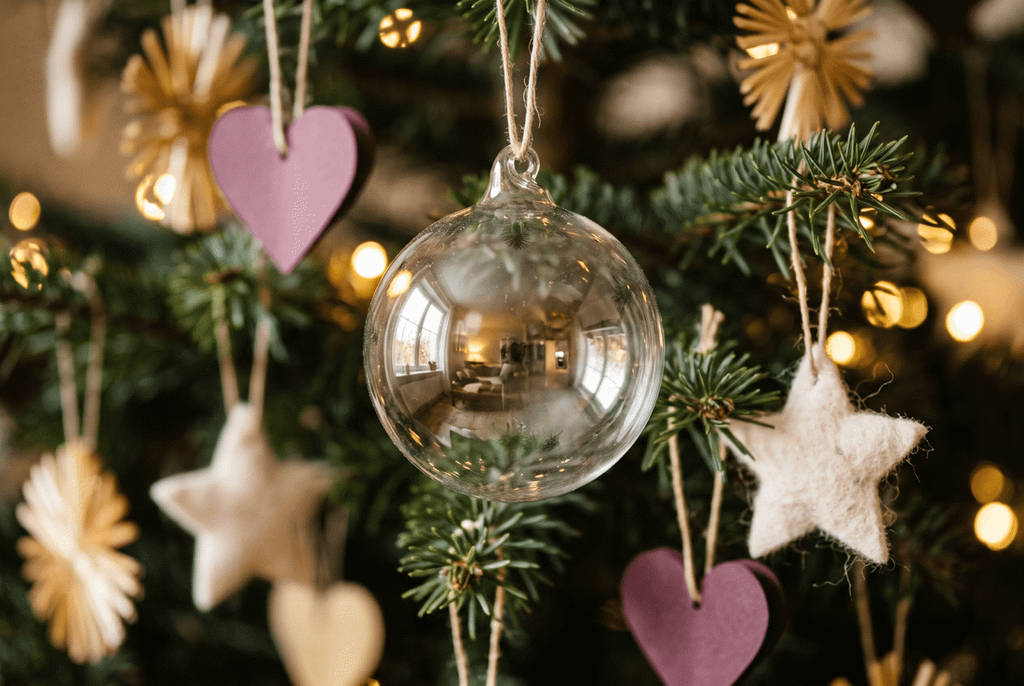
Classic Scandinavian trees use red and white, often with natural straw, wood and green. Some modern Nordic trees stick to white, cream and natural tones, while others add soft gold, silver or a personal accent color.
The secret is choosing a small palette and repeating it across the tree. Red woven hearts, white paper stars and golden straw ornaments repeated from top to bottom look calm and intentional, even with many different ornament styles.
If red and white isn’t your style, you can keep the Scandinavian spirit with different colors. White, cream and natural wood feel serene and minimal, while plum, lavender and gold feel rich and cozy. Deep green and red feel traditional and warm.
I’m drawn to plums and lavenders, so a tree with plum paper hearts, cream felt stars and golden straw feels like home to me. Choose colors that make you happy, then let natural straw and wood tie them together.
- Red and white: the classic Nordic palette.
- White, cream and natural wood: calm and serene.
- Plum, lavender and gold: rich and cozy.
- Green, red and straw: traditional and warm.
- Blue and white: cool, crisp and wintry.
Homey Hygge Recommendation
Before you decorate, set out all your ornaments and pick two or three main colors. Set aside anything that doesn’t fit, and your tree will look calm and pulled together from every angle.
Celebrate Around the Tree
In Scandinavia, the Christmas tree is more than a decoration. Families gather around it, dance around it on Christmas Eve and even throw it a farewell party in January.

In Denmark, families often join hands and dance around the Christmas tree on Christmas Eve while singing carols before opening presents. In Sweden, the tree traditionally comes down on St. Knut’s Day, January 13, with a party called julgransplundring, or Christmas tree plundering.
Dancing around the tree is one of Denmark’s most beloved Christmas Eve traditions. Family and friends circle the tree hand in hand, singing carols and hymns, and it’s often the last thing that happens before everyone settles in to open gifts.
In Sweden, St. Knut’s Day marks the official end of the Christmas season. Children gather for a party, dance around the tree one last time and “plunder” the sweets and edible ornaments before the tree is taken down. The tradition has changed very little since the 1870s.
You don’t need Scandinavian roots to borrow these traditions. A song around the tree on Christmas Eve or a small tree-plundering party in January can become a cozy new ritual in your home.
- Dance around the tree: hand in hand on Christmas Eve.
- Sing carols together: before opening gifts.
- Fill woven hearts with treats: to enjoy through the season.
- Plunder the tree on January 13: a fun end to Christmas.
- Make new ornaments each year: a growing family collection.
Homey Hygge Tip
Make one new ornament together every December and write the year on the back. Over time, your tree becomes a collection of memories as well as decorations.
A Scandinavian Christmas tree is natural, simple and handmade in feel. It usually features a spruce or fir with warm white lights, woven paper hearts, straw stars, wooden and felt ornaments, small flag garlands and a simple star on top.
Traditional Scandinavian ornaments include Danish woven paper hearts, straw stars and goats, wooden birds and bead garlands, felt tomte and nisse, flag garlands, paper cones filled with sweets, gingerbread hearts and small red apples.
Woven paper hearts are the easiest place to start. Fold two pieces of paper in different colors, cut matching strips from the fold, round the open ends and weave the strips together into a heart-shaped pocket with a paper handle. Paper cones, gingerbread hearts and simple felt stars are other easy ornaments to make at home.
Why do Danes put flags on Christmas trees?
Danes have decorated their trees with small Danish flags, called Dannebrog, for generations as a symbol of celebration and togetherness. Denmark is one of the only countries that uses its national flag on the Christmas tree.
Start with a natural spruce or fir and warm white lights, then add handmade ornaments like woven paper hearts, straw stars, wooden and felt pieces and a small flag garland. Keep to a calm palette, such as classic red and white, and finish with a simple straw or paper star on top.
In Sweden, Christmas trees traditionally come down on St. Knut’s Day, January 13, often with a children’s party where the tree’s sweets are eaten. Timing varies more in Denmark and Norway, often around early January.
Trim a Tree That Feels Like Home
A Scandinavian Christmas tree proves that simple can be beautiful. A natural tree, warm lights and a handful of handmade ornaments create a glow that feels calm, cozy and deeply personal.
Start with what you love, whether that’s a few woven hearts, a straw star or a little flag garland, and add to your collection each year. Over time, your tree will hold not just ornaments, but the memories of every December you’ve spent around it.
Continue Creating Your Homey Hygge Home
For more ways to bring Nordic warmth into every room, read Scandinavian Christmas Decorations: How to Get the Cozy Nordic Look.