Swedish Christmas decorations are full of warm light and folk charm, from straw goats and gnome-like tomte to glowing Advent stars, candle arches in the windows and painted Dala horses. They mix simple natural materials like straw and wood with cheerful red, white and gold, and many of them carry centuries of tradition.
Sweden’s Christmas season starts at the end of November with the first Sunday of Advent, when stars and candle arches suddenly appear in windows all over the country to push back the winter darkness. From there, December fills with straw ornaments, saffron buns, gingerbread hearts and the candlelit Lucia celebrations on December 13.
The Homey Hygge approach is to borrow the traditions that feel meaningful to you and give them your own colorful twist. This guide walks through ten classic Swedish Christmas decorations, what they mean and how to use them at home, whether you have Swedish roots or simply love the warmth of a Nordic Christmas. For the wider Scandinavian look, see our guide to Scandinavian Christmas Decorations: How to Get the Cozy Nordic Look.
TL;DR: Swedish Christmas Decorations and How to Use Them
Swedish Christmas decorations center on warm light and folk traditions. Bring home a straw julbock, hang straw stars and angels on the tree, place a glowing Advent star in the window and set an electric candle arch on the sill. Add a tomte or two, a painted Dala horse, Lucia-inspired touches, gingerbread hearts and Christmas flowers like hyacinths and amaryllis, then finish with red-and-white textiles and simple greenery for a cozy Swedish Christmas at home.
10 Swedish Christmas Decorations to Bring Home
You don’t need every decoration on this list. Start with the one that charms you most, like a straw goat or a window star, and build from there year after year.
Swedish Christmas Decoration Ideas at a Glance
- Learn what makes Swedish Christmas decor special.
- Bring home a straw julbock.
- Hang straw ornaments on the tree.
- Glow an Advent star in the window.
- Set an electric candle arch on the sill.
- Welcome the jultomte.
- Add a painted Dala horse.
- Celebrate Lucia Day.
- Decorate with gingerbread and Christmas flowers.
- Finish with red-and-white textiles and simple greenery.
Learn What Makes Swedish Christmas Decor Special
Swedish Christmas decor is built around light, straw and folk traditions. Glowing windows push back the long winter darkness, while straw ornaments, tomte and Dala horses bring warmth and a sense of history.
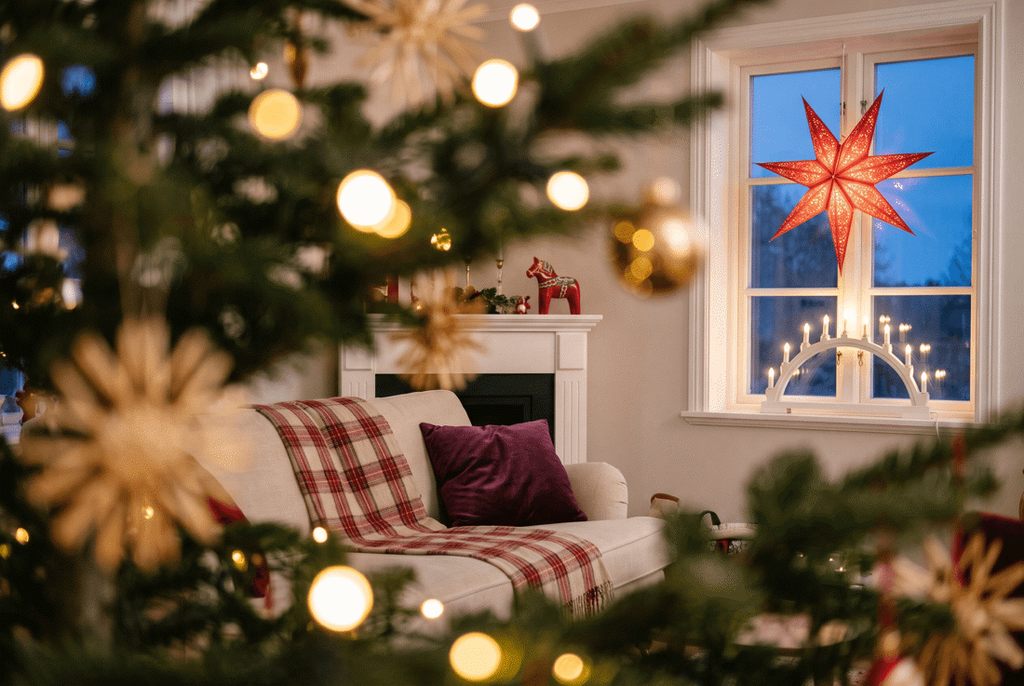
What are traditional Swedish Christmas decorations?
Traditional Swedish Christmas decorations include straw goats called julbockar, straw stars and angels, glowing Advent stars, electric candle arches, gnome-like tomte, painted Dala horses, gingerbread hearts and Christmas flowers like hyacinths, amaryllis and red tulips.
In Sweden, the season of light begins at the end of November. On the first Sunday of Advent, Advent stars and candle arches appear in windows across the country, and they stay lit through the darkest weeks of the year. It’s one of the reasons Swedish homes feel so welcoming in winter, inside and out.
Straw plays a big role, too. It’s a reminder of the manger in the Christmas story, and straw goats, stars, angels and wreaths have decorated Swedish homes for generations. Folk characters like the tomte add personality and a little playful mischief.
The colors are classic and cheerful: red and white, warm gold, evergreen and the natural tones of straw and wood. You can follow the tradition closely or give it your own twist with colors you love, like plum or berry, while keeping the spirit of the decorations.
Signature Swedish Christmas Decorations
- The julbock: a straw Christmas goat tied with red ribbon.
- Straw ornaments: stars, angels, hearts and wreaths.
- Window lights: Advent stars and electric candle arches.
- Folk figures: tomte and painted Dala horses.
- Seasonal touches: gingerbread hearts and Christmas flowers.
Homey Hygge Tip
Pick one Swedish tradition to start with this year rather than trying to do them all. A straw goat under the tree or a single star in the window is enough to bring a little Swedish Christmas into your home.
Bring Home a Straw Julbock
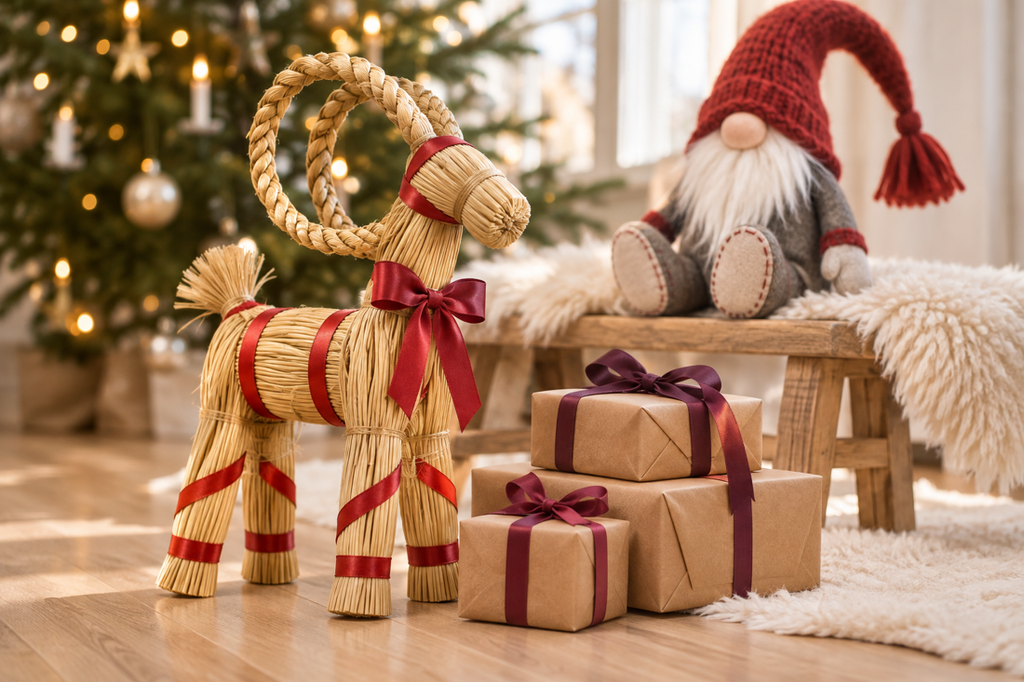
The julbock, or Yule goat, is one of the oldest and most recognizable Swedish Christmas symbols. Made of straw and tied with bright red ribbon, it stands guard under the tree, on a mantel or by the front door.
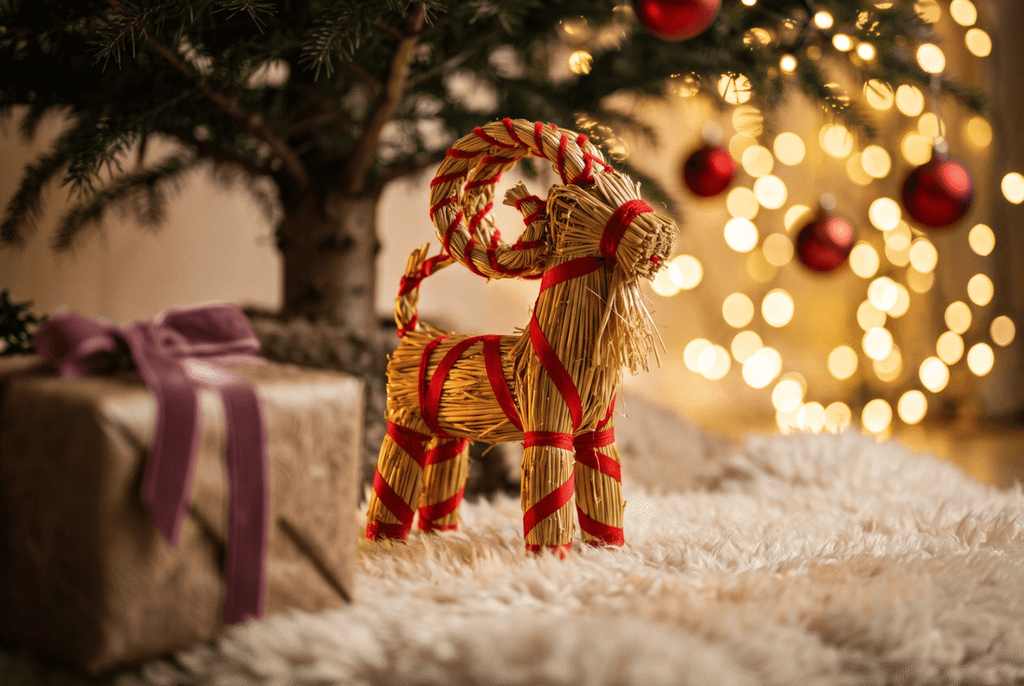
What is the Swedish Christmas goat?
The julbock is a straw goat that has been part of Swedish Christmas for centuries, with roots in old Nordic traditions. Before the jultomte became Sweden’s gift-bringer, the Christmas goat was linked to delivering presents, and today it’s mainly a decoration that guards the home and the tree.
The most famous julbock is the giant straw goat built every year in the city of Gävle for the start of Advent. It stands about 13 meters tall, and it’s become such a beloved and much-watched tradition that people follow its fate every December.
At home, julbockar come in every size, from tiny goats that hang on the tree to large ones that stand on the floor beside it. A small goat on a windowsill or a medium one on the mantel instantly makes a room feel Swedish.
Straw goats pair beautifully with red ribbon, evergreen branches and warm white lights. Because they’re made of natural straw, they also fit right in with a cozy, natural Scandinavian look.
Ways to Display a Julbock
- Under the tree: a medium or large goat standing guard.
- On the tree: small straw goats hung from the branches.
- On the mantel: with evergreen and red ribbon.
- By the front door: a larger goat to welcome guests.
- On a windowsill: beside an Advent candle arch.
Homey Hygge Recommendation
Start with one medium straw goat and give it a starring spot, such as under the tree or on the mantel. Add a small one to the tree the next year, and before long you’ll have a little herd that comes out every December.
Hang Straw Ornaments on the Tree
Straw ornaments are a classic part of Swedish Christmas trees. Delicate stars, angels, hearts and tiny goats made from straw add natural texture and a handmade feel that’s simple and timeless.
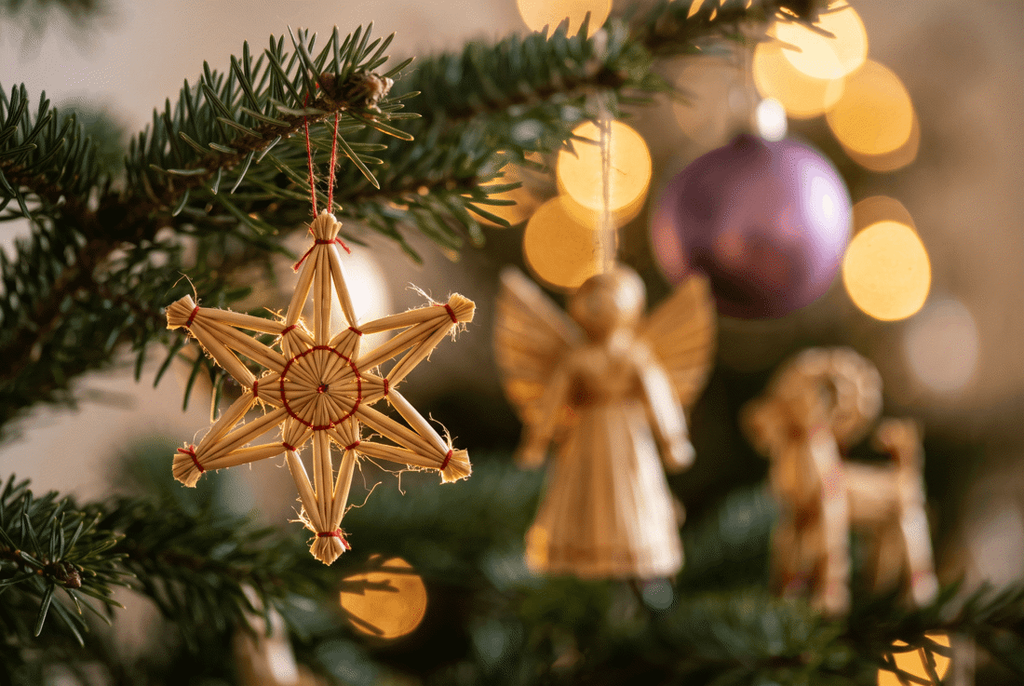
What are Swedish straw Christmas decorations?
Swedish straw Christmas decorations are ornaments made from woven, tied or folded straw, often accented with red thread or ribbon. Common shapes include stars, angels, hearts, wreaths and small julbock goats, and they’re hung on the tree, in windows or on garlands.
Straw ornaments are popular across Scandinavia, but they’re especially beloved in Sweden. Their soft golden color glows beautifully under warm white tree lights, and they’re light enough to hang on even the slimmest branches.
They also carry meaning. Straw has long symbolized the manger in the Christmas story, and harvest traditions across the Nordic countries included leaving sheaves of grain out for the birds at Christmas, known as julkärve in Sweden.
A tree trimmed mostly in straw, red ribbon and warm white lights looks classically Swedish. If you love color, mix straw stars with a few plum or berry ornaments, and the natural straw will help everything feel cohesive.
Straw Ornaments to Look For
- Straw stars: the most classic Swedish ornament.
- Straw angels: delicate and traditional.
- Straw hearts: simple and sweet.
- Mini julbock goats: tied with red ribbon.
- Straw wreaths: small ones for the tree, larger ones for the door.
Homey Hygge Tip
Store straw ornaments flat in a box with tissue paper between layers. Straw is surprisingly sturdy, but careful storage keeps the shapes crisp so they look lovely year after year.
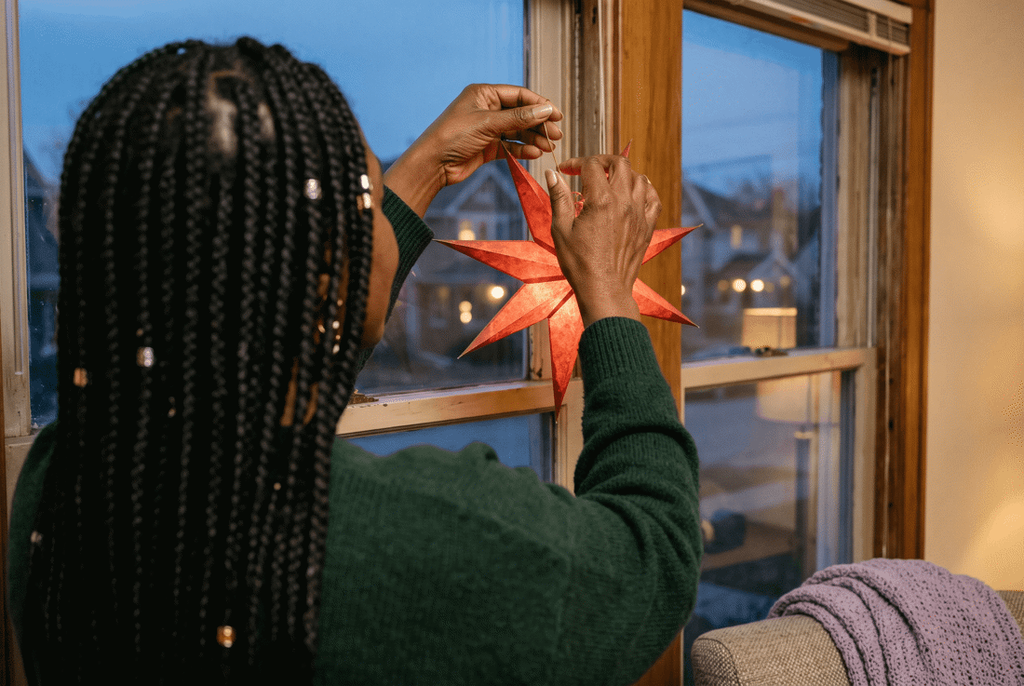
Glow an Advent Star in the Window
A glowing Advent star in the window is one of the most beloved Swedish Christmas decorations. Hung on the first Sunday of Advent, it shines through the darkest weeks of the year and makes a home look warm and welcoming from the street.
What is a Swedish Advent star?
A Swedish Advent star, or adventsstjärna, is a star made of paper, straw, wood or metal with a light inside, hung in a window during Advent and Christmas. The first Swedish versions were made from red paper in the 1930s, and they usually have seven or sometimes nine points.
Advent stars arrived in Sweden from Germany, where they had been popular since the late 1800s, and they represent the star that guided the Wise Men in the Christmas story. Today they’re less about religious symbolism for many families and more about bringing light and warmth to the season.
Stars come in many styles, from classic red and white paper to delicate cut-paper designs, woven straw and pierced metal. A single star in the main window looks simple and elegant, while a star in every window gives the whole house a festive glow.
Paper stars are lightweight and easy to hang from a hook or curtain rod, and their soft, diffused glow is exactly what makes them so cozy. Choose a warm white bulb for the most inviting light. For more ideas on creating a warm glow, see our guide to Hygge Lighting: How to Create a Warm, Cozy Glow at Home.
Advent Star Styles to Try
- Classic red paper: the original Swedish look.
- White cut-paper stars: delicate patterns that cast lovely shadows.
- Woven straw stars: natural and traditional.
- Pierced metal stars: sparkly patterns of light.
- A colorful twist: plum, berry or gold paper stars.
Homey Hygge Tip
Put your Advent star on a timer so it turns on about 30 minutes before sunset each evening. It’s a lovely sight to come home to, and you’ll never have to remember to switch it on.
Set an Electric Candle Arch on the Sill
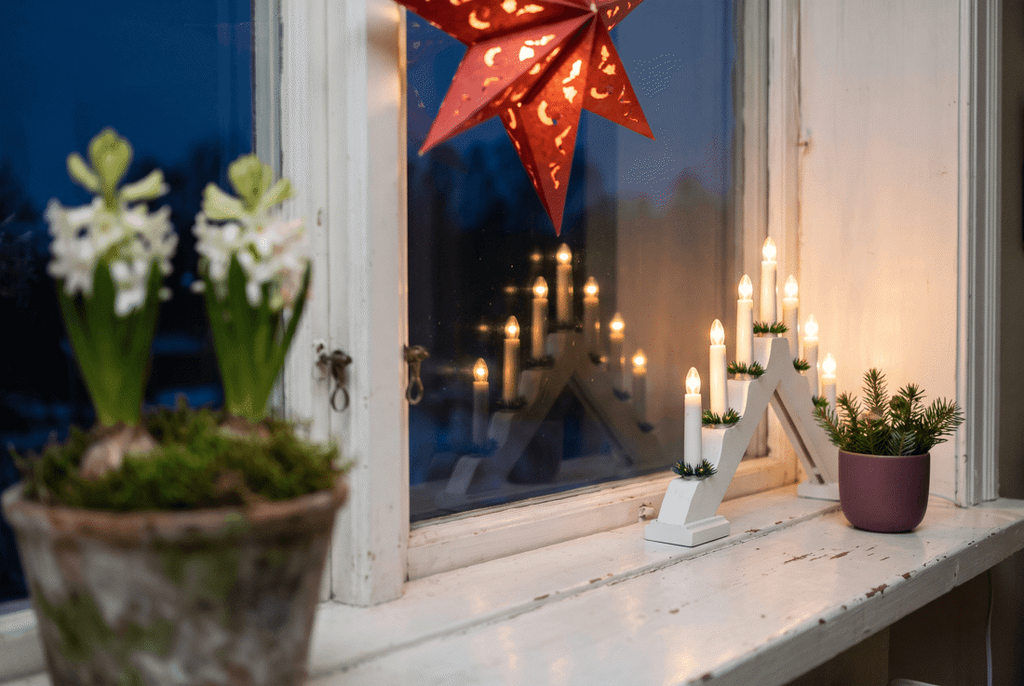
The electric candle arch is a Swedish invention, and you’ll find one glowing on windowsills in homes across Sweden every December. Its stepped row of soft lights pairs beautifully with an Advent star above it.
Who invented the electric Advent candlestick?
The first electric Advent candlestick was created in 1934 by Oskar Andersson, who worked for the lighting company Philips in Gothenburg. He designed it with seven lights, and it went on to become one of Sweden’s most familiar Christmas decorations.
Before electric versions, Swedish homes used an Advent candlestick with four real candles, lighting one more each Sunday before Christmas. The electric candle arch kept the spirit of that tradition while making it easy to leave the lights glowing in every window all evening.
Candles are the traditional heart of a Swedish Christmas, and they’re beautiful. I’m allergic to traditional candles, though, so in our home the glow comes from lamps and flameless candles instead. An electric candle arch gives you that classic Swedish window without an open flame near the curtains.
If you do use real candles, the National Fire Protection Association recommends keeping them at least 12 inches from anything that can burn and blowing them out before you leave the room or go to sleep. Electric or flameless candles are the safer choice for windowsills, where curtains and blinds can swing close.
Candle Arch Ideas
- A classic wooden arch: white or natural wood with seven lights.
- A brass or metal arch: a warm, polished look.
- One per window: for a glowing, Swedish-style facade.
- Paired with a star: an Advent star above the candle arch.
- Flameless candles: a safe way to keep the candlelit look.
Homey Hygge Recommendation
Create a classic Swedish window by pairing an electric candle arch on the sill with an Advent star hanging above it. Add a small pot of hyacinths or a sprig of evergreen beside the arch, and you’ll have the whole look in one corner.
Welcome the Jultomte
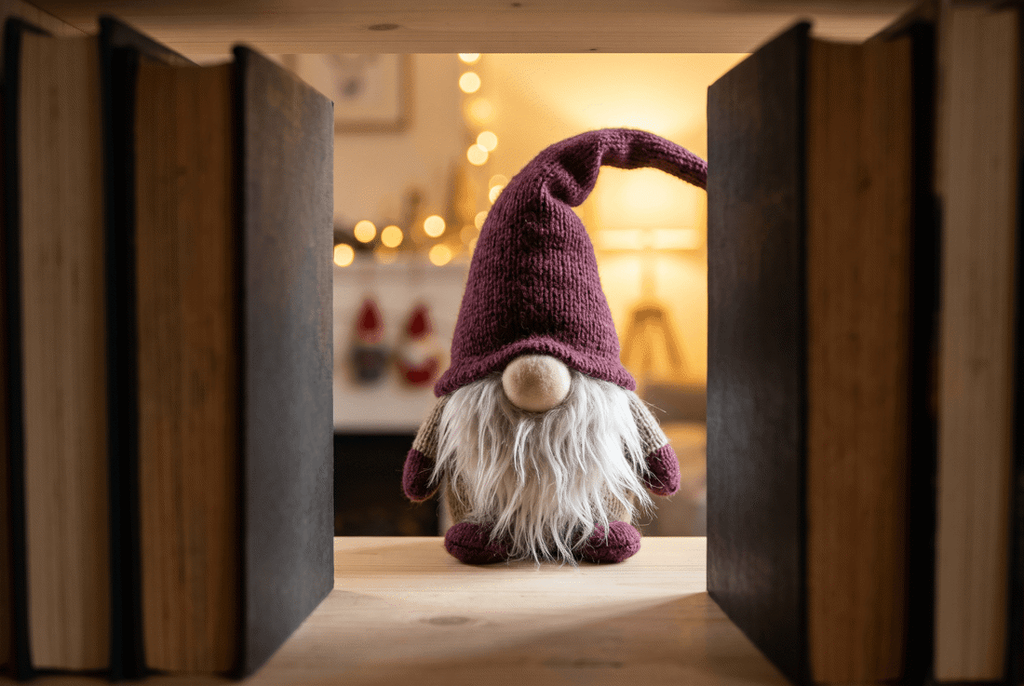
The tomte is a small, bearded figure from Swedish folklore who has become a cheerful symbol of Christmas. Tomte figures in felt, wool, wood or plush add charm and a touch of whimsy to shelves, windowsills and the tree.
What is a tomte?
In Swedish folklore, the tomte is a small, bearded creature believed to protect the home and farm and the people who live there. Since the late 19th century, the tomte has been closely tied to Christmas as the jultomte, who appears with the Christmas goat and brings gifts to children.
Tomte figures usually have a long white beard, a round nose and a tall red or gray knitted hat that often covers their eyes. They’re one of the most playful Swedish Christmas decorations, and they bring a sense of fun to a calm, natural Nordic look.
You’ll find tomte in every size and material, from tiny felt ornaments to wooden figurines and big, soft plush versions. Group a few on a shelf, tuck one into a window beside the candle arch or let one peek out from the branches of the tree.
I’ve always loved a cute stuffed animal tucked onto a mantel or shelf, so a soft plush tomte is an easy favorite for me. One or two well-placed tomte usually feel more charming than a whole crowd.
Tomte Decorations to Look For
- Plush tomte: soft and cozy for a shelf or sofa corner.
- Felt or wool tomte: small ornaments for the tree.
- Wooden tomte: carved figurines for a windowsill.
- Tomte with long knit hats: in classic red, gray or a color you love.
- A tomte family: small and large figures grouped together.
Homey Hygge Tip
Give your tomte a different spot each day in December, peeking out from behind a lamp, sitting on a bookshelf or perched in a plant. It’s a sweet little game for kids and grown-ups alike.
Add a Painted Dala Horse
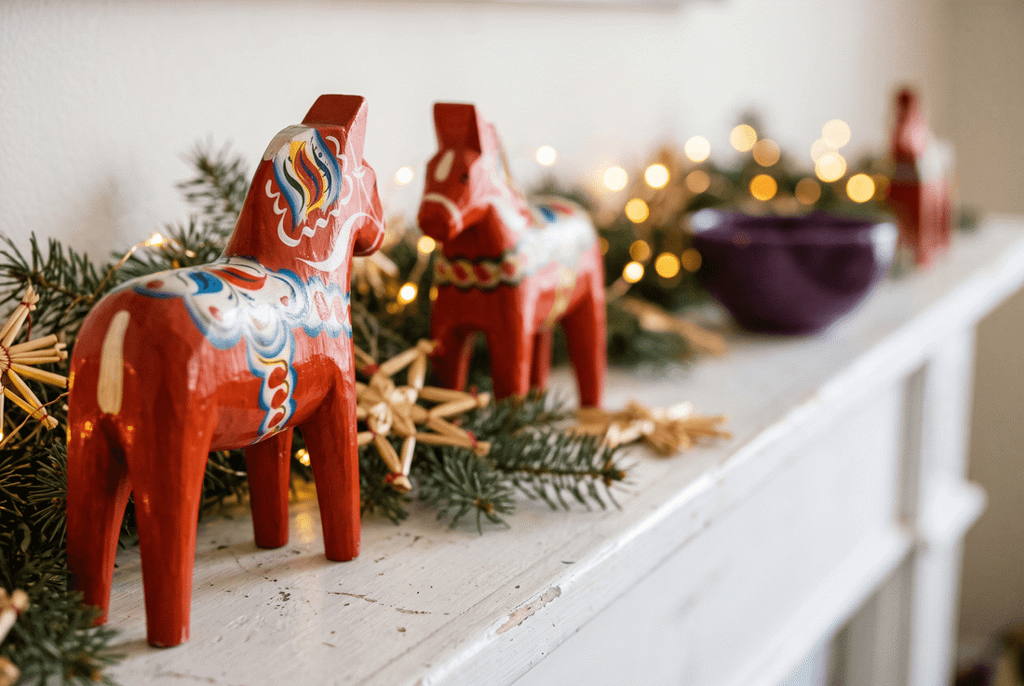
The Dala horse is a hand-carved, hand-painted wooden horse from the Swedish province of Dalarna, and it’s become a symbol of Sweden itself. Its bright red paint and flowery decoration make it a cheerful addition to Christmas decor.
What is a Dala horse?
A Dala horse, or dalahäst, is a traditional carved and painted wooden horse from Dalarna in central Sweden. It began as a children’s toy, and the earliest references to wooden horses for sale date back to 1623.
Carvers in Dalarna made the horses from local pine during long winter evenings, and in the 19th century they began painting them with a bright, swirling floral style called kurbits, inspired by local furniture painting. The classic Dala horse is red with colorful kurbits details, though you’ll also find blue, white, black and natural wood versions.
The Dala horse became a symbol of Sweden around the world after a giant painted horse was featured at the Swedish pavilion at the 1939 New York World’s Fair. Today, traditional horses are still carved and painted by hand in Dalarna, which means no two are exactly alike.
At Christmas, a Dala horse adds a bright pop of red and a touch of folk art to a mantel, windowsill or tree. Small Dala horse ornaments look lovely mixed with straw stars, and a larger horse makes a charming centerpiece among evergreens.
Ways to Use Dala Horses at Christmas
- Dala horse ornaments: hung on the tree among straw stars.
- A pair on the mantel: facing each other with evergreen between.
- On a windowsill: beside the candle arch.
- As a table centerpiece: surrounded by greenery and red ribbon.
- In different colors: red, blue, white or natural wood.
Homey Hygge Recommendation
Look for a hand-painted Dala horse rather than a mass-produced one if you can. Each one is a little different, and owning a piece of real Swedish folk art makes it feel like an heirloom you’ll bring out every Christmas.
Free 7-Day Printable
Make Your Home Feel Cozier in 7 Days
A straw goat and a glowing window star are a lovely place to start. The free 7-Day Homey Hygge Home Reset walks you through one small, doable step a day to make your whole home feel warmer, calmer and more like you, and none of it starts with shopping.
Cozy emails, no clutter. Unsubscribe anytime.
Celebrate Lucia Day
Lucia Day on December 13 is one of the most magical Swedish Christmas traditions. Candlelit processions, white gowns, saffron buns and gingerbread make it a lovely inspiration for cozy December decor.
What is Lucia Day in Sweden?
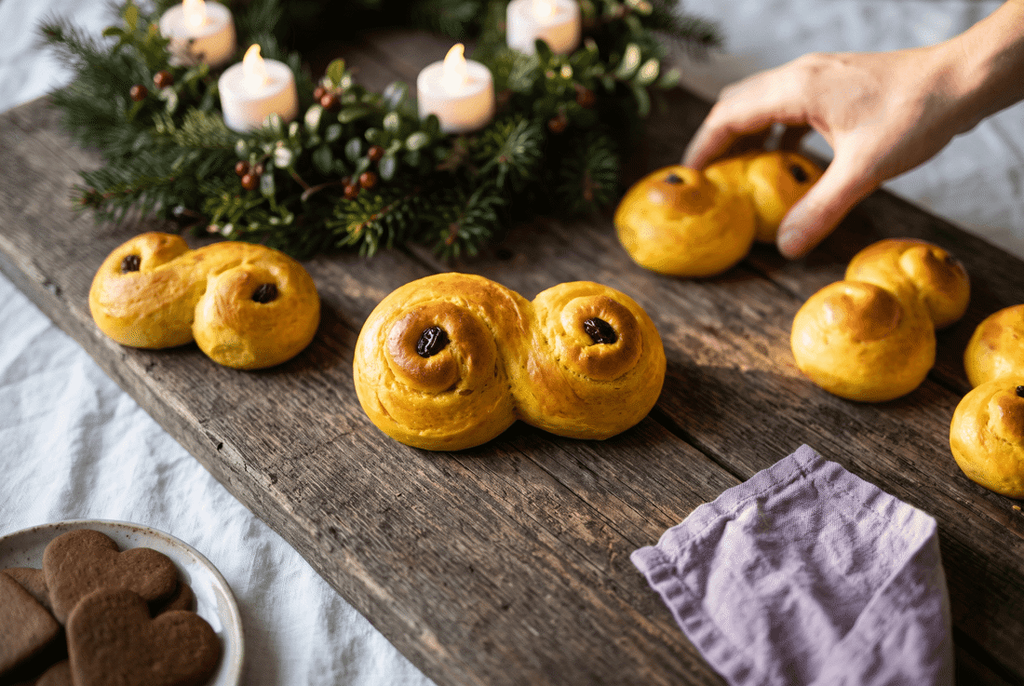
Lucia Day, celebrated on December 13, is a festival of light in the middle of the dark Swedish winter. A girl chosen as Lucia leads a procession wearing a white gown and a crown of candles, now usually electric, followed by attendants and star boys singing traditional songs.
Lucia processions take place in homes, schools, churches and public spaces across Sweden, and many families start the morning with saffron buns called lussekatter, gingerbread cookies and something warm to drink. Sweden’s modern public Lucia processions began in 1927, when a Stockholm newspaper chose an official Lucia for the city.
You can bring the spirit of Lucia into your home even if you’ve never seen a procession. A tray of golden saffron buns, a white linen tablecloth and a ring of flameless candles create a simple Lucia-inspired table for a cozy morning or afternoon gathering.
Lucia’s colors are white, gold and green, which pair beautifully with straw stars and evergreen. It’s a gentle, glowing way to mark the middle of December.
Lucia-Inspired Decor Ideas
- A ring of flameless candles: inspired by the Lucia crown.
- Saffron buns on a wooden board: golden lussekatter for a morning treat.
- A white linen tablecloth: simple and festive.
- Lingonberry or evergreen sprigs: classic touches of green and red.
- Gingerbread cookies: served on a pretty plate or stacked in a tin.
Homey Hygge Tip
Bake or buy a batch of saffron buns on December 13 and enjoy them with coffee or tea by candlelight or lamplight. It’s a lovely little ritual to mark the middle of the season, even if you don’t have Swedish roots.
Decorate With Gingerbread and Christmas Flowers
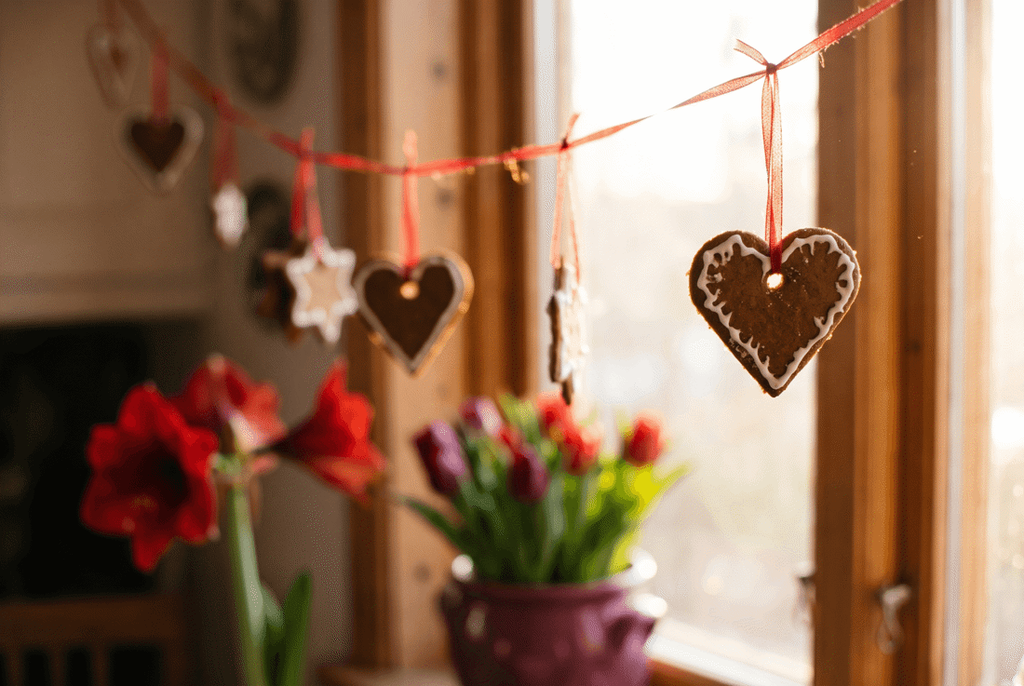
Gingerbread and Christmas flowers fill Swedish homes with color and wonderful smells. Pepparkakor hearts hung on string, pots of hyacinths and tall red amaryllis are classic touches that feel festive and fresh.
What flowers do Swedes decorate with at Christmas?
Popular Swedish Christmas flowers include fragrant hyacinths, tall amaryllis, red tulips and poinsettias, which Swedes call julstjärna, or Christmas star. They’re often grouped with moss, evergreen branches and lingonberry sprigs on windowsills and tables.
Gingerbread cookies, called pepparkakor, are part of nearly every Swedish Christmas. Thin, spiced and crisp, they’re cut into hearts, stars and goats, and many families hang them on string in windows or on the tree as edible decorations.
Flowers bring life and color to the dark weeks of December. Amaryllis can bloom for weeks with their tall, dramatic flowers, and pots of hyacinths are a classic windowsill decoration. Red tulips and white poinsettias add easy, cheerful color to a table or side table.
I tend to skip strongly scented flowers, since most florals aren’t for me, so amaryllis and red tulips are my favorite picks. If you love fragrance, hyacinths will fill your home with a sweet, springlike scent all season.
Swedish Christmas Flowers and Treats
- Amaryllis: tall, dramatic and long-lasting.
- Hyacinths: fragrant and classic on a windowsill.
- Red tulips: simple, cheerful color.
- Poinsettias (julstjärna): red, white or pink.
- Pepparkakor hearts: hung on string in a window or on the tree.
Homey Hygge Recommendation
Plant a few amaryllis or hyacinth bulbs in early December so they bloom in time for Christmas. Watching them grow through the month is part of the fun, and the flowers make a lovely, living decoration.
Finish With Red-and-White Textiles and Simple Greenery
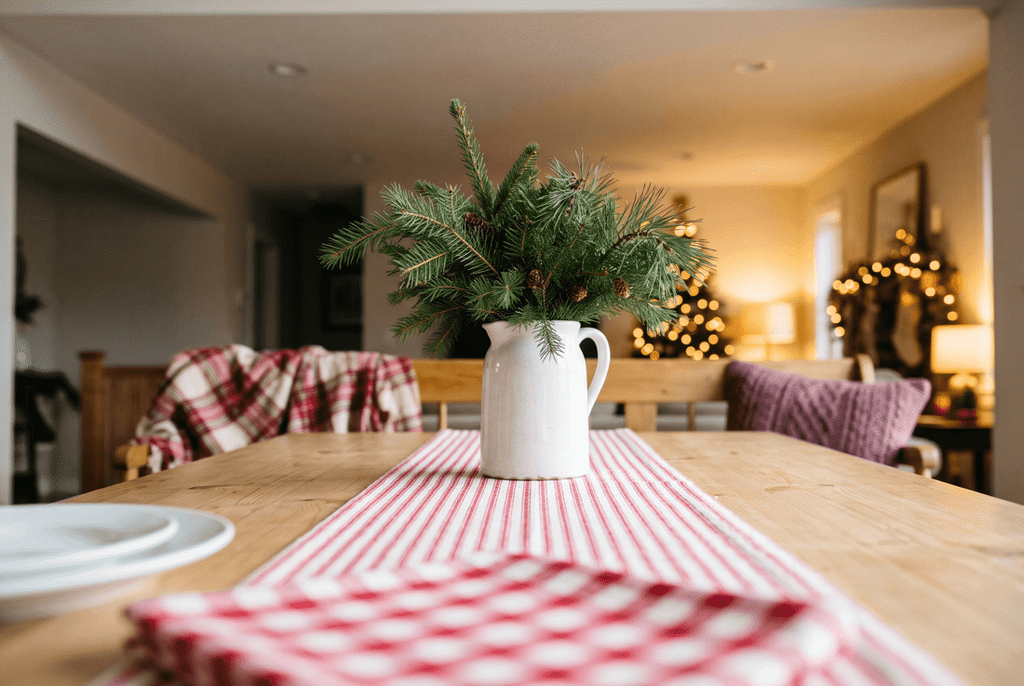
Red-and-white textiles and simple evergreen branches tie Swedish Christmas decorations together. Striped and checked linens, a cozy throw and a few branches of spruce make the whole room feel warm and festive.
What colors are traditional for a Swedish Christmas?
Red and white are the most traditional Swedish Christmas colors, often paired with evergreen green, warm gold and the natural tones of straw and wood. Burgundy and deeper reds are also popular in modern Swedish Christmas decor.
Textiles are an easy way to bring Swedish Christmas style into every room. A red-and-white striped or checked tablecloth, linen napkins, a woven runner and a cozy plaid throw on the sofa all echo the classic Swedish palette.
Evergreen is the finishing touch. Swedes often decorate with spruce and pine branches, moss and lingonberry sprigs, tucking them around candle arches, along the mantel or in simple vases. A few branches in a tall jug can make a room feel festive with almost no effort.
If red isn’t your favorite, you can keep the Swedish spirit with a different color. Plum and white, berry and cream or deep green and gold all pair beautifully with straw ornaments and Dala horses while still feeling cozy and Nordic.
Swedish Christmas Textiles and Greenery
- Red-and-white stripes or checks: tablecloths, runners and pillows.
- Linen napkins: simple, natural and festive.
- A cozy plaid throw: red, cream or a color you love.
- Spruce and pine branches: in vases or along the mantel.
- Moss and lingonberry sprigs: tucked around candle arches.
Homey Hygge Tip
Swap just two textiles for the season, such as a red-and-white table runner and one plaid throw. It brings Swedish Christmas color into the room instantly, and both pack away easily in January.
Frequently Asked Questions About Swedish Christmas Decorations
What are the most popular Swedish Christmas decorations?
The most popular Swedish Christmas decorations include straw julbock goats, straw stars and angels, glowing Advent stars, electric candle arches, tomte figures, Dala horses, gingerbread hearts and Christmas flowers like amaryllis, hyacinths and poinsettias.
Why do Swedes put stars and candles in their windows?
Swedes hang Advent stars and place candle arches in windows from the first Sunday of Advent to bring light to the long, dark winter. The tradition creates a warm, welcoming glow, and the star also recalls the star that guided the Wise Men.
What is the straw goat at Swedish Christmas?
The straw goat, or julbock, is one of Sweden’s oldest Christmas symbols. It was once linked to bringing gifts, and today it’s a decoration that stands under the tree or by the door, tied with red ribbon.
What is the difference between a tomte and a nisse?
They’re essentially the same folklore figure with different regional names. The tomte is the Swedish name, while nisse is used in Denmark and Norway, and both describe a small, bearded protector of the home who became tied to Christmas.
What colors are Swedish Christmas decorations?
Red and white are the most traditional colors, often paired with evergreen green, warm gold and natural straw and wood. Burgundy and deeper reds are also popular in modern Swedish Christmas decor.
When do Swedes put up Christmas decorations?
Many Swedes start decorating on the first Sunday of Advent, at the end of November or the beginning of December, when Advent stars and candle arches go up in the windows. The Christmas tree often goes up closer to Christmas.
Bring a Little Swedish Christmas Home
Swedish Christmas decorations are full of light, warmth and meaning. A glowing star in the window, a straw goat by the tree, a tomte on the shelf and a vase of red tulips can turn an ordinary December into something special.
You don’t need to do it all at once. Choose one or two traditions that make you smile, add your own colors and let your collection grow year by year, until your home glows a little more every Christmas.
When the holidays are over, our winter hygge decor ideas keep the cozy feeling going until spring.
Continue Creating Your Homey Hygge Home
For more ways to create a cozy Nordic Christmas, read Scandinavian Christmas Decorations: How to Get the Cozy Nordic Look.