
Cozy hobbies for homebodies are simple, screen-free activities that keep your hands busy and your mind calm: reading, coloring, knitting, sewing, quilting, baking, growing plants, journaling, puzzles and seasonal crafts. They give you something to look forward to at the end of the day and turn an ordinary evening at home into a small, restorative ritual.
Most of us end the day staring at a screen, and then wonder why we don’t feel rested. Hobbies that use your hands and hold your attention offer a different kind of break, one that lets your mind settle instead of scrolling. Research on crafts like knitting and coloring suggests they can help people feel calmer and happier, and many of us know that feeling instinctively from an afternoon spent making something.
The Homey Hygge approach is to choose hobbies that fit the life you actually have, not the one you’d have if every evening were free. Some of these take five minutes, some take a whole winter. This guide walks through ten cozy, screen-free hobbies, including beginner sewing and quilting, with simple ways to start each one at home.
TL;DR: Cozy Screen-Free Hobbies for Homebodies
The best cozy hobbies for homebodies are simple, screen-free and easy to pick up in the evening. Read a good book, try adult coloring, knit or crochet something soft, sew your own pillow covers or start a beginner quilt, grow plants indoors, bake something simple, keep a journal, work a puzzle or play a board game, and make seasonal paper crafts. Give your favorite hobby a cozy corner with good light and a basket of supplies, so it’s easy to start whenever you have a few quiet minutes.
10 Cozy Screen-Free Hobbies for Homebodies
You don’t need to take up all ten. Pick one that sounds relaxing, start small and see whether it becomes part of your evenings.
Cozy Hobby Ideas at a Glance
- Curl up with a good book.
- Try adult coloring.
- Knit or crochet something cozy.
- Take up sewing and beginner quilting.
- Grow something indoors.
- Bake something simple.
- Keep a journal or gratitude notebook.
- Work a puzzle or play a board game.
- Make seasonal paper crafts.
- Make room for your hobbies.
Curl Up With a Good Book
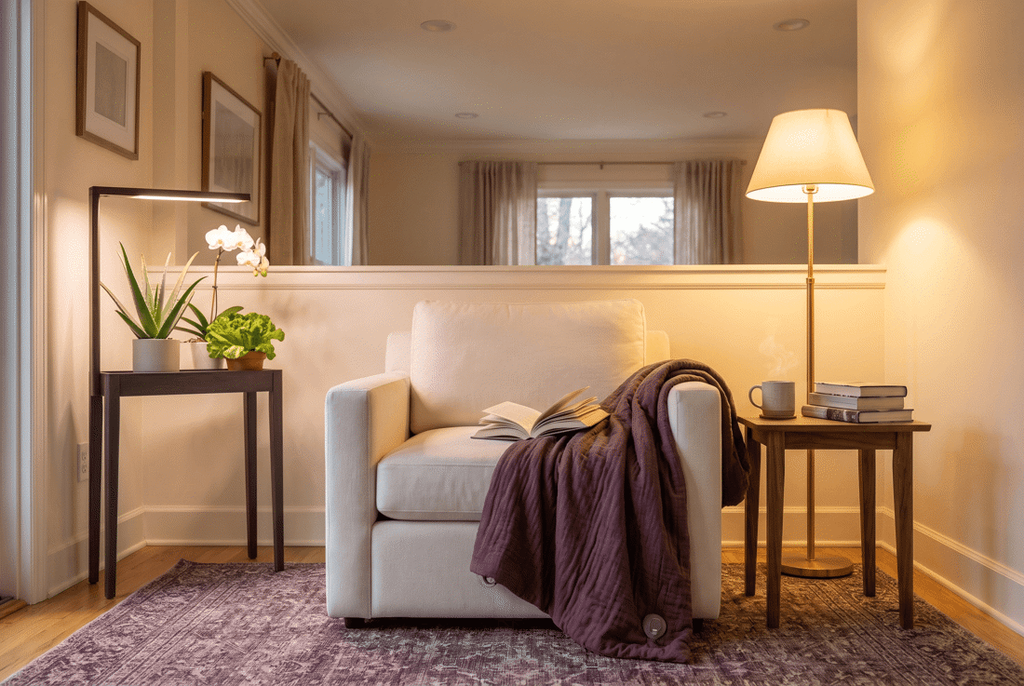
Reading is the classic cozy hobby, and for good reason. A good book, a soft blanket and a warm lamp can turn any quiet evening into something you look forward to all day.
How do I get back into reading for fun?
Start small and read what you genuinely enjoy, not what you think you should read. A few pages before bed, a chapter with your morning coffee or a short novel you can finish in a weekend makes reading feel like a treat instead of a chore.
Reading is one of the easiest hobbies to start because it asks for almost nothing: a book, a comfortable seat and a little light. It’s also one of the best ways to step away from screens, since a paper book doesn’t ping you with notifications halfway through a chapter.
If you’ve fallen out of the habit, give yourself permission to read lighter, cozier books. Mysteries, comfort reads, memoirs and seasonal novels all count. So do cookbooks and picture-heavy home books you flip through with tea.
The library is a homebody’s best friend, too. Most libraries let you place holds online and pick them up on your schedule, and many offer free e-books and audiobooks for nights when your eyes are tired. In our home, my reading nook has a comfy chair, a lamp, a heated blanket and a plant stand whose light gives the corner a soft glow, and having that spot ready makes it much easier to actually sit down and read. For ideas on creating your own, see our guide to How to Create a Cozy Reading Nook in Any Space.
Easy Ways to Read More
- Keep a book where you relax: on the nightstand, the sofa arm or in your nook.
- Read before bed instead of scrolling: even ten minutes counts.
- Use the library: holds, e-books and audiobooks for free.
- Choose comfort reads: mysteries, cozy fiction and seasonal stories.
- Join or start a book club: monthly company and a gentle deadline.
Homey Hygge Tip
Try a phone-free reading hour one evening this week. Put your phone in another room, make a warm drink and read until your tea is gone. It’s a small ritual that makes the whole evening feel slower.
Try Adult Coloring
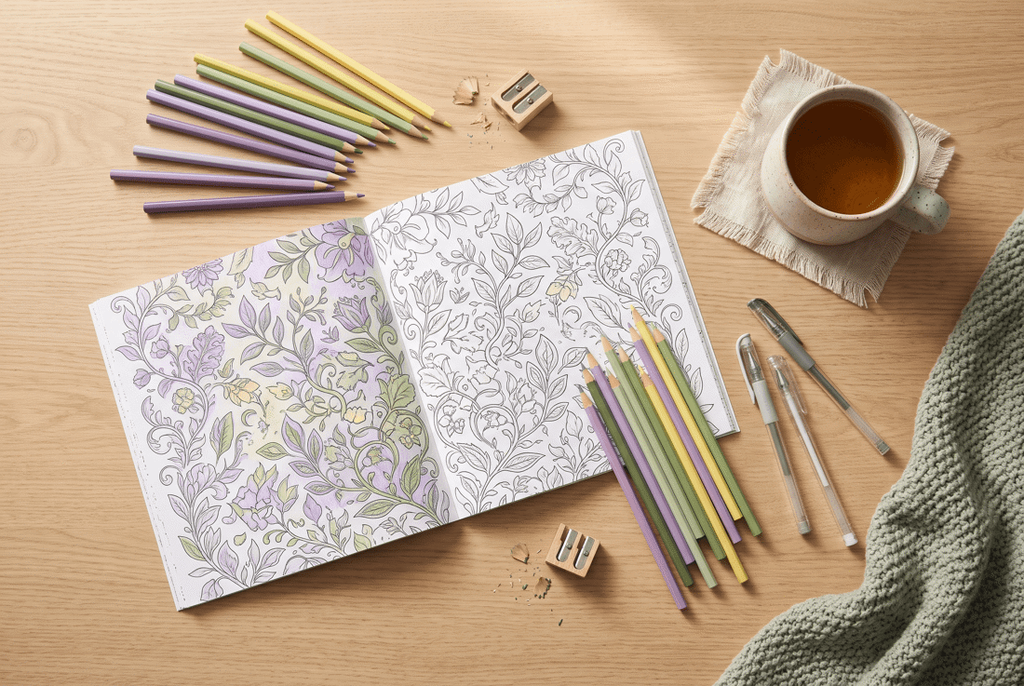
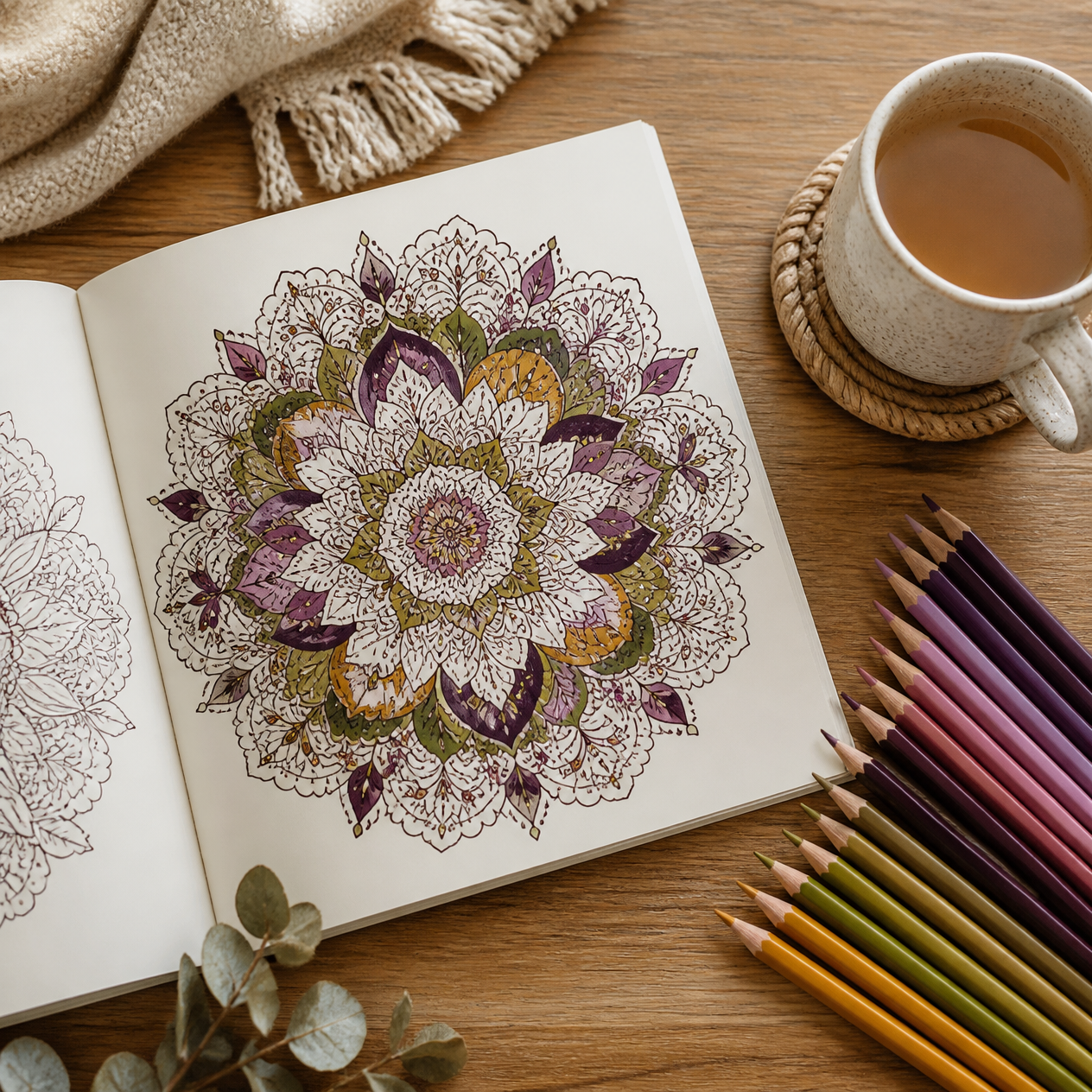
Coloring isn’t just for kids. Adult coloring books offer a relaxing, creative way to unwind, and you don’t need any artistic skill to enjoy them.
Does coloring really help you relax?
Research suggests it can. In a 2005 study by Nancy Curry and Tim Kasser at Knox College, students who spent 20 minutes coloring a structured design, such as a mandala or plaid pattern, reported lower anxiety, while those who drew freely on a blank page did not.
Coloring gives your hands something gentle to do and your mind a single, calm thing to focus on. Choosing colors and filling in shapes is absorbing without being demanding, which makes it a lovely way to wind down after a busy day.
There are adult coloring books for almost every taste: cozy home scenes, botanicals, seasonal designs, animals, patterns and mandalas. Structured designs seem to be especially calming for many people, because the lines do the hard work and you get to enjoy the color.
You only need a few supplies to start. Colored pencils are forgiving and easy to blend, gel pens add bright pops of color, and fine-tip markers give bold results. A small cup or pouch keeps everything together so you can color on the sofa, at the kitchen table or in bed.
Coloring Supplies to Start With
- A coloring book you love: cozy scenes, florals or patterns.
- Colored pencils: soft, blendable and forgiving.
- Gel pens or fine-tip markers: for brighter details.
- A pencil sharpener and eraser: small but essential.
- A pouch or cup: to keep supplies together and portable.
Homey Hygge Recommendation
Turn coloring into an evening ritual: warm lamp on, cozy music playing, a mug of tea and one page at a time. You don’t have to finish a page in one sitting, and half the fun is coming back to it.
Knit or Crochet Something Cozy
Knitting and crochet combine soothing, repetitive motion with the satisfaction of making something soft you can actually use. Once you learn a few basic stitches, you can work on a project almost anywhere.

Is knitting or crochet easier for beginners?
Both are very learnable. Crochet uses a single hook and many beginners find it quicker to start and easier to fix mistakes, while knitting uses two needles and creates a smoother, drapier fabric. Try whichever project you’re most excited to make.
There’s research behind the calm many knitters describe. A 2013 international survey of more than 3,500 knitters, published in the British Journal of Occupational Therapy, found a significant link between how often people knitted and how calm and happy they felt. Many respondents said they knitted specifically for relaxation and stress relief.
The rhythm is part of the appeal. Once a stitch becomes familiar, your hands keep working while your mind settles, which makes knitting and crochet wonderful companions to a podcast, an audiobook or quiet conversation with family.
Start with a simple, satisfying project: a scarf, a dishcloth, a simple hat or a granny square. A chunky yarn and larger needles or hook make stitches easier to see and help projects grow quickly, which keeps you motivated.
If yarn isn’t your thing, other kinds of needlework offer the same calm. Embroidery and cross-stitch need only a hoop, a needle, floss and fabric, and beginner kits include everything you need to stitch a small design in an evening or two.
Easy First Knitting and Crochet Projects
- Dishcloths: small, useful and quick to finish.
- A simple scarf: perfect for practicing one stitch.
- Granny squares: classic crochet that can grow into a blanket.
- A chunky beanie: fast with thick yarn.
- A beginner embroidery or cross-stitch kit: everything included for a small first design.
Homey Hygge Tip
Keep a small project bag by your favorite seat with yarn, needles or a hook, scissors and your pattern. When everything’s ready, it’s easy to pick up a few rows during a show or while you wait for the kettle.
Take Up Sewing and Beginner Quilting
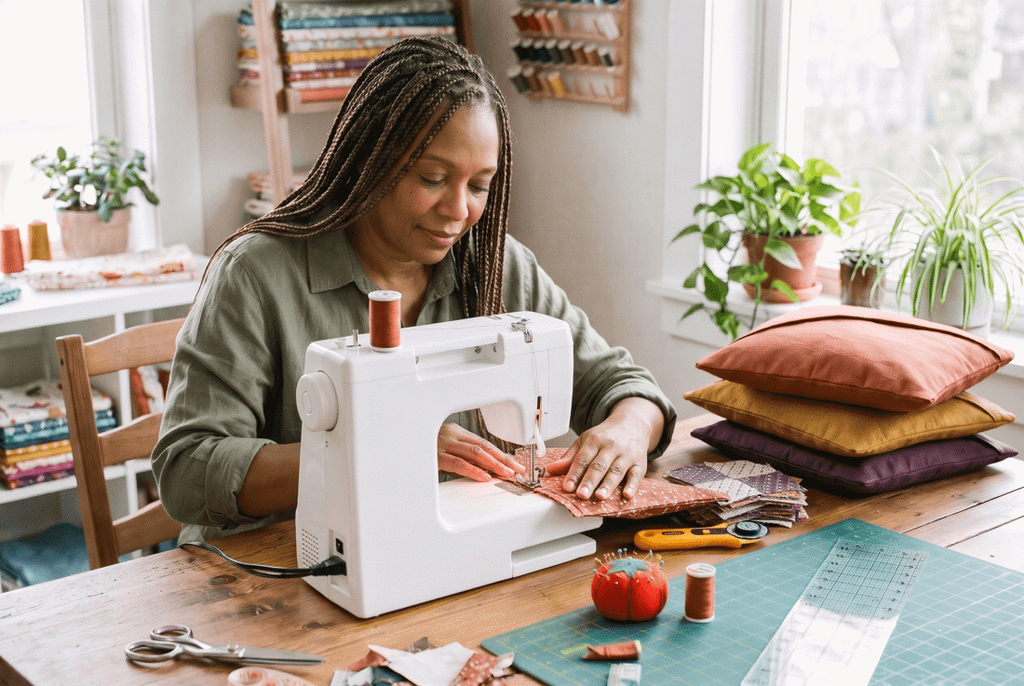
Sewing and quilting let you make cozy things for your home with your own hands, from simple pillow covers to a quilt you’ll keep for years. Both start with straight seams, a little patience and fabric you love.
What should I sew first as a beginner?
An envelope pillow cover is one of the best first projects. It uses straight seams, needs no zipper or buttons and takes about an evening, and you end up with something you’ll actually use. Once you’re comfortable, a small quilt is a natural next step.
Sewing is wonderfully useful for a cozy home. Pillow covers, table runners, napkins and quilts are all within reach of a beginner, and making your own means you can choose exactly the colors and patterns you want instead of settling for what’s in stores. It’s also a gentle, absorbing hobby in that measuring, pinning and sewing a straight line asks just enough of your attention to quiet everything else.
Sew Your Own Envelope Pillow Covers
An envelope pillow cover is made from three pieces of fabric, one square front and two rectangular back panels that overlap, so you can slide the pillow insert in and out. Many beginner tutorials use these measurements for a standard 18-inch insert with a half-inch seam allowance:
- Front: one square 1 inch larger than your insert (19 by 19 inches for an 18-inch pillow).
- Back: two rectangles the same height as the front, each about 12 to 13 inches wide, so they overlap by roughly 5 inches.
- Hem the back panels: fold one long edge of each back piece under twice by about a quarter inch, press and stitch.
- Layer and sew: place the front right side up, then both back panels right side down, hemmed edges overlapping in the middle, pin and sew all the way around.
- Turn and fill: clip the corners, turn the cover right side out, poke the corners out and slip in your insert.
Cotton, linen and cotton canvas are easy fabrics to start with. Once you’ve made one cover, you can make a whole set for each season in an afternoon. For more on choosing pillows and textiles, see our guide to The Essential Textiles Every Hygge Home Needs.
Start a Beginner Quilt
Quilting can look intimidating, but a first quilt is really just squares of fabric sewn together, layered and stitched. A quilt is made from three layers: the pieced top, a fluffy middle layer called batting and a backing fabric underneath, often called the quilt sandwich.
- Start small: a table runner, baby quilt or lap quilt made from simple squares.
- Gather the basics: a rotary cutter, a self-healing cutting mat and a long acrylic ruler make cutting accurate and fast.
- Sew a consistent quarter-inch seam: most quilt patterns use a quarter-inch seam allowance, and keeping it steady helps your squares line up.
- Build the sandwich: cut the backing and batting a few inches larger than the quilt top on every side, then smooth and pin the three layers together.
- Quilt and bind: stitch simple straight lines through all three layers, then finish the edges with binding.
A lap quilt is a realistic first goal, and some quilters say it takes most beginners a few weekends rather than months. It won’t be perfect, and that’s part of its charm. A finished quilt with a few wobbly seams will still keep someone warm on the sofa.
Sewing and Quilting Essentials
- A basic sewing machine: or a needle and thread for hand-sewing.
- Fabric scissors or a rotary cutter: kept just for fabric.
- A cutting mat and acrylic ruler: for straight, accurate cuts.
- Pins or sewing clips: to hold layers in place.
- An iron: pressing seams makes everything look neater.
Homey Hygge Recommendation
Make your first pillow cover from a fabric you already love, even an old tablecloth or a favorite shirt. It takes the pressure off getting it perfect, and the finished cover will mean more to you every time you see it on the sofa.
Grow Something Indoors
Caring for plants indoors is a calm, rewarding hobby that brings a little life and green into your home all year. A few easy plants on a windowsill or plant stand give you something small to tend every day.
What are the easiest plants to grow indoors?
Pothos, snake plants, aloe and spider plants are forgiving choices that tolerate a range of light and the occasional missed watering. Herbs like basil and mint are fun if you have a sunny window, and regrowing scraps like lettuce or green onions in water is a simple, satisfying experiment.
There’s something quietly grounding about checking on a plant, noticing a new leaf and giving it a drink of water. It’s a hobby that rewards small, regular attention rather than big chunks of time, which makes it a natural fit for homebodies.
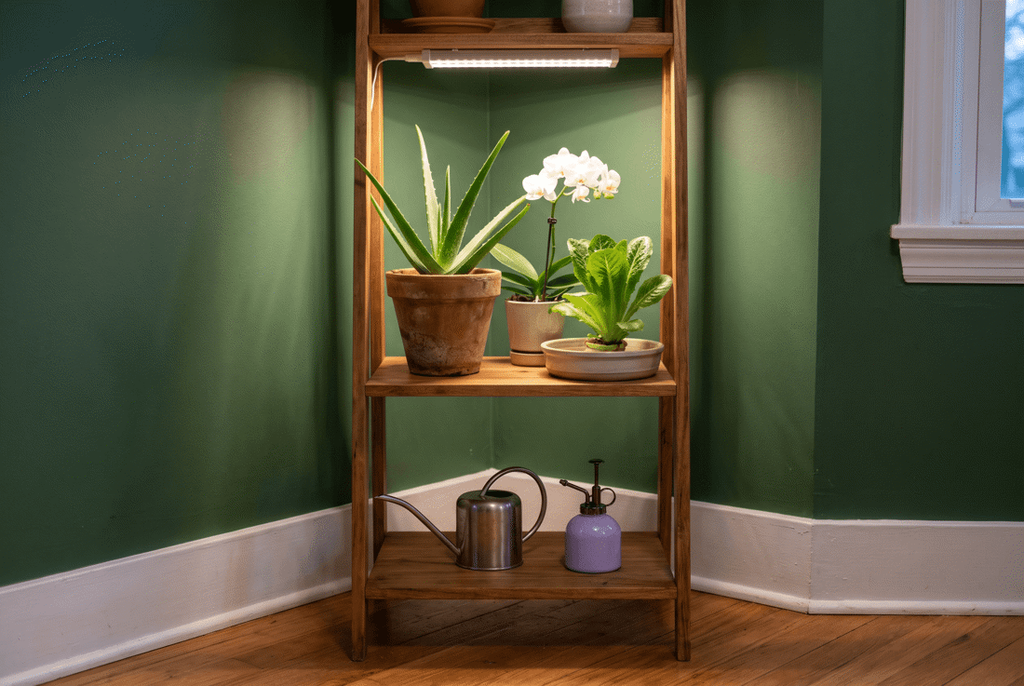
My own plant stand has become one of my favorite corners. I grow an aloe and an orchid there and even regrow lettuce under its grow light, and when the light comes on in the evening, it gives the whole corner a cozy glow. It’s proof that a small setup can be both useful and beautiful.
If your home doesn’t get much natural light, a simple grow light can make a big difference, especially in winter. Start with one or two easy plants, learn what they need and add more as your confidence grows.
Easy Indoor Growing Ideas
- Low-care houseplants: pothos, snake plants and spider plants.
- Aloe or succulents: for a sunny windowsill.
- Kitchen herbs: basil, mint or parsley near the brightest window.
- Regrown scraps: lettuce or green onions in a shallow dish of water.
- A plant stand with a grow light: for darker rooms and winter months.
Homey Hygge Tip
Pick one day a week as plant day. Water, wipe dusty leaves and turn each pot a little toward the light. It’s a calm ten-minute ritual that keeps your plants happy and gives you a reason to slow down.
Bake Something Simple
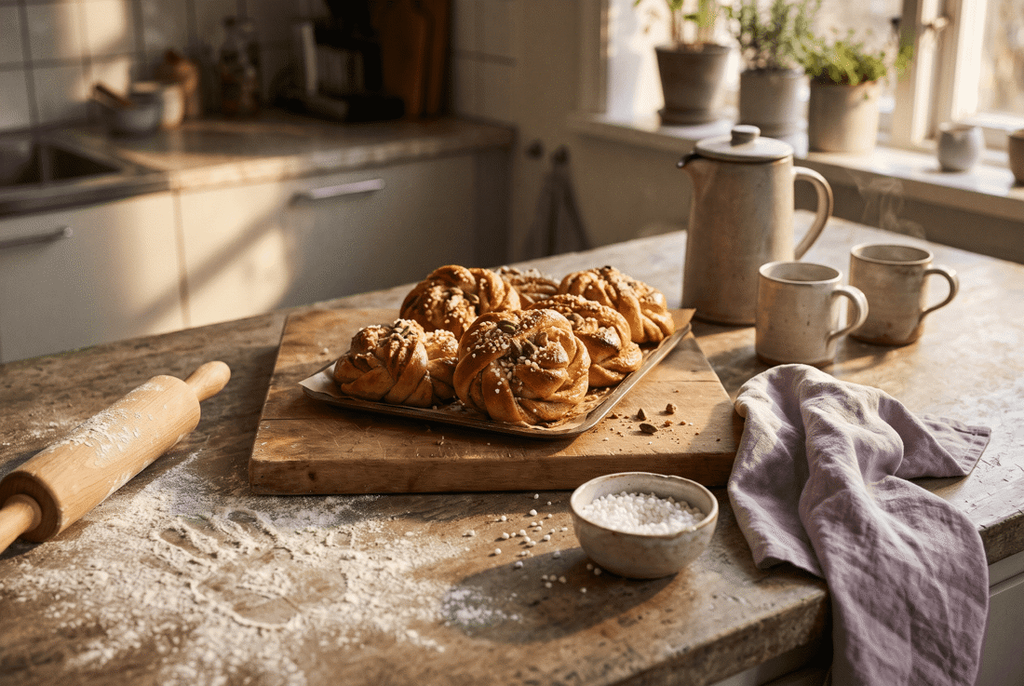
Baking fills your home with warmth and wonderful smells and gives you something delicious to share. A simple loaf, a batch of cookies or a pan of cinnamon rolls can turn an ordinary afternoon into a cozy occasion.
What should I bake on a cozy day at home?
Choose forgiving recipes that make the house smell amazing: banana bread, chocolate chip cookies, cinnamon rolls, scones, simple soda bread or an apple crumble. Quick breads and cookies are especially beginner-friendly because they don’t need special equipment or rising time.
Baking is a hobby for all the senses. Measuring and stirring keep your hands busy, the oven warms the kitchen, and the smell of cinnamon or fresh bread makes a home feel instantly welcoming. It’s also one of the easiest hobbies to share with family, friends or neighbors.
If you want to dip into a little Scandinavian coziness, try cardamom buns, cinnamon rolls or simple spiced cookies. They pair perfectly with a pot of coffee or tea and a slow afternoon.
You don’t have to be an expert baker. Start with a recipe you’ve made before or one with lots of good reviews, and focus on enjoying the process rather than achieving perfection. A slightly lopsided loaf still tastes like home.
Cozy Bakes to Try
- Banana bread: forgiving, quick and great for using ripe bananas.
- Cinnamon or cardamom buns: warm, spiced and very Scandinavian.
- Chocolate chip cookies: a classic for sharing.
- Scones: quick to make and perfect with tea.
- Apple crumble: simple, seasonal and comforting.
Homey Hygge Recommendation
Make a slow Sunday bake a regular ritual. Put on music, bake one recipe from start to finish and save a little to share with someone, whether that’s a neighbor, a friend or the people in your own home.
Keep a Journal or Gratitude Notebook
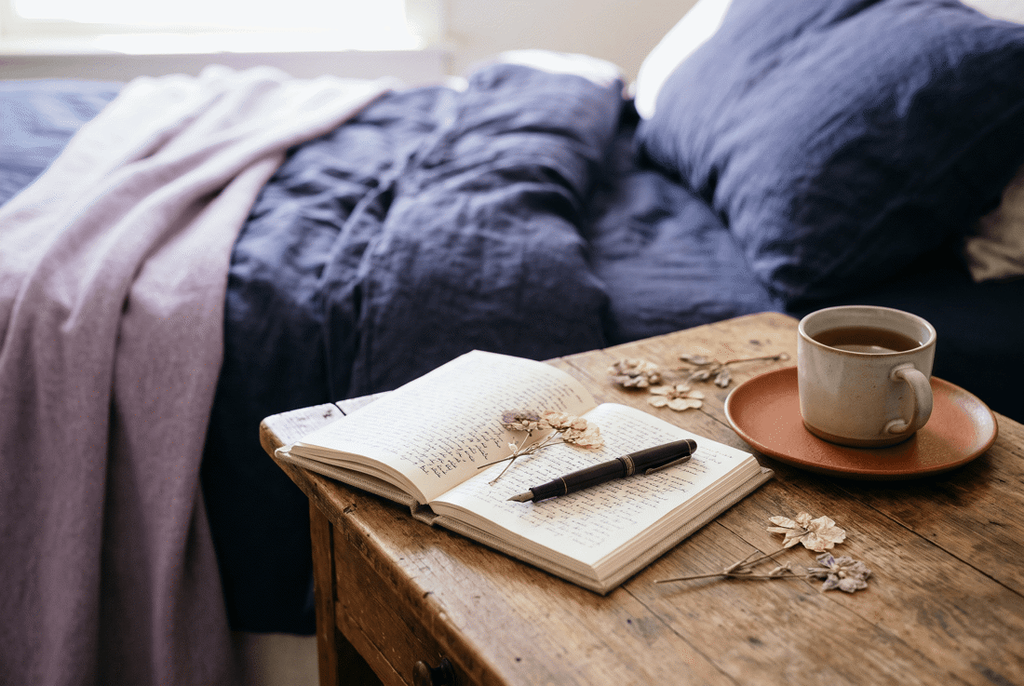
Journaling gives you a quiet place to slow down, sort through your thoughts and notice the good moments in your days. All you need is a notebook, a pen and a few minutes.
What should I write in a journal if I’m not sure where to start?
Try writing three good things from your day, a quick note about how you’re feeling or a simple prompt, like the best thing you ate this week or something that made you laugh. There’s no wrong way to do it, and a few lines are plenty.
Journaling is one of the simplest screen-free hobbies there is. Writing by hand slows your thoughts down, and putting the day on paper can help you let it go before bed. Over time, a journal also becomes a lovely record of your seasons, routines and small joys.
If a blank page feels intimidating, a gratitude notebook is an easy place to start. Writing down a few things you’re thankful for each evening keeps the practice short and gently shifts your attention toward what went right.
You can make journaling as creative as you like. Some people add sketches, pressed flowers, ticket stubs or photos, which turns a journal into a mix of diary and scrapbook.
Journaling Ideas to Try
- Three good things: a quick daily gratitude list.
- A seasonal journal: notes on what you’re enjoying each season.
- A reading log: books you’ve read and favorite lines.
- A memory scrapbook: photos, tickets and little keepsakes.
- Simple prompts: one question a night when you’re stuck.
Homey Hygge Tip
Keep your journal and a pen on your nightstand or in your reading nook. When it’s always within reach, writing a few lines before bed becomes a habit instead of something you mean to do.
Free 7-Day Printable
Make Your Home Feel Cozier in 7 Days
A cozy hobby is a lovely way to slow down at home. The free 7-Day Homey Hygge Home Reset walks you through one small, doable step a day to make your whole home feel warmer, calmer and more like you, and none of it starts with shopping.
Cozy emails, no clutter. Unsubscribe anytime.
Work a Puzzle or Play a Board Game
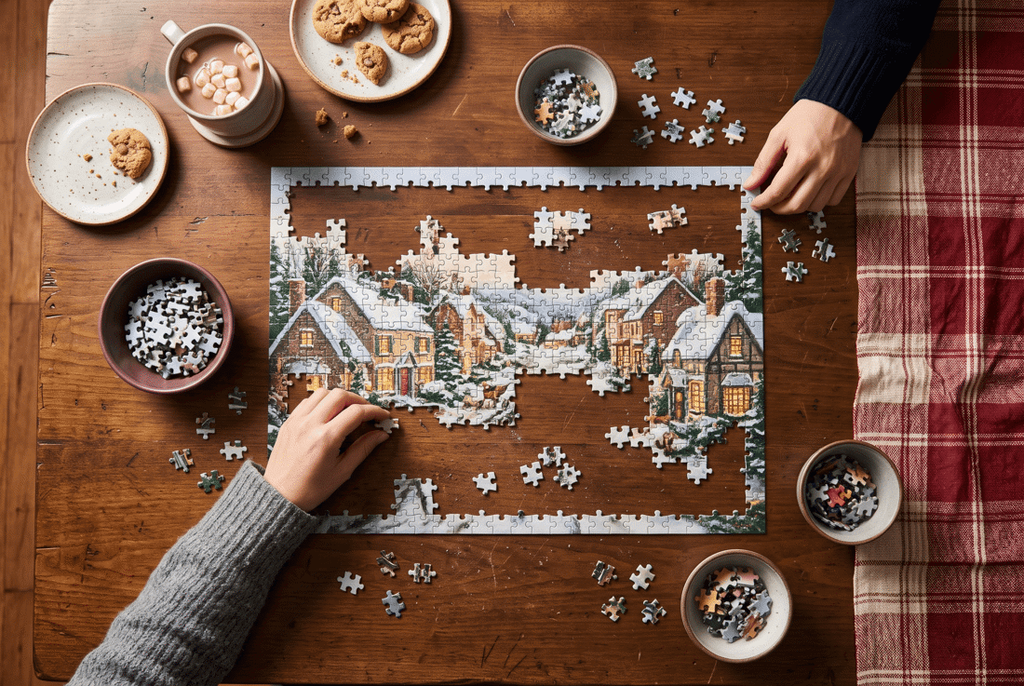
Jigsaw puzzles and board games are cozy, screen-free ways to spend an evening, alone or with the people you love. They’re absorbing, a little challenging and perfect for slow winter nights.
Are jigsaw puzzles a good hobby for adults?
Yes. A jigsaw puzzle gives your mind a calm, focused task and offers small wins every time a piece clicks into place. It’s easy to work on for ten minutes or two hours, and leaving it out invites everyone in the house to add a piece as they pass.
There’s a special kind of coziness to a puzzle spread across the dining table on a winter weekend. You can work on it alone with a podcast, or it can become a slow, shared project where family members wander over and help without any planning.
Board games and card games bring the same screen-free togetherness to an evening. Simple classics, cooperative games where everyone plays on the same team and quick card games all make for laughter and conversation, which is exactly what hygge is about.
Choose puzzles with images you’d enjoy looking at for a while: cozy villages, gardens, bookshelves, food or vintage art. A 500-piece puzzle is a friendly place to start, while 1,000 pieces makes a satisfying weekend project.
For more ways to make winter evenings feel special, see our winter hygge ideas guide.
Puzzle and Game Night Ideas
- A 500-piece puzzle: a friendly first project.
- A 1,000-piece puzzle: for a slow winter weekend.
- Cooperative board games: everyone works together.
- Classic card games: quick, simple and great for any age.
- A puzzle mat or board: so you can clear the table without losing progress.
Homey Hygge Tip
Set up a puzzle in a spot people pass every day, with a lamp nearby and a bowl of snacks. You’ll be surprised how often someone stops to add a piece, and it quietly brings the household together.
Make Seasonal Paper Crafts
Paper crafts are simple, inexpensive and wonderfully seasonal. Paper stars, woven hearts, garlands and cards add handmade charm to your home and make a cozy activity for a quiet evening or a crafty afternoon with friends.
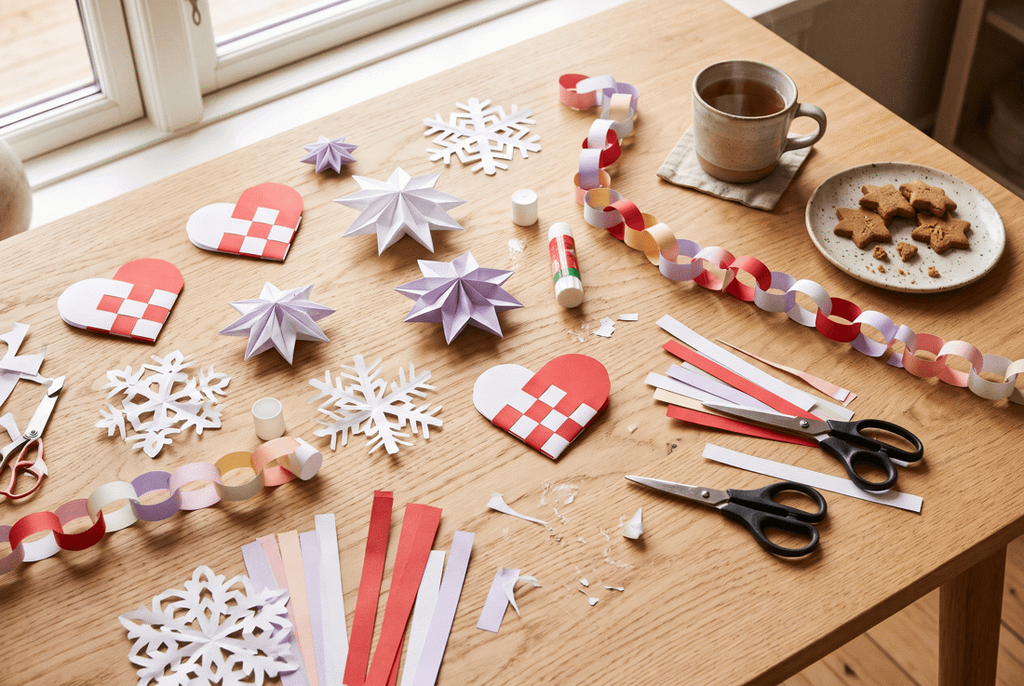
What are easy paper crafts for adults?
Woven paper hearts, folded paper stars, paper garlands, handmade cards and simple paper snowflakes are all easy to start with. You only need paper, scissors, glue and a little patience, and most projects take less than an hour.
Paper crafts are a lovely way to mark the seasons. In winter, you might cut snowflakes or weave red-and-white Danish hearts. In spring, make paper flowers. In fall, try a garland of paper leaves. Each season gives you a fresh, easy project and something new to decorate with.
Many Scandinavian families set aside a Christmas craft day in December just for making paper decorations together. It’s a sweet tradition to borrow, and it turns crafting into a cozy social event. For more holiday ideas, see our guide to Scandinavian Christmas Decorations: How to Get the Cozy Nordic Look.
Paper crafting is also an easy hobby to share with kids or grandkids, since the supplies are simple and forgiving and the results go straight onto the tree, the window or the fridge.
Easy Seasonal Paper Crafts
- Woven paper hearts: a classic Danish Christmas craft.
- Folded paper stars: for windows, garlands or the tree.
- Paper garlands: leaves in fall, snowflakes in winter, flowers in spring.
- Handmade cards: birthdays, holidays or just because.
- Paper snowflakes: simple, cheerful and beautiful in a window.
Homey Hygge Recommendation
Host a small craft evening with a friend or family member. Set out paper, scissors and glue, make cocoa or tea and see what you create together. The decorations are a bonus; the time together is the point.
Make Room for Your Hobbies
The easiest hobbies to keep up are the ones that are ready to go. A cozy spot with good light, a comfortable seat and a basket of supplies makes it simple to pick up your hobby whenever you have a few quiet minutes.
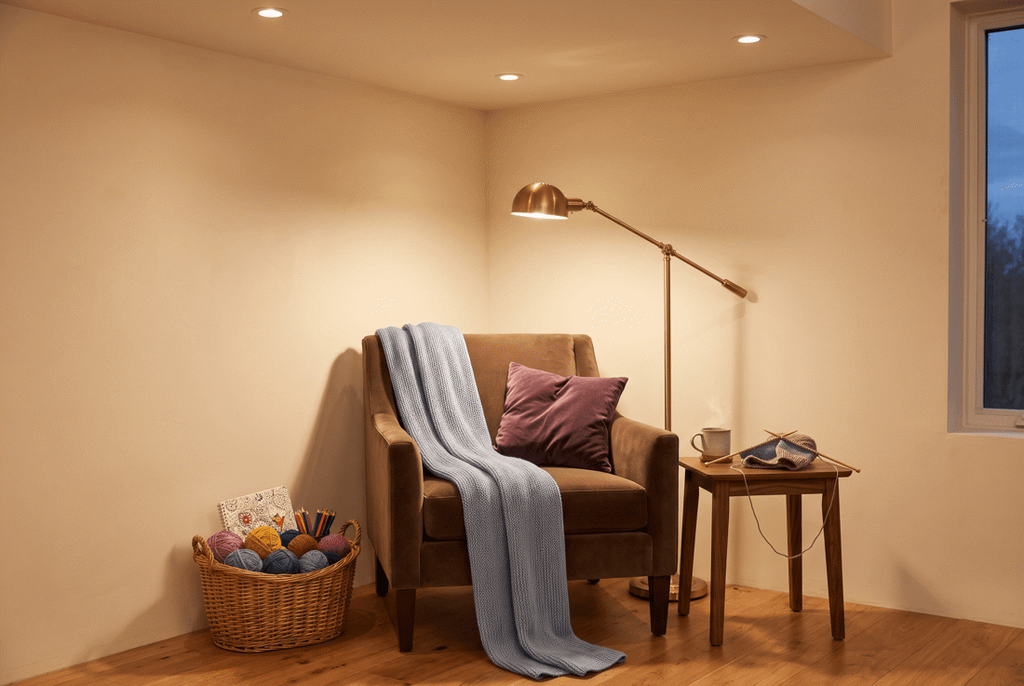
How do I create a cozy hobby space at home?
Choose a comfortable seat with a good lamp nearby, then keep your supplies in a basket, bag or cart within reach. You don’t need a dedicated craft room; a corner of the living room or bedroom works beautifully as long as everything is easy to grab and put away.
One of the biggest obstacles to a hobby isn’t time; it’s setup. If your yarn is in the closet, your coloring books are in a drawer and your puzzle is in the garage, it’s easier to reach for your phone instead. Keeping your current hobby ready and visible makes it the easy choice.
Good light matters, too. A lamp you can aim at your work makes reading, coloring, sewing and knitting more comfortable, especially in the evening. A warm, dimmable lamp lets you go from bright enough to see stitches to soft enough to relax.
Your hobby corner can be part of your reading nook, a spot at the kitchen table or a chair by the window. The goal is a place that invites you to sit down and make something, even if it’s just for a few minutes.
Hobby Corner Essentials
- A comfortable seat: a chair or sofa corner you love sitting in.
- A good lamp: warm, adjustable light aimed at your work.
- A basket or bag: to keep supplies together and portable.
- A small side table or tray: for tea, tools and your project.
- A soft throw: because every cozy hobby is better under a blanket.
Homey Hygge Tip
Keep just one or two current projects out at a time and store the rest. A basket with only what you’re working on now feels inviting, while an overflowing craft pile can feel more like a to-do list.
Frequently Asked Questions About Cozy Hobbies for Homebodies
What is a cozy hobby?
A cozy hobby is a relaxing, low-pressure activity you can enjoy at home, usually with your hands, like reading, knitting, coloring, baking or puzzles. It helps you slow down and feel comfortable rather than rushed or competitive.
What are good hobbies for homebodies?
Good hobbies for homebodies are ones you can enjoy comfortably at home, like reading, adult coloring, knitting or crochet, sewing and quilting, baking, growing indoor plants, journaling, jigsaw puzzles, board games and seasonal paper crafts.
What are relaxing screen-free hobbies?
Relaxing screen-free hobbies use your hands and hold your attention gently: knitting, crochet, coloring, puzzles, sewing, baking and journaling are all popular choices. Research on knitting and structured coloring suggests these kinds of activities can help people feel calmer.
What is the easiest hobby to start at home?
Reading and adult coloring are two of the easiest, since they need very few supplies and no special skills. A library card or a coloring book and a set of pencils is all it takes to begin.
Is quilting hard for beginners?
Quilting is more approachable than it looks. A first quilt made from simple squares mostly requires accurate cutting and a consistent quarter-inch seam. Starting with a small project, like a table runner or lap quilt, makes it manageable.
What can I sew as a beginner?
Envelope pillow covers, cloth napkins, tote bags and simple table runners are great first sewing projects. They use straight seams and finish quickly, so you get something useful while you build your skills.
How do I make time for hobbies?
Keep your hobby ready to go in a basket by your favorite seat, and replace a bit of evening screen time with it. Even ten or fifteen minutes a day adds up, and having supplies within reach makes it much easier to start.
Make Your Evenings Something to Look Forward To
The coziest evenings at home aren’t spent scrolling. They’re spent with a good book, a half-finished quilt, a puzzle on the table or a batch of cookies cooling on the counter. Cozy hobbies give your hands something to do and your mind a chance to rest.
You don’t need to master any of these right away. Pick one that sounds relaxing, gather a few simple supplies and give it a quiet evening this week. If it feels good, keep going. If it doesn’t, try the next one. The right hobby is simply the one you look forward to.
Continue Creating Your Homey Hygge Home
Every cozy hobby is better with a comfortable spot to enjoy it. Learn how to create one in How to Create a Cozy Reading Nook in Any Space.