
The essential textiles every hygge home needs are the soft pieces you actually touch every day: a generous throw blanket, pillows you can sink into, a rug underfoot, curtains that soften the windows, bedding you love climbing into and a few linens for the table. Together, they make a home feel warm, quiet and inviting long before you add a single decoration.
Textiles matter so much in hygge because comfort is something you feel, not just something you see. A room can be beautifully lit and thoughtfully styled, but if the sofa is slippery, the floor is cold and the windows echo, it never quite feels cozy. Soft layers absorb sound, warm up hard surfaces and invite people to slow down and stay a while.
The Homey Hygge approach is to build your textile collection slowly, starting with the pieces you’ll use most. You don’t need to replace everything at once or follow a neutral color scheme. This guide walks through ten essential textiles, what to look for in each and how to make them feel like you.
TL;DR: The Essential Textiles Every Hygge Home Needs
Every hygge home is built on a few essential textiles: a soft, generously sized throw blanket, supportive pillows with good inserts, a rug that grounds your seating, curtains hung high and wide, and bedding that feels good against your skin. Choose natural fibers like wool, cotton and linen where you can, mix in textures like knits, velvet and bouclé, and dress the table with simple linens. Finish with wearable comfort like wool socks and a soft robe, and swap a few textiles with the seasons so your home always feels fresh and warm.
10 Essential Textiles for a Cozy Hygge Home
You don’t need all ten at once. Start with the textile that would make the biggest difference in the room you use most, and build from there.
Essential Hygge Textiles at a Glance
- Start with a soft, generous throw blanket.
- Add pillows that invite you to sink in.
- Ground each room with a rug.
- Soften windows with curtains.
- Choose bedding you love climbing into.
- Bring in natural fibers.
- Mix textures like knits, velvet and bouclé.
- Dress the table with simple linens.
- Make comfort wearable.
- Swap textiles with the seasons.
Start With a Soft, Generous Throw Blanket
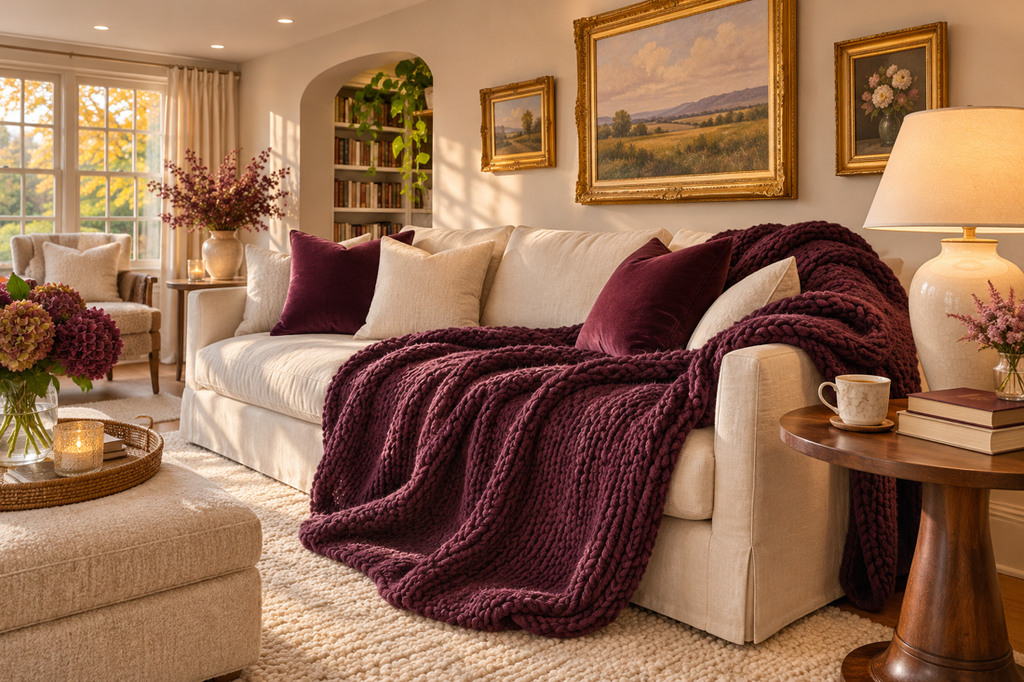
A soft throw blanket is the single most essential textile in a hygge home. It turns any seat into a cozy spot, adds color and texture to a room and invites everyone to curl up and stay a while.
What size throw blanket is best for curling up?
Many throws are about 50 by 60 inches, which works for draping over a chair or covering your lap. If you like to curl up fully under a blanket, or you’re tall, look for a larger throw around 60 by 80 inches so it actually covers you from shoulders to toes.
A throw is the easiest way to make a room feel instantly cozier. Draped over the arm of the sofa, folded at the foot of the bed or tucked into a basket beside a reading chair, it quietly says “you’re welcome to get comfortable here.”
Size matters more than most people think. I’m tall, so I always look for long blankets that actually cover me when I curl up, and I keep several big, soft ones around the house in chunky knit, chenille and crochet. A few even have fun designs, like dogs or coffee mugs, because a cozy home should make you smile, too.
When you choose a throw, think about how it feels first and how it looks second. A beautiful blanket that’s scratchy or too small to cover your feet will end up folded and ignored. For ideas on arranging throws with your pillows, see our guide to How to Layer Blankets and Pillows for a Cozy Hygge Home.
Throw Blankets Worth Considering
- Chunky knit: big texture and a cozy, handmade look.
- Chenille: velvety soft and wonderful to curl up under.
- Wool or wool blend: warm, breathable and long-lasting.
- Cotton waffle or woven: lighter weight for warmer months.
- Faux fur or sherpa: extra plush for winter evenings.
Homey Hygge Tip
Keep at least one throw within arm’s reach of every main seat in your living room. If you have to get up and go find a blanket, you’re far less likely to use it.
Add Pillows That Invite You to Sink In
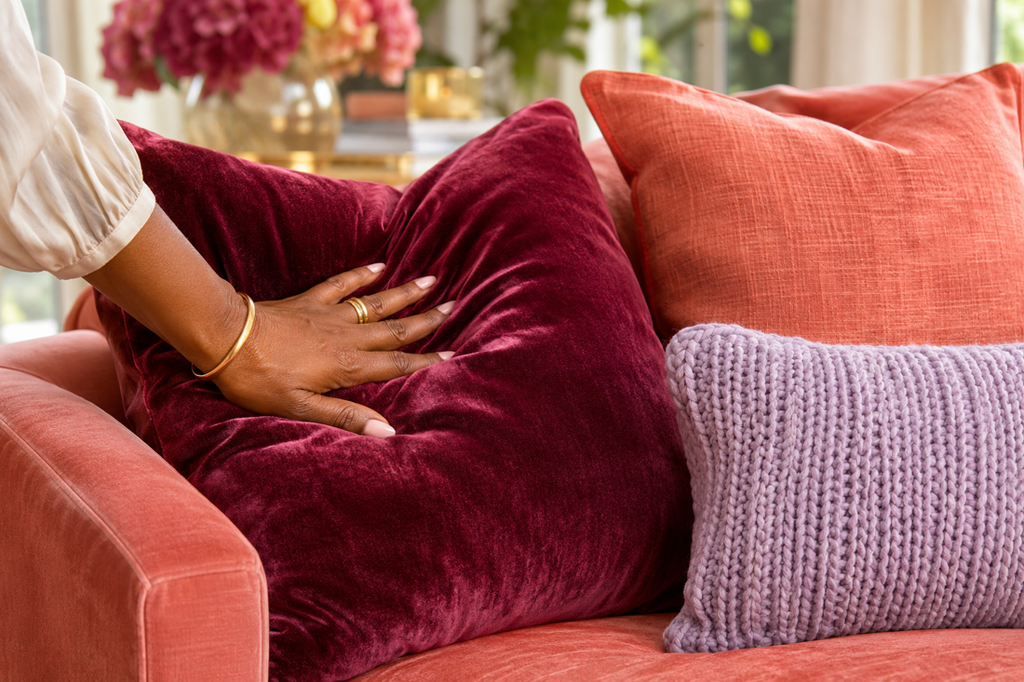
Pillows add comfort, support and personality to sofas, chairs and beds. The best hygge pillows feel full and huggable, with inserts that hold their shape and covers in colors and textures you love.
What pillow inserts feel the most comfortable?
Feather or down-blend inserts feel soft and squishy and are easy to fluff back into shape, while polyester inserts are lighter, budget-friendly and a good choice for allergies. Many designers suggest choosing an insert about two inches larger than the cover so pillows look full rather than flat.
Flat, sad pillows are one of the quickest ways to make a sofa look tired. A plump insert inside a soft cover makes a pillow inviting to lean against, hug or tuck behind your back while you read.
Think about how each pillow will be used. A firm lumbar pillow supports your lower back in a reading chair. A large, squishy pillow is perfect for the corner of the sofa. A few smaller decorative pillows add color and pattern without crowding the seat. A sofa so buried in pillows that sitting down becomes a small excavation project has gone a little too far.
Pillow covers are also one of the easiest ways to bring in color and change the look of a room. Swapping a few covers each season costs far less than new furniture and can make a familiar room feel fresh again.
Pillow Priorities
- Full inserts: about two inches larger than the cover.
- Removable, washable covers: easier to keep fresh.
- A mix of sizes: large squares, a lumbar and a smaller accent.
- Soft fabrics: velvet, linen, knit and cotton.
- Color you love: a few pillows are an easy way to try it.
Homey Hygge Recommendation
Give every pillow the hug test. If you wouldn’t want to lean against it or hold it while watching a movie, it’s decoration, not comfort, and one or two of those are plenty.
Ground Each Room With a Rug
A rug warms up cold floors, softens sound and pulls a seating area together so it feels like one cozy space. In a hygge home, a well-sized rug is often the difference between a room that feels finished and one that feels like furniture floating in space.

What size rug should I get for a living room?
A common guideline is to choose a rug large enough that at least the front legs of your sofa and chairs rest on it. For many living rooms, that means an 8-by-10-foot rug, with some bare floor left showing around the edges.
A rug that’s too small is one of the most common decorating mistakes, and it’s an easy one to make because larger rugs cost more. But a tiny rug floating in the middle of the room makes everything around it look disconnected. Placing the front legs of your furniture on the rug ties the whole grouping together.
Material matters too. Wool rugs are naturally soft, durable and warm underfoot, which makes them a classic hygge choice. Washable rugs are a practical option for homes with kids, pets or high traffic, and a layered look, such as a smaller patterned rug over a larger natural jute one, adds both texture and color.
Don’t forget the spots where you stand or step barefoot. A soft runner in the hallway, a small rug beside the bed and a cozy mat by the bathtub all make everyday moments feel warmer.
Rug Placement Basics
- Living room: front legs of the seating on the rug.
- Bedroom: extend the rug beyond the sides of the bed so your feet land on it.
- Dining room: large enough that chairs stay on the rug when pulled out.
- Entry or hallway: a runner that leaves some floor showing on each side.
- Layering: a patterned rug over a larger natural-fiber base.
Homey Hygge Tip
Before buying a rug, outline its size on the floor with painter’s tape and live with it for a day. It’s the easiest way to see whether it’s big enough to pull your furniture together.
Soften Windows With Curtains
Curtains frame the windows, soften hard edges and make a room feel more enclosed and cozy, especially in the evening. Hung well, they can also make windows look larger and ceilings look taller.

How high should you hang curtains?
Many designers recommend hanging curtain rods higher than the window frame and wider than the window, with panels long enough to just graze the floor. A common guideline is to extend the rod about 4 to 10 inches past each side of the frame so the window looks larger.
Bare windows can make a room feel cold and unfinished after dark, when glass turns into a black mirror. Curtains add softness, color and a sense of shelter, which is a big part of what makes a room feel hygge in the evening.
Hanging them high and wide makes a surprising difference. Curtains that stop just below the window frame and hug the sides make windows look small, while panels that start near the ceiling and fall to the floor make the whole room feel taller and more generous.
Choose fabric for the mood you want. Linen and cotton filter soft daylight and feel relaxed and airy. Velvet and heavier weaves feel rich and cozy in colder months. Lined or thermal curtains help block drafts and outside light, which can make bedrooms more restful.
Curtain Fabrics to Consider
- Linen: soft, airy and lovely in daylight.
- Cotton: easy-care and versatile.
- Velvet: rich, warm and cozy for winter.
- Thermal or lined panels: help with drafts and light.
- Sheers layered with heavier panels: daylight by day, privacy at night.
Homey Hygge Recommendation
If your curtains currently hang just above the window frame, try raising the rod closer to the ceiling and extending it wider. It’s one of the most affordable changes you can make, and the room will instantly look taller and cozier.
Choose Bedding You Love Climbing Into
Bedding is the textile you spend the most time with, so it deserves real attention. Sheets that feel good against your skin, a cozy duvet or quilt and a throw at the foot of the bed turn a bedroom into a true retreat.

What sheets feel the coziest?
It depends on how you sleep. Cotton percale feels crisp and cool, cotton sateen feels smooth and silky, linen is breathable with a relaxed, textured look, and flannel feels warm and soft in winter. Many people keep two sets, one lighter and one warmer, and switch with the seasons.
The best bedding is the bedding you can’t wait to get into at the end of a long day. That feeling comes from how the fabric feels, how warm or cool you sleep and how inviting the bed looks when you walk into the room.
A layered bed always looks cozier than a flat one. Start with sheets you love, add a duvet or quilt, fold a throw across the foot of the bed and finish with a couple of pillows. You don’t need a showroom stack of eight decorative pillows; you need enough layers to adjust for warm and cold nights.
Color counts here, too. Bedding is a lovely place to bring in a color that makes you happy, whether that’s a deep plum duvet, sage sheets or a floral quilt passed down from someone you love. For a step-by-step guide to layering, see How to Create a Hygge Bed With Layers and Texture.
Bedding Layers to Build
- Sheets: percale, sateen, linen or flannel, depending on how you sleep.
- A duvet or comforter: the warm heart of the bed.
- A quilt or coverlet: an extra layer for cold nights.
- A throw at the foot: color, texture and quick warmth.
- A few pillows: for sleeping, plus one or two for reading.
Homey Hygge Tip
If you only upgrade one thing in your bedroom this year, make it your sheets. You’ll feel the difference every single night.
Bring In Natural Fibers
Natural fibers like wool, cotton, linen and sheepskin give a hygge home warmth, texture and a lived-in softness that gets better with time. They breathe, wear beautifully and feel good against the skin.

Are natural fibers better for a hygge home?
Natural fibers are a classic hygge choice because they feel warm, breathe well and age gracefully. That said, synthetic fabrics like fleece, sherpa and performance blends can be soft, durable and easier to clean, so a mix is perfectly fine. Choose what feels good and fits how you live.
Each natural fiber brings something different. Wool is warm, springy and naturally resilient, which makes it ideal for throws and rugs. Cotton is soft, breathable and easy to wash. Linen is cool, relaxed and gets softer with every wash. Sheepskin, or a good faux version, adds instant plush warmth to a chair or bench.
If you’re concerned about what’s in your textiles, look for the OEKO-TEX STANDARD 100 label. It means every component of the product, down to the threads and buttons, has been tested for a long list of substances that could be harmful to human health.
You don’t need to replace everything with natural fibers. Start with the textiles that touch your skin most, like sheets, throws and pillow covers, and build from there.
Natural Fibers and Their Strengths
- Wool: warm, durable and naturally springy.
- Cotton: soft, breathable and easy to care for.
- Linen: airy, relaxed and softer with every wash.
- Sheepskin or faux sheepskin: plush warmth for seats and floors.
- Jute and sisal: sturdy, natural texture for rugs.
Homey Hygge Recommendation
When shopping for textiles, close your eyes and touch the fabric before you look at the price or color. If it doesn’t feel good in your hands, it won’t feel good on your sofa or your skin.
Mix Textures Like Knits, Velvet and Bouclé
Mixing textures is what makes a room of textiles feel rich and inviting instead of flat. Pairing smooth with nubby, matte with soft sheen and chunky with fine gives your eyes and hands something to enjoy.

How do you mix textures without it looking messy?
Keep your colors connected and vary the textures instead. A velvet pillow, a chunky knit throw and a linen cover in related colors feel layered and intentional, while too many competing patterns and colors at once can start to feel busy.
A room where every textile is the same smooth cotton can feel a little one-note, even if the colors are lovely. Adding a nubby bouclé chair, a velvet pillow and a chunky knit throw creates depth, catches the light differently and makes the space feel more welcoming.
Think of texture as a quieter way to add interest. If you love calm, simple colors, texture keeps the room from feeling bland. If you love bold color, texture helps everything feel softer and more cohesive.
A simple formula is to include at least three textures in each seating area: something smooth, something soft and something with visible structure, like a knit, weave or fringe.
Textures to Mix
- Velvet: soft sheen and rich color.
- Bouclé: nubby, cloud-like and cozy.
- Chunky knit: big, handmade texture.
- Linen: relaxed, slightly rumpled and matte.
- Faux fur or sheepskin: plush and warm.
- Woven or fringed throws: visible pattern and structure.
Homey Hygge Tip
Look at your sofa from across the room. If every pillow and throw seems to blend into one smooth surface, swap one piece for something with more texture, like a chunky knit or a velvet cover.

Free 7-Day Printable
Make Your Home Feel Cozier in 7 Days
The right textiles make a home feel soft and lived-in. The free 7-Day Homey Hygge Home Reset walks you through one small, doable step a day to make every room feel warmer and more like you.
Cozy emails, no clutter. Unsubscribe anytime.
Dress the Table With Simple Linens
Table linens make everyday meals and gatherings feel warmer and more special. A tablecloth or runner, cloth napkins and a few soft kitchen textiles bring hygge into the heart of the home.

Do table linens really make a difference?
Yes. A simple tablecloth, runner or set of cloth napkins softens a hard table, adds color and makes even an ordinary weeknight dinner feel more intentional. They’re also an easy way to change the mood with the seasons.
Hygge is often about lingering at the table long after the meal is done, and textiles make that easier. A linen runner, a stack of cloth napkins and a pair of chair cushions make a dining table feel like a place to stay rather than a place to eat quickly and move on.
Linen is a lovely choice for table textiles because it’s durable, relaxed and gets softer with every wash, so you don’t have to worry about a few wrinkles. Cotton is easy to care for, and a patterned tablecloth can hide the occasional spill from a family meal.
Don’t overlook the kitchen. Soft tea towels, a cushioned mat by the sink and a pretty apron are small textiles that make time in the kitchen feel cozier.
Table and Kitchen Textiles
- A runner or tablecloth: softens the table and adds color.
- Cloth napkins: an everyday luxury.
- Chair cushions or pads: for lingering after dinner.
- Tea towels: practical and pretty.
- A cushioned kitchen mat: comfort while you cook.
Homey Hygge Recommendation
Try using cloth napkins for an ordinary weeknight dinner this week. It’s a tiny change, but it makes a regular meal feel like an occasion.
Make Comfort Wearable
Some of the coziest textiles in a hygge home aren’t on the furniture at all. Soft socks, a warm robe, comfortable loungewear and slippers make it easy to feel relaxed the moment you walk in the door.

What should I wear for a cozy night in?
Choose soft, roomy layers you can relax in: thick wool or knit socks, a fleece or waffle robe, comfortable lounge pants and slippers with a little structure. The goal is to feel warm and unbothered, not to look polished.
Hygge is a feeling, and few things create it faster than changing into something soft after a long day. Meik Wiking, CEO of the Happiness Research Institute in Copenhagen, even covers how to dress hygge in The Little Book of Hygge, because comfort you wear matters as much as comfort you sit on.
Wearable textiles are also practical. Warm socks and slippers make cold floors more pleasant, a robe makes early mornings easier and a soft cardigan by the door is perfect for chilly evenings on the porch.
Keep your cozy pieces somewhere easy to reach. A basket by the bed with socks and a robe, or a hook by the door for a cardigan, makes it far more likely you’ll actually use them.
Wearable Comfort Essentials
- Thick knit or wool socks: the classic hygge staple.
- A soft robe: fleece, waffle or terry.
- Comfortable loungewear: roomy and soft against the skin.
- Slippers: warm, with enough support for padding around.
- A cozy cardigan: easy to grab on the way out the door.
Homey Hygge Tip
Put a small basket by the front door or bedroom with your coziest socks and a robe. Changing into them as soon as you get home becomes a simple ritual that signals the day is done.
Swap Textiles With the Seasons
Rotating a few textiles with the seasons keeps your home feeling fresh and comfortable all year. Lighter cottons and linens suit warmer months, while wool, velvet and knits make winter feel warm and cozy.

How do you change textiles for the seasons?
Swap a few key pieces rather than everything: pillow covers, a throw, the duvet or quilt and maybe the curtains. Store the off-season textiles clean and folded so they’re ready to bring back out next year.
You don’t need a separate set of everything for every season. A few strategic swaps, like a heavier throw and velvet pillow covers in winter or lighter linen and cotton in spring, change how a room feels without much cost or effort.
Seasonal swaps are also a great time to check what you actually use. If a blanket stayed folded all winter or a pillow never left the closet, it may be time to let it go and make room for something you’ll love.
Store off-season textiles somewhere dry and breathable, like cotton storage bags or a lidded basket, rather than airtight plastic. For more on cold-weather layers, see our guide to The Best Winter Textiles for a Warm and Comfortable Home.
Seasonal Textile Swaps
- Fall and winter: wool throws, velvet pillows, flannel sheets, heavier curtains.
- Spring and summer: linen covers, cotton throws, percale sheets, sheer curtains.
- Year-round: a few favorite pieces that work in every season.
- Storage: clean, dry and breathable bags or baskets.
- Edit as you go: let go of what you never used.
Homey Hygge Recommendation
Make your seasonal textile swap a small ritual, such as the first chilly weekend of fall and the first warm weekend of spring. Wash and fold the outgoing pieces, bring out the new ones and enjoy how different the room feels.
Frequently Asked Questions About Hygge Textiles
What textiles are used in hygge decor?
Hygge decor relies on soft, comfortable textiles: throw blankets, plump pillows, rugs, curtains, layered bedding and table linens. Natural fibers like wool, cotton, linen and sheepskin are especially popular, often mixed with textures like chunky knits, velvet and bouclé.
What is the most important textile for a hygge home?
A soft, generously sized throw blanket is often the most important, because it makes any seat instantly cozier and invites people to curl up. A rug and good bedding come close behind.
Do hygge textiles have to be neutral colors?
No. Cream, oatmeal and gray are popular, but hygge is about how a space feels, not a specific color palette. Plum, deep green, terracotta, berry or any color you love can feel just as cozy, especially when you mix in plenty of texture.
How many throw blankets should a living room have?
There’s no set number, but a good guideline is at least one throw within reach of every main seat. Store extras in a basket nearby so they’re easy to grab without crowding the sofa.
What is OEKO-TEX certification?
OEKO-TEX STANDARD 100 is a widely recognized label for textiles that have been tested for harmful substances. When a product carries it, every component, including threads and buttons, has been tested against strict limits for substances that could affect human health.
How do I make a room feel cozier with textiles on a budget?
Start with the pieces you use most, like a throw and a couple of pillow covers, and shop your home for textiles tucked away in closets. Swapping pillow covers and adding one soft throw can transform a room for very little money.
Wrap Your Home in Comfort
The coziest homes aren’t the ones with the most decorations. They’re the ones with a blanket within reach, a rug that’s warm underfoot, pillows you can sink into and a bed you can’t wait to climb into at night.
Start with the textile that would make the biggest difference in the room you use most, then add the next one when you’re ready. Choose what feels good, mix in a color you love and let your home get softer and more personal over time.
Continue Creating Your Homey Hygge Home
Now that you know which textiles matter most, learn how to arrange them beautifully in How to Layer Blankets and Pillows for a Cozy Hygge Home.