
A hygge living room should make you want to stay awhile. It is comfortable enough to relax in, welcoming enough for people to gather, and personal enough that it feels connected to the people who actually live there.
That does not mean you need to replace your furniture with Scandinavian pieces, cover every chair in blankets, or turn the entire room beige. The best hygge living room ideas are usually less about following a particular decorating formula and more about creating a space that supports the way you want to spend time at home.
For me, that means a living room can still have plenty of color, personality, family life, books, hobbies, and the things we actually use. Cozy should not require erasing everything interesting from the room.
TL;DR: Creating a Hygge Living Room
A hygge living room combines comfortable seating, an inviting layout, layered lighting, soft textures, colors you enjoy, meaningful decor, and enough organization to make the room easy to use. Arrange the space around relaxing and connecting, then add warmth through rugs, curtains, cushions, throws, wood, artwork, books, and practical lighting. Your living room can be colorful, modern, traditional, small, rented, or budget-friendly and still feel wonderfully hygge.
10 Hygge Living Room Ideas for a Cozier Space
You do not need to completely redecorate your living room to make it feel warmer and more inviting. Start by improving the parts of the room that affect how comfortable it is to actually spend time there, then layer in color, texture, lighting, personality, and the little details that make the space feel finished.
Hygge Living Room Ideas at a Glance
- Arrange the room for comfort and connection instead of appearance alone.
- Choose seating you genuinely want to use and make it easy to settle in.
- Layer your lighting so the room can shift from daytime activity to evening relaxation.
- Use color to create warmth and personality rather than assuming hygge has to be neutral.
- Layer textiles and texture to soften the room without overwhelming it.
- Add meaningful decor so your living room feels collected rather than staged.
- Create a cozy activity zone for reading, hobbies, games, or quiet time.
- Manage clutter without stripping away character or making the room feel empty.
- Bring in warm, tactile materials through furniture and accessories.
- Work with the room and budget you already have, whether your space is small, rented, or simply not ready for a full makeover.
Use the ideas that solve real problems in your room first. A hygge living room does not have to be finished all at once to start feeling better.
Arrange the Living Room for Comfort and Connection
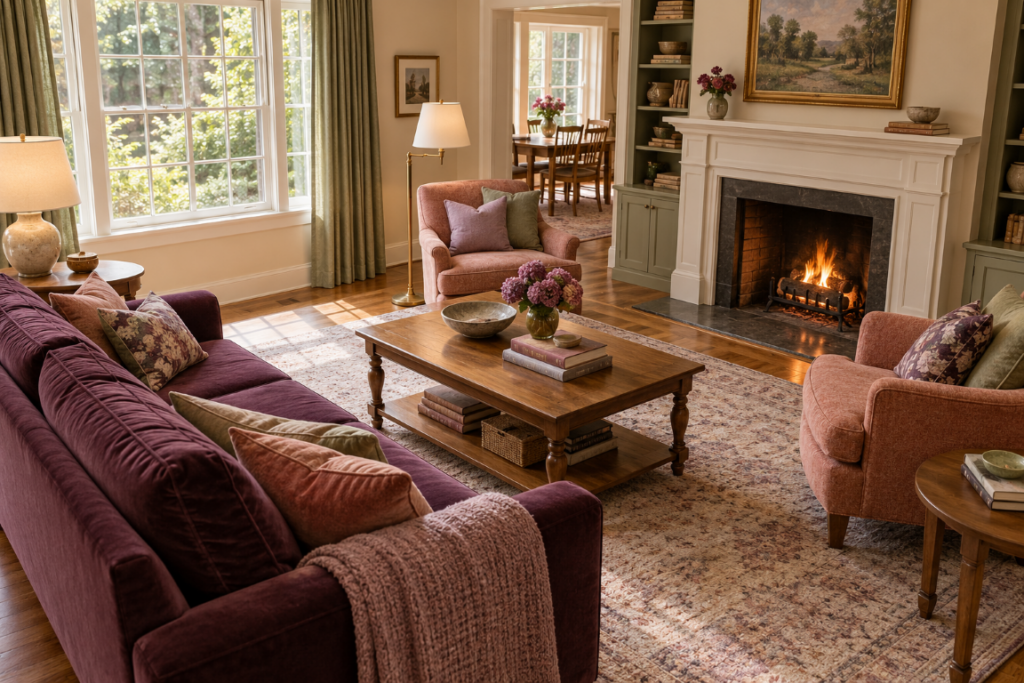
A hygge living room layout should make relaxing, talking, reading, watching movies, and spending time together feel easy. Arrange furniture around the activities that actually happen in the room instead of designing the space only around how it looks from the doorway.
What is the best layout for a cozy living room?
The best layout allows people to move through the room comfortably while keeping seating close enough for conversation and shared activities. Furniture should also have practical lighting and surfaces nearby so the room works without constant rearranging.
Many living rooms are arranged automatically around the television, but that does not have to be the only consideration. Even if the television is important to your household, seating can still relate to one another rather than forming a row of furniture facing a screen.
Pulling chairs slightly toward the sofa can make conversation feel more natural. A small side table between seats gives people somewhere to set a drink, while a lamp positioned near a chair can turn an otherwise unused corner into one of the best spots in the room.
Pay attention to the paths people naturally take through the space too. A room feels less comfortable when you constantly have to squeeze around furniture or dodge the corner of the coffee table.
A Cozy Layout Should Include
- Comfortable conversation distance between seats
- Clear pathways through the room
- Tables within reach of seating
- Lighting positioned near the activities that need it
- Enough open floor space to keep the room from feeling crowded
- Furniture placement that supports the way your household actually uses the room
Homey Hygge Tip
Spend an evening in your living room before changing anything and notice where everyone naturally settles. Those habits can tell you more about the layout you need than a perfectly staged inspiration photo ever will.
Choose Seating You Actually Want to Sit In
Comfortable seating is one of the most important parts of a hygge living room because the room should invite people to settle in rather than admire it from a distance. Sofas and chairs should support your body, fit your space, and work for the activities your household enjoys.
What furniture makes a living room feel hygge?
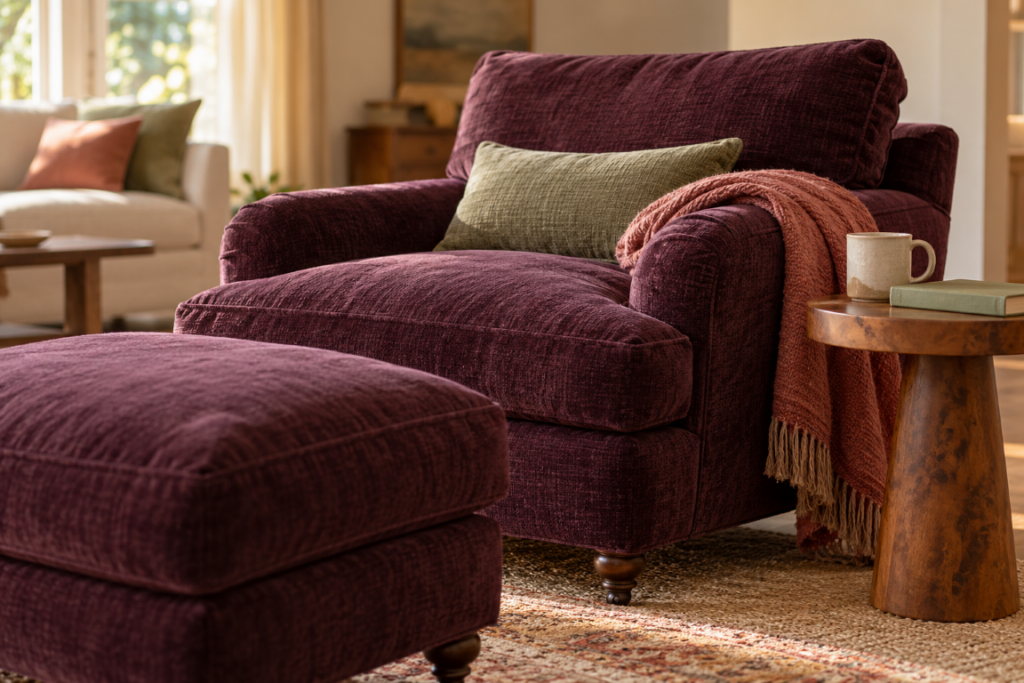
Comfortable sofas, armchairs, ottomans, footstools, useful side tables, and furniture made from warm or tactile materials can all support a hygge atmosphere. The most important quality is not a specific style but whether the furniture makes the room pleasant to use.
A gorgeous chair becomes considerably less charming if nobody wants to sit in it for more than five minutes. Comfort needs to be part of the decorating decision from the beginning.
Think about how you relax. Some people want a deep sofa they can curl into, while others prefer firmer seating with better back support. A footstool or ottoman might make an existing chair much more comfortable without requiring you to replace it.
Scale matters too. Oversized furniture can make a small living room feel cramped, while furniture that is too small can leave a larger room feeling disconnected and awkward.
You also do not need a matching furniture set. A sofa paired with different but complementary chairs can make the living room feel more collected, personal, and visually interesting.
Seating Features Worth Prioritizing
- Supportive cushions
- Comfortable seat depth
- Durable upholstery
- Armrests or nearby surfaces where useful
- Footrests or ottomans
- Furniture scaled appropriately for the room
- Enough seating for the people who regularly use the space
Homey Hygge Recommendation
Choose the furniture based on how you like to sit, not how someone in a catalog is sitting. If you curl your legs underneath you, stretch out, read for hours, or regularly share the sofa with children or pets, your furniture needs to accommodate real life.
Layer Lighting for a Warm, Flexible Glow
Layered lighting makes a hygge living room feel warmer and more comfortable by combining several useful light sources instead of relying entirely on one overhead fixture. Floor lamps, table lamps, task lights, and adjustable lighting allow the room to change with the time of day and activity.
Should you use warm lighting in a hygge living room?
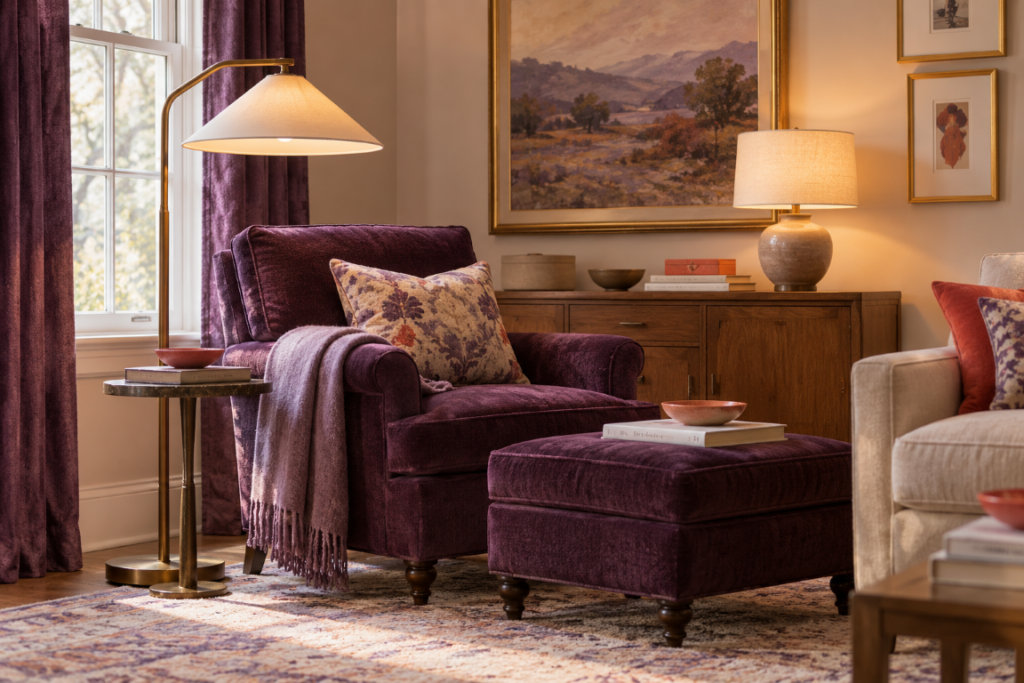
Warm or comfortably warm-toned lighting usually creates a softer evening atmosphere than very cool, blue-toned light. The exact light you prefer may vary, but the goal is to avoid a room that feels harsh or flat when you are trying to relax.
Living rooms often need to perform several jobs throughout the day. Bright enough lighting might be helpful when cleaning or doing a project, while a softer combination of lamps feels better during a movie, conversation, or quiet evening.
A floor lamp beside a reading chair can create useful task lighting. Table lamps on consoles or side tables provide smaller pools of light, while dimmers or adjustable bulbs can help one fixture serve different purposes.
Candles are often associated with hygge, but they are not necessary. Good lamps can create plenty of warmth without turning the coffee table into a small fire department training exercise.
Useful Living Room Lighting Layers
- Floor lamps beside seating
- Table lamps on consoles or end tables
- Reading lamps
- Dimmable fixtures
- Adjustable smart lighting if useful
- Small accent lighting for shelves or darker corners
- Natural daylight during the day
Homey Hygge Tip
Turn on only the lights you normally use after sunset and look for uncomfortable dark spots or glare. Fixing those lighting problems will usually make more difference than adding decorative lighting simply because it looks cozy.
Bring Color Into Your Hygge Living Room
Color can make a hygge living room feel warm, personal, and inviting when you choose shades you genuinely enjoy and repeat them thoughtfully throughout the room. Hygge does not require an all-neutral palette.
What colors work best in a hygge living room?
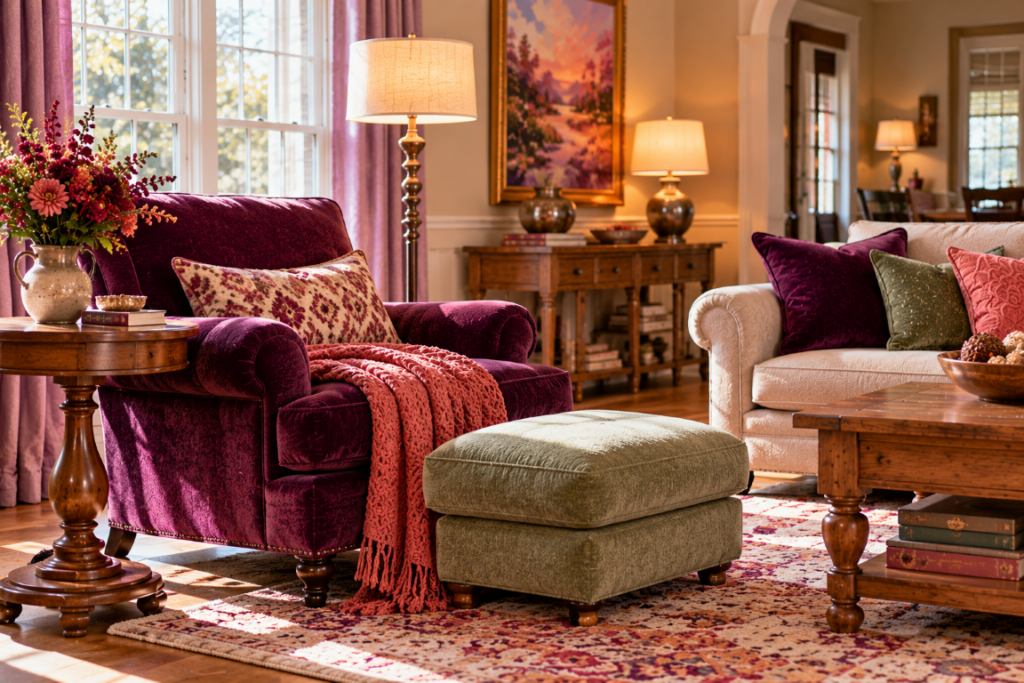
Warm neutrals, earthy colors, greens, blues, terracotta, berry shades, plum, lavender, burgundy, and other comfortable colors can all work beautifully. The best palette is one that creates the atmosphere you want while fitting naturally with the rest of your home.
This is one of the areas where Homey Hygge intentionally takes a broader approach. Neutral Scandinavian rooms are beautiful, but they are not the only interpretation of hygge worth exploring.
A purple living room can absolutely feel hygge. Plum upholstery, lavender accents, aubergine accessories, warm wood, coral, sage, ivory, and soft gold could create a room that feels both colorful and comfortable.
Your palette might lean toward blue and rust, burgundy and cream, green and warm wood, or something entirely different. What matters is repeating enough of the colors around the room that they feel connected rather than random.
If you are nervous about color, begin with things that are easy to change. Rugs, pillows, artwork, throws, curtains, and accessories can bring plenty of personality before you ever reach for a paintbrush.
Easy Places to Add Color
- Area rugs
- Curtains
- Cushions
- Throws
- Artwork
- Upholstered chairs
- Lamps and lampshades
- Books and decorative objects
- Painted furniture
- Accent walls or full-room paint
Homey Hygge Tip
Start with a color you already love rather than searching for an official “hygge color.” Building from your own preferences is far more likely to create a room you still enjoy once the current decorating trend has packed its tiny neutral suitcase and left.
Layer Textiles Without Smothering the Room
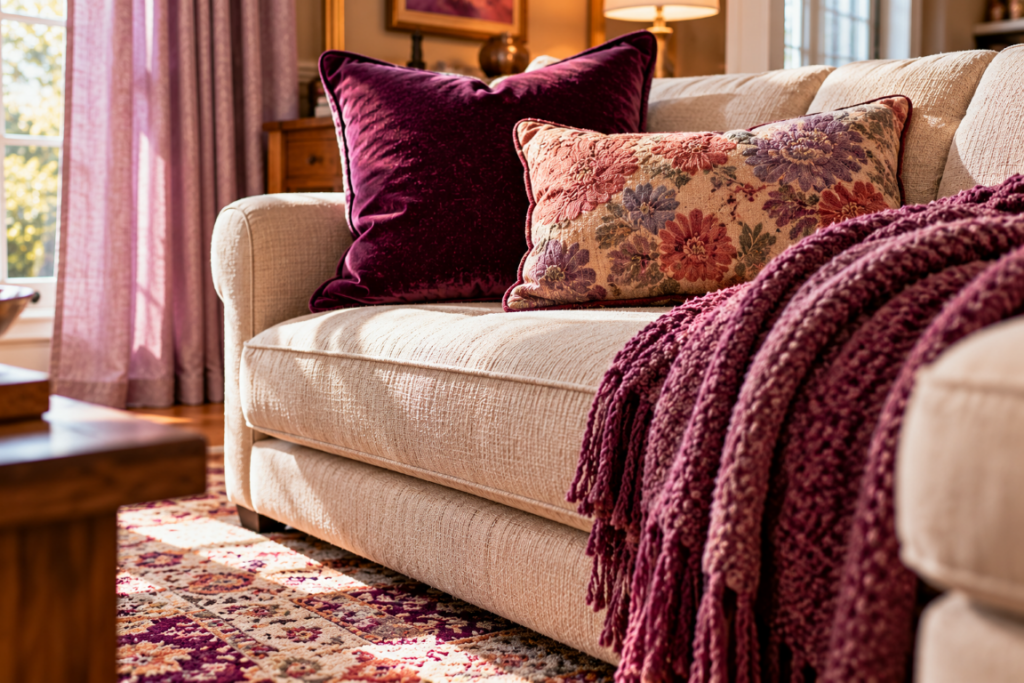
Textiles make a living room feel softer and more comfortable by adding warmth, texture, and visual depth. Rugs, curtains, cushions, upholstery, and throws work best when each one contributes something useful instead of simply adding more layers.
Do you need an area rug for a cozy living room?
No, but a rug can help define the seating area, soften hard flooring, absorb sound, and add color or texture. If your living room already feels comfortable without one, a rug is not a requirement.
A bare room can feel visually hard even when the furniture itself is comfortable. Textiles soften those edges and make the space feel more settled.
Curtains can add softness around windows, while an area rug can visually connect several pieces of furniture. Cushions let you introduce texture and color without a permanent decorating decision, and a throw kept near the sofa makes sense if someone actually uses it.
The key is restraint. Seven cushions, four throws, layered rugs, heavy curtains, and fabric on every surface may technically qualify as textile-rich, but the room can start feeling upholstered from floor to ceiling.
Textures That Work Well Together
- Velvet with linen
- Woven upholstery with smooth wood
- Soft wool or knit with leather
- Patterned rugs with solid furniture
- Cotton curtains with richer upholstery
- Quilted or woven throws with simple cushions
Homey Hygge Recommendation
Mix textures instead of simply adding more of the same one. A room often feels richer when smooth, soft, woven, and structured surfaces sit together than when everything is fluffy.
Decorate With Things That Mean Something
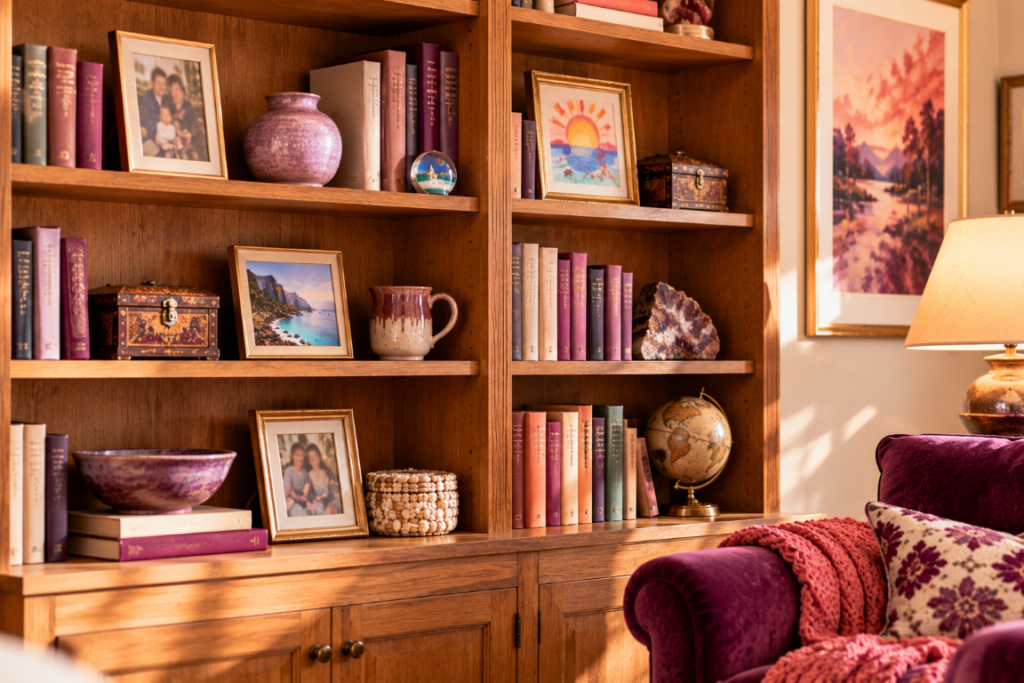
Personal decor makes a hygge living room feel lived in because it connects the room to your family, interests, memories, and experiences. Artwork, books, photographs, collections, handmade pieces, and meaningful objects can add warmth that generic accessories cannot duplicate.
How do you make a living room cozy without making it cluttered?
Display fewer pieces with more intention rather than filling every shelf and tabletop. Group related objects, leave some open space, and prioritize things you enjoy seeing over decorative filler.
A living room often becomes the public face of a home, which can create pressure to make everything look polished. But polished does not have to mean impersonal.
Books you actually read, photographs you love, artwork that means something, souvenirs from trips, children’s creations, inherited pieces, and collections can all make the room feel more connected to your life.
The goal is not to display every meaningful thing you own. Giving a smaller number of pieces enough breathing room can make them feel more important.
You can also rotate decor. Not everything needs to be visible simultaneously for it to be part of your home.
Personal Decor Ideas
- Family photographs
- Favorite books
- Original or meaningful artwork
- Travel keepsakes
- Handmade objects
- Heirlooms
- Children’s artwork
- Collections
- Framed memories or mementos
Homey Hygge Tip
Before buying another decorative object, walk through the house and look for something meaningful that could live in the room instead. The most interesting decor is often already yours.
Create a Cozy Corner for Something You Enjoy
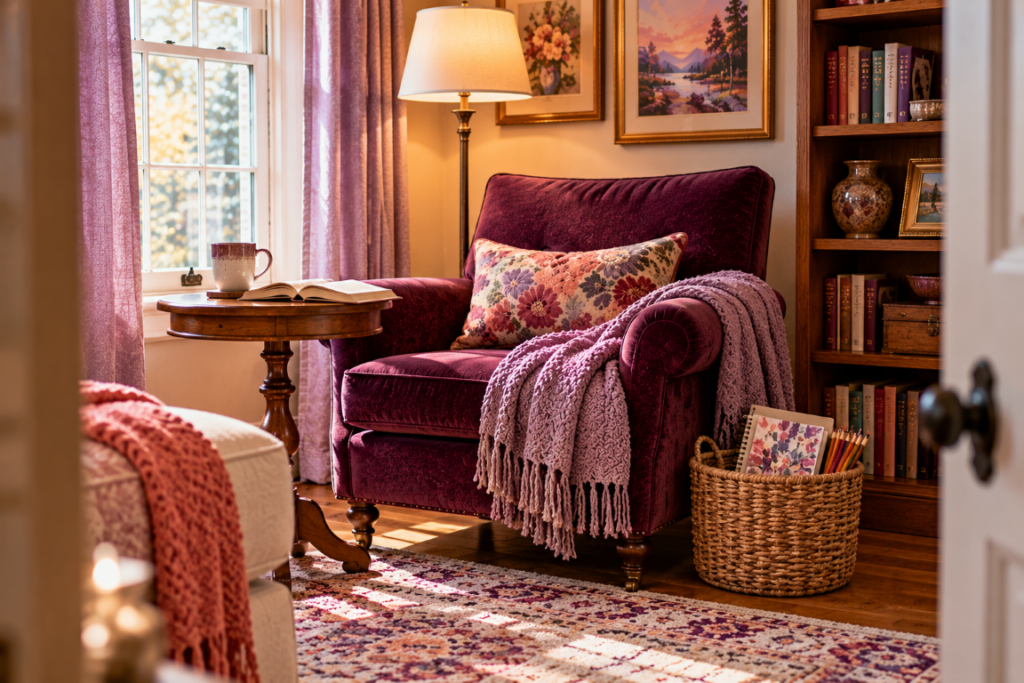
A small activity zone can make your living room feel more hygge by giving enjoyable everyday activities a comfortable place to happen. Reading, coloring, journaling, games, music, puzzles, or conversation can each become part of the room instead of activities you have to set up from scratch.
Does a hygge living room need a reading nook?
No. A reading nook is one option, but the better goal is to create a comfortable area for something you genuinely enjoy doing, whether that is reading, crafting, gaming, listening to music, or spending time with family.
I love the idea of living rooms having more than one reason to exist. The sofa and television may be important, but they do not have to be the entire personality of the room.
A chair near a window with a good lamp and a small table can become a reading spot. A basket with coloring supplies can turn the coffee table into a creative space, while a small cabinet of games can make it easier to start family game night without hunting through another room.
Accessibility matters. The more complicated an activity is to start, the easier it is to postpone.
Cozy Zones You Could Create
- Reading corner
- Coloring or journaling spot
- Game area
- Puzzle table
- Music corner
- Coffee or tea spot
- Conversation area
- Small craft station
For a full guide to setting up a reading or cozy corner, see How to Create a Cozy Reading Nook in Any Space.
Homey Hygge Tip
Keep one enjoyable activity visible or easy to reach. If getting started requires finding a box on the top shelf of a closet in another room, your phone has already won the convenience battle.
Keep Clutter Under Control Without Going Minimalist
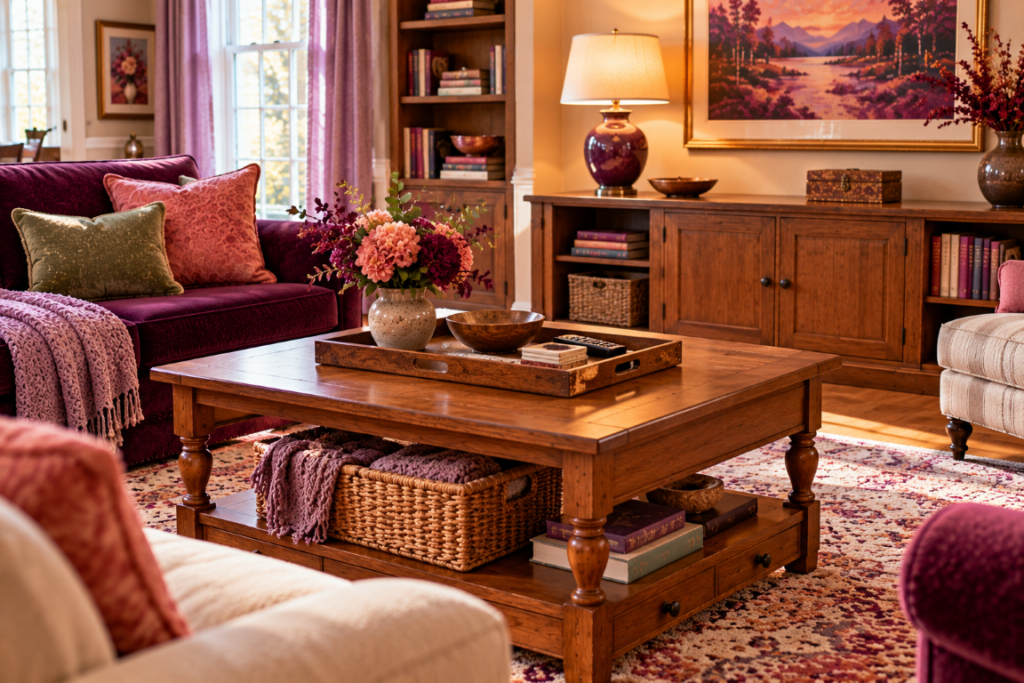
A hygge living room does not need to be minimalist, but clutter should not interfere with comfort or function. Use storage to contain everyday necessities while keeping enough books, art, collections, and personal objects visible for the room to retain its character.
Why can clutter make a living room feel less cozy?
Clutter can create visual distraction and physical inconvenience when surfaces, pathways, or seating become difficult to use. A room usually feels more comfortable when frequently used objects have predictable places to go.
There is a difference between a layered room and a room where everything is simply out.
Books on a shelf can add warmth. A pile of unopened mail covering the side table usually does not have quite the same effect.
Think about the categories of clutter that repeatedly appear in your living room. Remote controls, toys, blankets, chargers, magazines, games, hobby supplies, and everyday odds and ends are easier to manage when each category has a simple home.
Storage does not have to be invisible either. Baskets, trunks, cabinets, bookshelves, decorative boxes, and tables with drawers can become part of the room’s design.
Storage That Keeps a Room Cozy
- Baskets for blankets or toys
- Side tables with drawers
- Closed cabinets
- Bookshelves
- Decorative boxes
- Trunks or storage ottomans
- Trays for small everyday items
Getting ready for the cold months? Our winter decor ideas inspired by hygge cover blankets, fabrics and lighting for the season.
Homey Hygge Tip
Organize around where clutter naturally appears instead of where you think it should go. If everyone drops remotes beside the sofa, storage for remotes belongs beside the sofa, not three rooms away in a beautifully organized cabinet nobody uses.
Mix Warm Materials for a More Inviting Room
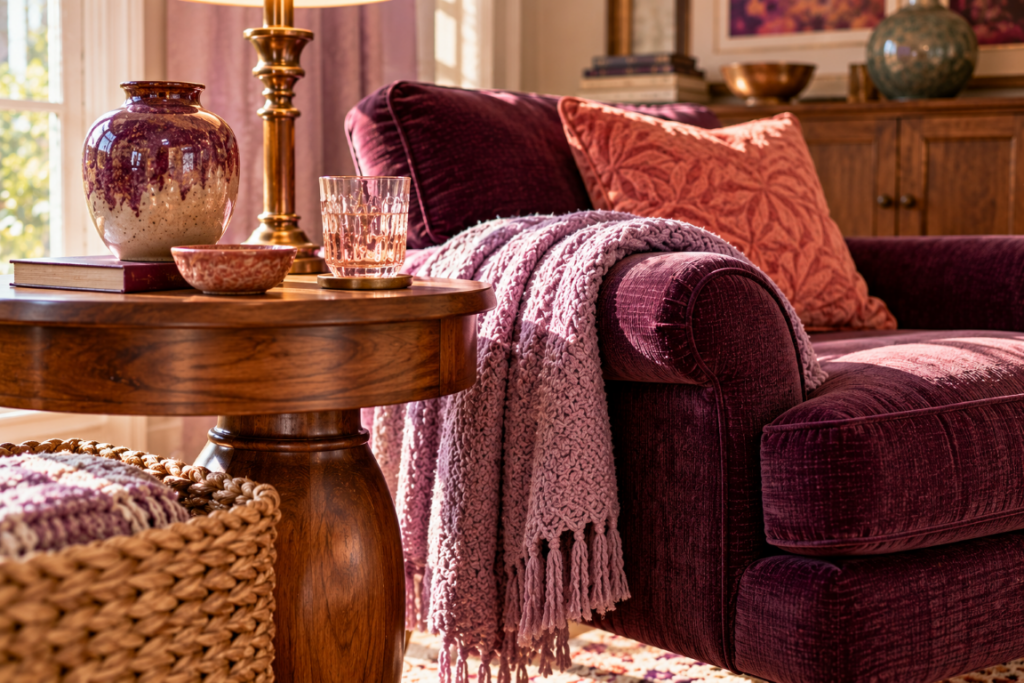
Combining warm, tactile materials can make a living room feel more grounded and visually comfortable. Wood, woven materials, upholstery, ceramics, glass, metal, and natural fibers can create depth without requiring one specific hygge decorating style.
Do you need natural materials for a hygge living room?
No. Natural materials are commonly associated with hygge because they add warmth and texture, but they are not a requirement. Use materials that fit your home, lifestyle, budget, and maintenance preferences.
Warm wood is especially useful because it can soften rooms with painted walls, upholstered furniture, or modern finishes. A wooden side table, picture frame, console, or coffee table can provide plenty of warmth without requiring the entire room to become rustic.
Woven baskets, ceramic pieces, textured upholstery, glass, and small metallic accents can add additional contrast. Mixing materials usually creates a more collected feeling than buying every piece from one matching furniture range.
You can also use vintage or secondhand pieces here. Older wood furniture, pottery, frames, and decorative pieces often add character that can be difficult to reproduce with brand-new matching items.
Materials to Mix and Match
- Warm wood
- Upholstery
- Woven fibers
- Ceramic
- Glass
- Brass or other warm metals
- Cotton
- Linen
- Wool or wool-like textiles
- Leather or leather alternatives
Homey Hygge Recommendation
You do not need every material in one room. Pick a few that create contrast with what you already have, especially if the room currently feels visually flat or too coordinated.
Make Small Living Rooms Feel Cozy, Not Crowded
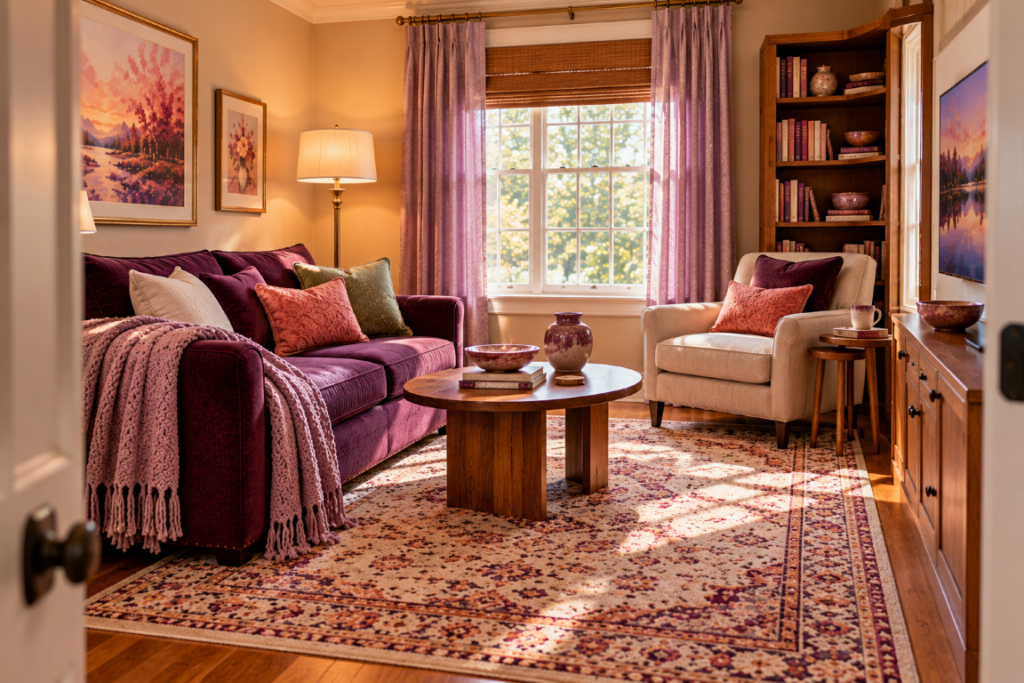
A small hygge living room should prioritize comfortable furniture, clear pathways, useful lighting, and a few strong decorative layers instead of trying to fit every cozy idea into limited space. Smaller rooms can feel especially intimate when each piece has a clear purpose.
How do you make a small living room hygge?
Choose furniture that fits the room, use lighting at multiple heights, add softness through a rug or curtains, and keep frequently used items organized. A smaller number of well-chosen pieces will usually feel more inviting than filling every corner.
Small living rooms do not need tiny furniture everywhere, but scale becomes particularly important. One comfortable sofa may work better than trying to squeeze in several undersized seating pieces.
Wall-mounted shelving, nesting tables, storage ottomans, floor lamps, and furniture with built-in storage can help you get more function without adding a lot of visual bulk.
Color is still welcome. Small rooms do not automatically need white walls and pale furniture, especially if deeper or richer colors make the space feel more intimate and intentional.
Small-Space Hygge Priorities
- Furniture with appropriate scale
- Clear walking paths
- Multi-purpose pieces
- Vertical storage
- Useful lighting
- One strong rug rather than several small ones
- Controlled but meaningful decor
- Colors you genuinely enjoy
Homey Hygge Tip
Do not confuse “small” with “needs more small stuff.” Too many little pieces can make a compact room feel busier than one or two substantial, comfortable pieces with enough space around them.
Create Hygge Without Buying an Entire New Living Room
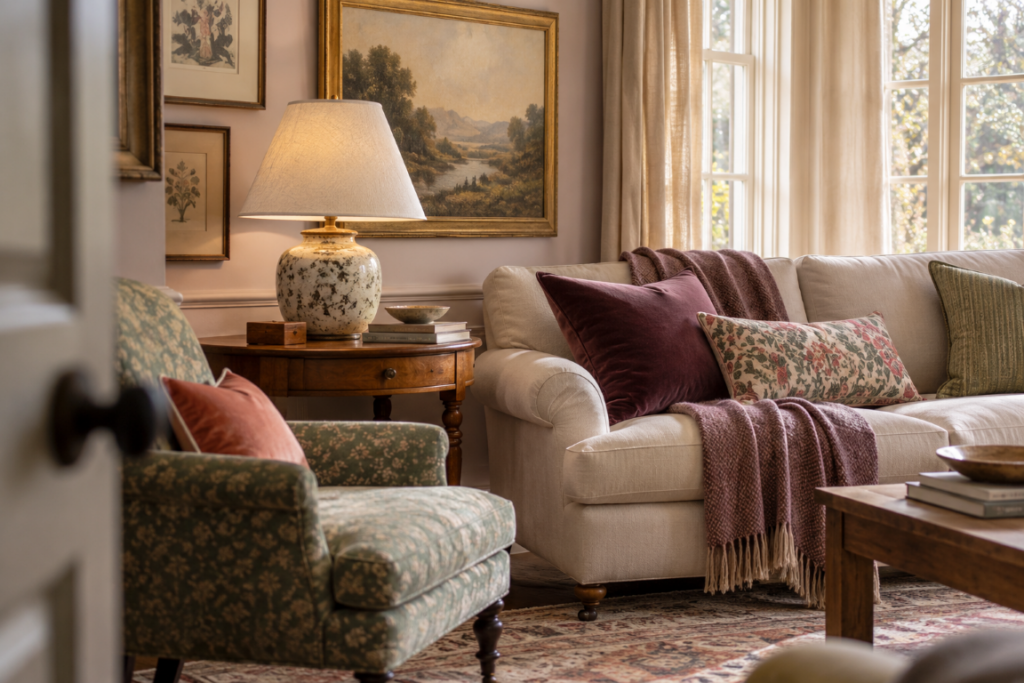
You can make a living room feel more hygge without replacing all of your furniture. Rearranging what you own, improving lighting, adding a few textiles, editing clutter, displaying meaningful objects, and shopping secondhand can change the atmosphere with a much smaller budget.
Can you create a hygge living room on a budget?
Absolutely. Many of the changes that make a living room more comfortable involve placement, lighting, organization, and using items you already own rather than purchasing an entirely new decorating scheme.
Start by shopping your own house. A lamp from another room may work better beside the sofa, a forgotten throw might bring in exactly the color you need, and artwork stored away may deserve a place on the wall.
Secondhand shopping can also be useful for wood furniture, lamps, frames, baskets, ceramics, and other pieces where a little age adds character rather than taking away from it.
Renters can use the same principles without permanent changes. Rugs, freestanding lighting, curtains, removable artwork, textiles, bookshelves, and furniture arrangement can create a noticeably warmer room while remaining portable.
Spend money where it solves a genuine problem first. If the room needs better lighting, another decorative vase is unlikely to rescue it.
Budget-Friendly Changes With High Impact
- Rearrange the furniture
- Move lamps between rooms
- Shop secondhand
- Bring out textiles you already own
- Change cushion covers instead of whole pillows
- Display existing books and artwork
- Add storage where clutter naturally gathers
- Improve one uncomfortable piece at a time
Homey Hygge Tip
Make a list of what is preventing the room from feeling comfortable before you make a shopping list. The first list usually saves you money on the second one.
Frequently Asked Questions About Hygge Living Rooms
What makes a living room hygge?
A hygge living room feels comfortable, warm, personal, and easy to spend time in. Comfortable seating, layered lighting, inviting textiles, meaningful decor, useful layouts, and everyday activities all help create that atmosphere.
Does a hygge living room have to be neutral?
No. A hygge living room can include plum, green, blue, burgundy, coral, terracotta, lavender, or any other colors that create a comfortable atmosphere for you.
Do I need a fireplace for a hygge living room?
No. A fireplace can add warmth and atmosphere, but it is not required. Lamps, soft textiles, warm colors, comfortable seating, and thoughtful room layout can create plenty of coziness without one.
Can a modern living room feel hygge?
Absolutely. Hygge is about the experience of the room rather than one decorating style. Modern furniture can feel just as inviting when paired with comfortable seating, softer lighting, texture, color, and personal details.
How can I make my living room cozy without clutter?
Choose a smaller number of meaningful decorative pieces, use storage for everyday necessities, and keep the surfaces you regularly use relatively clear. Layering does not require filling every available space.
Can I create a hygge living room in a rental?
Yes. Rugs, curtains, lamps, freestanding storage, artwork, textiles, furniture arrangement, and removable decorating options can all make a rental living room feel warmer and more personal.
Can a hygge living room include a television?
Of course. Hygge does not require removing technology from your home. The television can be part of family movie nights, gaming, or shared entertainment without needing to dominate every other part of the room.
How can I make a small living room feel hygge?
Focus on comfortable furniture at the correct scale, layered lighting, a cohesive color palette, useful storage, clear pathways, and a few tactile materials. Small rooms can feel especially cozy when they are arranged intentionally rather than overcrowded.
Create a Living Room That Makes You Want to Stay
A cozy living room is not really about how many traditionally “hygge” things you can fit into it. It is about creating a room that makes staying home feel good.
Maybe that means a sofa everyone piles onto during movie night, a chair you disappear into with a book, a table where someone is always leaving a mug, or a corner that finally makes you want to pull out your coloring supplies instead of reaching automatically for your phone.
The colors can be neutral or bold. The furniture can be new, secondhand, traditional, modern, or something you have owned for years. The room can be large enough for several seating areas or small enough that the sofa practically introduces itself when you walk through the door.
What matters is how the room works for your life.
Start with comfort. Fix the lighting. Arrange the furniture around how you actually live, then build outward with color, texture, meaningful objects, and the things that make you enjoy being there.
That is the kind of living room I want Homey Hygge to celebrate: cozy, colorful, and beautifully lived.
Continue Creating Your Homey Hygge Home
Next, explore Hygge Lighting: How to Create a Warm, Cozy Glow at Home for a deeper look at using lamps, layered lighting, placement, and adjustable light to make every room feel warmer and more inviting.
You might also want to checkout How To Create Your Cozy Christmas Hygge Home Setup or a Cozy Hygge Home in general