
Hygge is a Danish concept centered around creating warmth, comfort, connection, and space to enjoy the quieter pleasures of everyday life. You might experience hygge while lingering over dinner with people you love, curling up with a book after a long day, spending an evening coloring instead of scrolling, or simply enjoying a cup of coffee without rushing to the next thing.
If you first discovered hygge through cozy rooms filled with blankets, candles, and soft lighting, you are definitely not alone. That was part of what initially drew me to it too, but the more I learned, the more I realized that what appealed to me went far beyond decorating.
I want my home to be somewhere my family genuinely enjoys being. I want more slow evenings, comfortable corners, creative hobbies, meaningful everyday moments, and spaces that feel like us rather than something copied from a catalog. That is the version of hygge I am working on bringing more intentionally into my own life, and it is what Homey Hygge is all about.
TL;DR: What Is Hygge?
Hygge is a Danish approach to enjoying comfort, connection, and the simple pleasures of everyday life. Although cozy interiors can help create the atmosphere, hygge is not a decorating style and does not require neutral colors, minimalist furniture, expensive accessories, or even candles. It can be found in family dinners, quiet evenings alone, creative hobbies, summer picnics, or comfortable nights at home because the focus is less on creating a certain look and more on creating moments and spaces you genuinely enjoy.
The Meaning of Hygge
There is no perfect one-word English translation for hygge. “Cozy” comes close, but the idea also includes warmth, connection, contentment, presence, and slowing down enough to enjoy what is happening around you.
Hygge can be as simple as sharing a meal without rushing, reading somewhere comfortable, talking with someone you care about, or giving yourself permission to enjoy a quiet moment without feeling like you should be doing something more productive. It does not make every ordinary moment extraordinary. Instead, it encourages you to notice and enjoy more of the ordinary ones.
Hygge is generally pronounced “hoo-gah.” The word can look slightly intimidating at first, but fortunately you do not need a Danish language lesson before you can start bringing more of the feeling into your own life.
Where Hygge Comes From
Although hygge is strongly associated with Denmark today, the word has older Norwegian roots connected with well-being. It appeared in Danish writing around the end of the 18th century and eventually became closely woven into Danish everyday culture.
In modern Danish life, hygge is often associated with relaxed time spent with family or close friends, shared food, conversation, quiet evenings at home, and other simple pleasures. It can also include time spent alone, which is important because hygge is not limited to social gatherings.
That cultural background is worth understanding because hygge has become heavily commercialized outside Denmark. Search for it online and you will quickly find hygge blankets, candles, furniture, mugs, gift boxes, and probably enough beige home decor to redecorate a small country.
Those things can help create the setting, but buying something labeled “hygge” does not automatically create hygge. The atmosphere and experience matter far more than the label on the product.
What Hygge Feels Like in Everyday Life
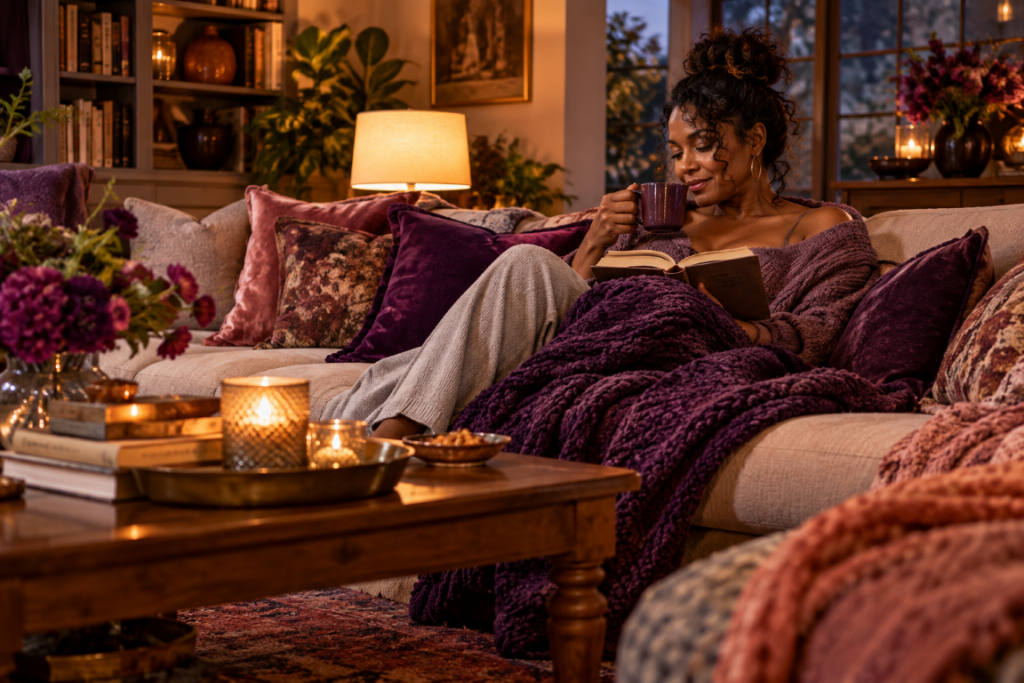
Hygge often feels surprisingly ordinary. It might be sitting around the table after dinner because nobody is quite ready to get up, making hot chocolate and playing a board game, or settling under a blanket with a book while the house is quiet.
It might also mean putting on music while you journal, baking something on a rainy afternoon, coloring for an hour simply because you enjoy it, or sitting outside on a summer evening while the daylight slowly disappears. None of those moments need to be elaborate to feel meaningful.
Hygge does not always involve other people either. Reading, journaling, coloring, crafting, baking, gardening, listening to music, or simply sitting somewhere comfortable can all create the same sense of ease.
That is one of the things I like most about the idea. Hygge does not ask everyday life to become more impressive. It encourages you to actually be present for it.
The Elements That Create a Hygge Feeling
There is no single official checklist you need to complete before a room or moment qualifies as hygge. Instead, several elements tend to work together to create the feeling.
Comfort
Comfort can be physical, but it can also be emotional. A chair you love sitting in, a soft blanket, comfortable clothes, good food, or a room where you naturally relax can all contribute to hygge.
The important part is that the space or experience feels comfortable to the people actually using it. A room that photographs beautifully but feels stiff or inconvenient to live in misses the point.
Warmth and Atmosphere
Lighting, texture, temperature, sound, scent, and the arrangement of a room can all change how it feels. Soft lamps instead of one glaring overhead light might make the evening feel warmer, while a rug, curtains, or layered textiles can soften a room physically and visually.
These details help create atmosphere, but they are tools rather than requirements. The goal is not to collect every object associated with hygge but to create surroundings that make it easier to settle in and feel comfortable.
Presence
It is difficult to enjoy a moment when your attention is everywhere except where you are. Hygge can mean staying around the dinner table a little longer, setting your phone aside during part of the evening, or concentrating on one enjoyable activity instead of trying to multitask through your free time.
That does not mean technology has no place in a hygge lifestyle. It simply means creating some moments when your attention is allowed to stay in the room with you.
Connection
Hygge is strongly associated with togetherness, whether that means family dinner, coffee with a friend, game night, a movie with your spouse, or baking with your children. The gathering does not need to be elaborate to feel special.
In fact, one of the things I appreciate about hygge is that it removes some of the pressure to perform. You can invite people over without turning the house into a showroom first.
Simple Enjoyment
Books, coffee, tea, baking, music, games, crafts, coloring, a favorite meal, time outside, or a good conversation can all create hygge. These are often things we already have access to but easily rush past.
Part of creating more hygge is simply making room for the things that make everyday life enjoyable.
Personal Meaning
A hygge home does not have to look exactly like anyone else’s. Family photographs, books you love, artwork your children made, meaningful souvenirs, handmade pieces, favorite colors, and well-used objects can make a room feel far more welcoming than perfectly coordinated decor that has no connection to your life.
Home should feel lived in. More importantly, it should feel like your life is being lived there.
Hygge at Home Is More Than a Decorating Style
Hygge is broader than interior design, but the way your home is arranged can absolutely support it. Comfortable furniture can encourage you to settle in, softer lighting can change the atmosphere of an evening, and textiles such as blankets, pillows, rugs, and curtains can make rooms feel warmer and more inviting.
Room layout matters too. A living room arranged around conversation feels different from one where every seat points toward a television, just as a comfortable reading corner can encourage you to pick up a book more often.
The key is remembering that decorating is only part of the equation. You could own the world’s coziest sofa and still spend every evening stressed, distracted, and answering emails from it.
Your surroundings can help create the conditions for hygge. They cannot manufacture the experience for you.
Color and Personality Belong in Hygge
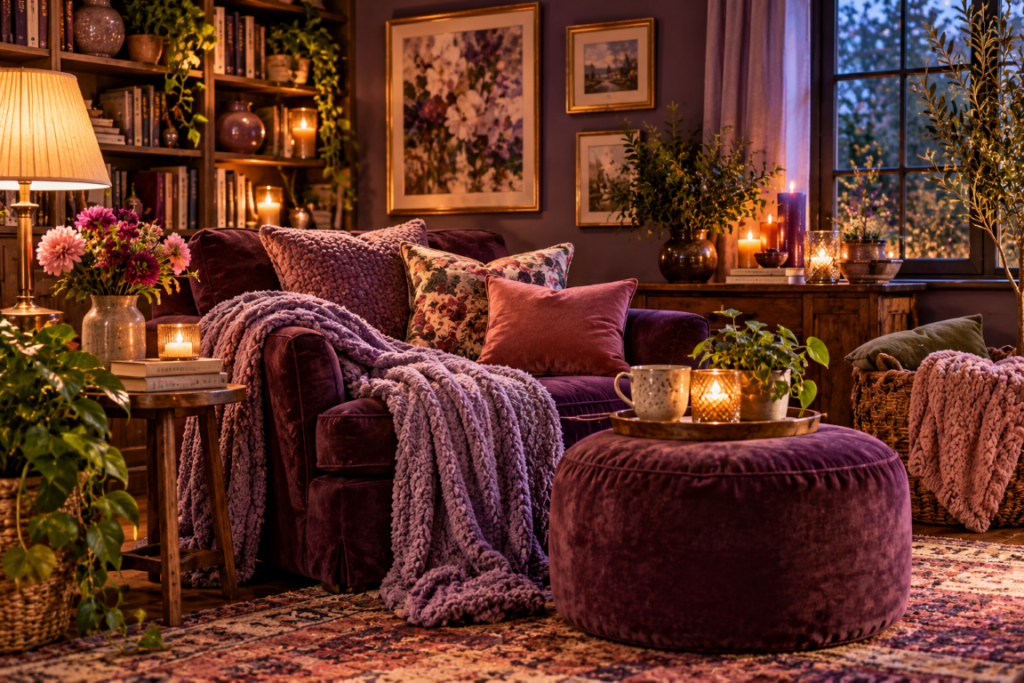
One misconception I especially want to challenge on Homey Hygge is the idea that a hygge home has to be neutral or minimalist. Search for hygge interiors and you will often find cream walls, beige sofas, pale wood, white bedding, and restrained Scandinavian spaces.
Those rooms can absolutely feel hygge, but they are not the only way to create it. Deep green, warm blue, terracotta, burgundy, mustard, pink, plum, mauve, lavender, and other colors can all belong in a cozy home.
And yes, that includes purple.
I am personally drawn toward creating a purple palette in my own home, and learning more about hygge has not made me want to trade that personality for an all-neutral interior. I am much more interested in seeing what happens when the warmth and intentionality of hygge meet color, personality, and a little drama.
A vintage-filled home can be hygge. A colorful home can be hygge. A modern home, cottage-inspired home, or more layered and expressive home can be hygge too. Your decorating style does not need to disappear for your home to feel comfortable and welcoming.
If you want to learn how to do this, checkout our guide that shows you how to create a colorful hygge home without neutrals while not going overboard and creating chaos.
The Homey Hygge Test
As I create my own home, I want to come back to one simple test: Does this make the space more comfortable, welcoming, personal, or enjoyable to actually use?
If it does, it may belong. If it does not, you probably do not need it simply because somebody printed the word “hygge” on the packaging.
Simple Ways to Practice Hygge at Home
You do not need to completely redesign your house before you can experience more hygge. Start with the way you already live and look for small changes that make ordinary moments more enjoyable.
- Create comfortable places you actually use. A reading chair, corner of the sofa, dining table, porch seat, or spot near a window can become somewhere you naturally want to spend time.
- Use softer, layered lighting. Table lamps, floor lamps, dimmers, lanterns, or other warm light sources can create a gentler atmosphere than relying entirely on bright overhead lighting.
- Make ordinary moments more intentional. Use the mug you love, play music while making dinner, sit down for breakfast, or turn an ordinary evening into movie or game night.
- Build routines you look forward to. Friday might become family game night, Sunday morning might mean pancakes, or a rainy evening might become coloring time.
- Spend undistracted time with people you care about. Lingering at the table or talking over coffee can be enough. Hygge does not require an elaborate gathering.
- Make room for quiet and screen-free hobbies. Reading, coloring, journaling, puzzles, crafting, and baking can give your attention somewhere pleasant to land.
- Decorate around what makes you feel at home. Choose colors, textures, furniture, art, photographs, books, and meaningful objects because they work for your life rather than because they satisfy someone else’s version of hygge.
You can start with one of these rather than trying to overhaul everything at once. Turning hygge into another seventeen-step self-improvement project would rather defeat the point.
Hygge Does Not Have to Be Expensive
This matters to me because Homey Hygge will eventually include plenty of decorating ideas, product recommendations, and things I genuinely think are worth considering. Even so, you do not need to shop your way into a hygge life.
You do not need a new sofa, an expensive Scandinavian candle, a fireplace, a large home, or a complete decorating makeover. Sometimes creating more hygge means moving a chair closer to the window, dimming the lights after dinner, using a blanket you already own, baking something with your kids, calling someone you miss, or spending half an hour doing something you enjoy.
Products can make your home more comfortable or help you create the atmosphere you want. They should support the experience rather than become the experience.
Hygge Through the Seasons
Winter may be the season most closely associated with hygge because cold, dark weather naturally lends itself to warm lighting, blankets, hot drinks, and evenings indoors. That does not mean hygge disappears when the weather warms up.
Spring hygge might mean opening the windows, bringing flowers inside, gardening, or sitting outdoors with a book. Summer can include porch conversations, family cookouts, picnics, beach days, and long evening meals outside.
Fall lends itself beautifully to baking, deeper colors, seasonal meals, changing textures, and evenings that gradually move back indoors. The details change throughout the year, but the idea remains the same: create space to enjoy where you are and who you are with.
My Own Homey Hygge Journey
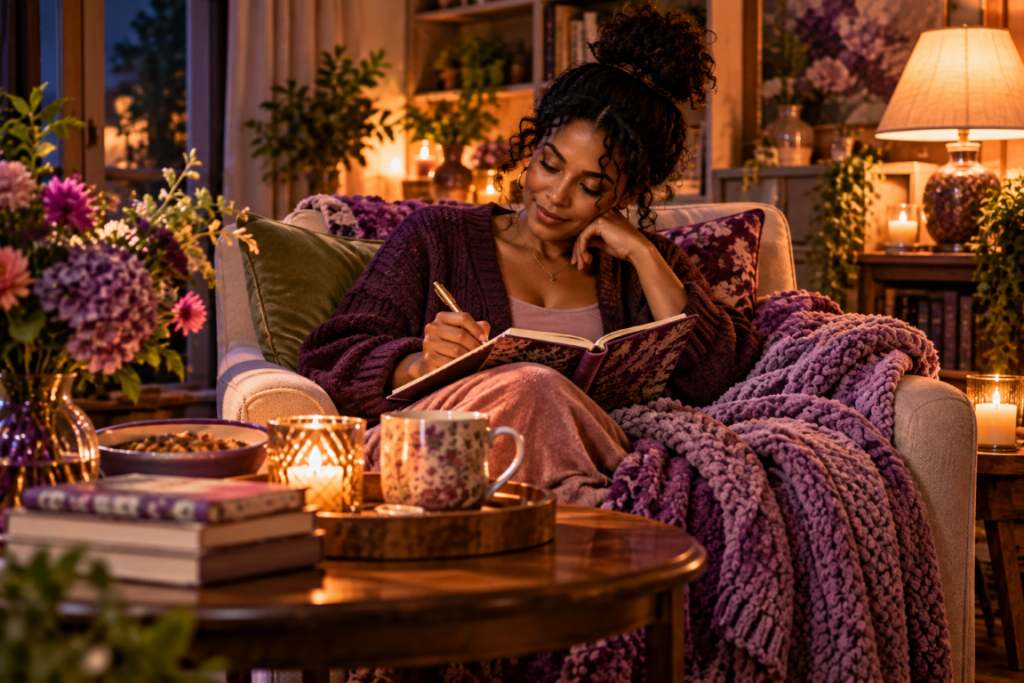
I am at the beginning of this journey too. I did not grow up calling these moments hygge, and I am not trying to reinvent myself as an expert in Danish culture overnight.
What I have realized is that hygge gives a name to many of the things I already want more of. I want our home to feel welcoming instead of merely decorated, and I want spaces my family actually uses rather than rooms that only look good when everything is perfectly arranged.
I also want to experiment with color, especially purple, while still creating rooms that feel warm and relaxing. I want more creative activities such as coloring and other screen-free hobbies, and I want ordinary days to contain more moments that are enjoyable while they are actually happening.
Homey Hygge is where I am going to explore all of that. Some things will be researched, while others will come from changes I make in my own home and routines, and I will share what I try, what works for us, what does not, and what I learn along the way.
Ultimately, I am not trying to create a picture-perfect hygge home. I want to create one we love living in.
Frequently Asked Questions About Hygge
Is hygge just another word for cozy?
Not quite. Coziness is part of hygge, but hygge also includes atmosphere, presence, connection, contentment, and taking time to enjoy ordinary pleasures.
Can you practice hygge alone?
Yes. Although hygge is strongly associated with relaxed time spent with family and friends, quiet solo activities such as reading, coloring, baking, watching a favorite movie, or enjoying a slow coffee break can also feel hygge.
Is hygge a decorating style?
Hygge itself is not strictly an interior-design style. Decorating choices such as comfortable furniture, warm lighting, soft textiles, personal objects, and inviting layouts can simply help create an atmosphere that supports it.
Does hygge have to be minimalist?
No. Hygge and Scandinavian minimalism sometimes overlap visually, but they are not the same thing. A home can include color, artwork, books, collections, patterns, and personality while still feeling comfortable and welcoming.
Can a colorful home be hygge?
Absolutely. There is no required hygge color palette, so the colors in your home can reflect your personality while still helping you create a cozy, inviting atmosphere.
Do you need candles to create hygge?
No. Candlelight is famously associated with hygge, but lamps, dimmers, lanterns, flameless candles, and other soft lighting can create a warm atmosphere too.
Is hygge only for winter?
No. Winter may be the most obvious hygge season, but summer dinners outdoors, spring mornings by an open window, beach evenings, gardening, picnics, and fall gatherings can all create hygge moments.
Can you practice hygge on a budget?
Definitely. Rearranging a comfortable corner, reading a library book, cooking together, playing games you already own, spending time outdoors, or simply slowing down for a conversation can all create hygge without requiring you to buy anything.
Make Hygge Feel Like Home
The more I learn about hygge, the less interested I am in creating a home that simply looks recognizably hygge. I would rather create one that feels comfortable enough to relax in, personal enough to recognize ourselves in, and welcoming enough that people naturally want to linger.
Your version may be warm and neutral. Mine may end up considerably more purple. Both can belong.
That is what I want Homey Hygge to explore: not one prescribed version of cozy living, but ways to make your home and everyday life feel more like somewhere you genuinely want to be.
Continue creating your Homey Hygge home: Next, we will explore how to create a cozy, welcoming hygge home room by room without stripping away the colors, personality, and things that make it yours.