
Cozy winter decor inspired by hygge is about making your home feel warm, bright and welcoming during the coldest, darkest months of the year. It’s less about buying a new look for the season and more about adjusting what you already have: heavier blankets, softer lighting, deeper color and a few natural touches that make coming home on a cold evening feel like a reward.
Hygge was practically made for winter. VisitDenmark describes Danish winters as long and dark, and says Danes fight that darkness with hygge. Those of us with shorter, milder winters can still borrow the idea: when the days get shorter, give the inside of your home more attention.
The Homey Hygge approach skips the all-white, snow-globe version of winter decor. A winter home can be plum and sage, full of big knit blankets and family photos, and still feel calm. And it doesn’t have to come down the week after Christmas, because winter lasts well into March.
Still enjoying the last of fall? Our guide to creating a hygge home for autumn has cozy ideas to carry you into winter.
TL;DR: Creating a Hygge Home
To make your home feel cozy in winter, layer warm textiles like long knit and fleece blankets, swap in winter fabrics such as flannel and velvet, and light your rooms with dimmable lamps and warm bulbs for the long evenings. Dress your windows to hold in warmth, bring in deeper color and natural winter elements, create one warm gathering spot and one cozy corner for hobbies, make the entryway ready for cold weather, and keep the winter feeling going after the holiday decorations come down.

10 Cozy Winter Decor Ideas Inspired by Hygge
These ideas move from the things you touch to the things you see, then to the spaces where winter evenings actually happen. Most of them use what you already own, rearranged for the season.
Cozy Winter Decor Ideas at a Glance
- Layer blankets and throws for real warmth.
- Swap in winter fabrics.
- Light your home for long winter evenings.
- Dress the windows for warmth and daylight.
- Bring in deeper winter color.
- Add natural winter touches and seasonal scent.
- Create one warm gathering spot.
- Make a corner for winter hobbies.
- Get the entryway ready for cold weather.
- Keep the winter feeling after the holidays.
Layer Blankets and Throws for Real Warmth
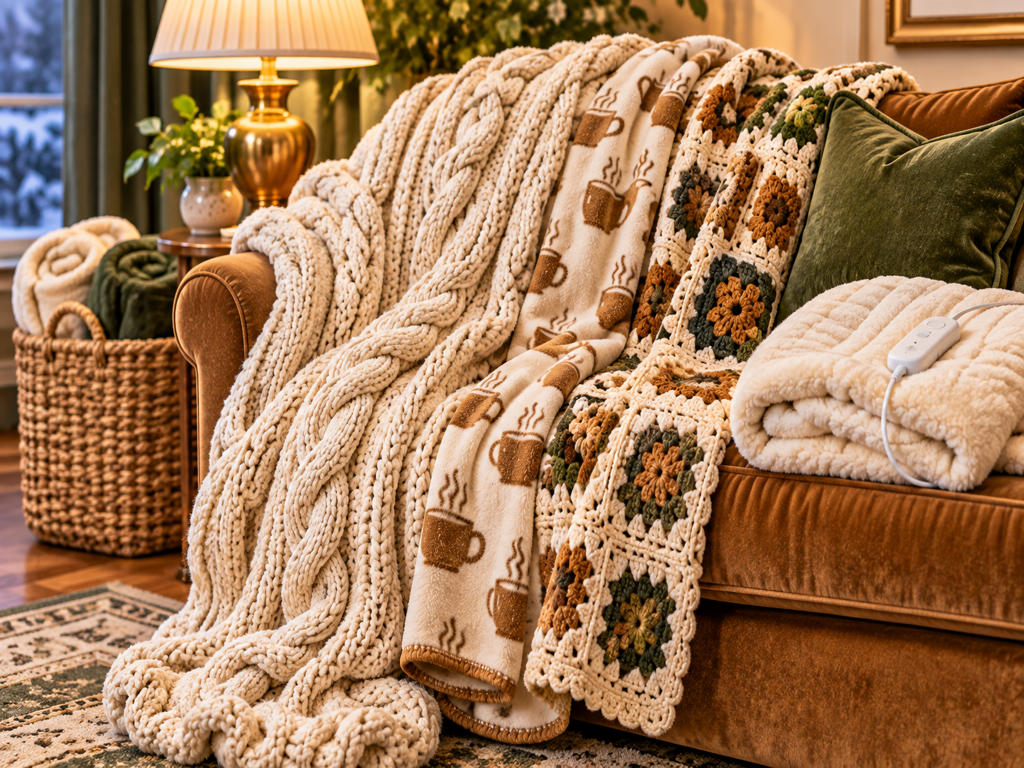
Blankets are the fastest way to make a room feel ready for winter. A few big, soft throws within reach of every seat and bed make the house feel warmer before you ever touch the thermostat.
How many throw blankets does a cozy living room need?
One for every person who usually sits there, plus one extra, is a good starting point. That way nobody has to share or go hunting for a blanket on a cold night. Keep the extras folded in a basket so the room stays tidy.
In winter, a throw draped over the sofa arm isn’t decoration. It gets used every evening. Choose blankets big enough to actually cover you, especially if you’re tall. I’m tall, so long blankets are a must in our house, and the big chenille and knit ones are always the first to go.
Mix textures so the room feels layered rather than matched: a chunky knit, a soft fleece or chenille and a crocheted afghan look good together and feel different under your hands. A blanket with a fun pattern, like coffee mugs or dogs, adds personality.
If you’re looking for more ideas to add blankets to your space, checkout our guide on the Best Winter Textiles to use to create cozy spaces in your home.
Blankets Worth Layering
- Chunky knit: a statement throw for the sofa or the foot of the bed
- Chenille or fleece: the everyday blanket for movie nights
- Crochet or quilted: adds pattern and a handmade feel
- Heated blanket: for the coldest spot in the house
- Long or oversized throws: 60 by 80 inches or larger, so they cover tall people too
Homey Hygge Tip
Put a heated blanket in the chair you use most on winter evenings. I keep one in my reading nook, and it’s the reason that chair is so hard to leave on a cold night.
Swap In Winter Fabrics
Changing a few fabrics is the simplest seasonal refresh. Trading lightweight cotton for flannel, velvet, wool and faux fur makes a room look and feel warmer without new furniture.

Do I need to change my whole room for winter?
No. Swapping pillow covers, a throw or two, and the bedding usually does it. Pillow covers are inexpensive and easy to store, so you can keep a winter set and change them in a few minutes.
Think of fabrics as a seasonal wardrobe for your home. In winter, you want materials that feel warm to the touch and look soft in lamplight: velvet pillows on the sofa, flannel sheets on the bed, a wool or shag rug where your feet land in the morning. Our hygge bedroom ideas show how to layer a bed for the cold months.
Rugs make a bigger difference than most people expect. Hard floors feel cold in winter, and a thick rug, or a smaller one layered over a larger one, warms the room up visually and underfoot.
Easy Winter Fabric Swaps
- Velvet or wool pillow covers in place of linen or cotton
- Flannel or jersey sheets on the bed
- A thicker rug, or a sheepskin or faux-fur rug layered on top of your current one
- A knit or fleece throw on every chair
- Heavier or lined curtains in the rooms you use most at night
Homey Hygge Recommendation
Buy pillow covers instead of new pillows. Keep the same inserts all year and store a set of winter covers in a labeled bin. Swapping them takes ten minutes and changes the whole feel of a room.
Light Your Home for Long Winter Evenings
In winter it can be dark before dinner, so lighting does more to make a home feel cozy than anything else. Several warm, low light sources around the room feel far more inviting than one bright overhead light.

What kind of lighting feels the coziest in winter?
Warm white bulbs, around 2700K, on lamps with dimmers. Spread light across the room at different heights, with floor lamps, table lamps and a little accent light, so no corner falls into darkness.
This is where I’ve made the biggest change in my own home. I use lamps with built-in dimmers and color-changing smart bulbs on the larger side tables and nightstands, mostly in the evening. During the day I enjoy natural sunlight, and as it fades, the lamps take over.
Winter is also the season for string lights, and they don’t have to come down with the Christmas tree. A strand along a bookshelf, in a glass jar or across a mantel adds a soft glow through February. Candles are the traditional symbol of hygge, but flameless candles and lamps give you the same warm glow with less worry, especially if you have pets or children. Our guide to hygge lighting goes into each layer in more detail.
Winter Lighting Layers
- Ambient: recessed or ceiling lights on a dimmer
- Lamps: table and floor lamps with warm white bulbs
- Accent: string lights, picture lights, a small lamp on a shelf
- Task: a good reading lamp by your favorite chair
- Flameless candles: for the glow without an open flame
Homey Hygge Tip
Set your smart bulbs or plug-in timers to turn the lamps on about 30 minutes before sunset. Coming home to a lit, glowing house on a dark winter evening is one of the easiest hygge rituals there is.
Dress the Windows for Warmth and Daylight
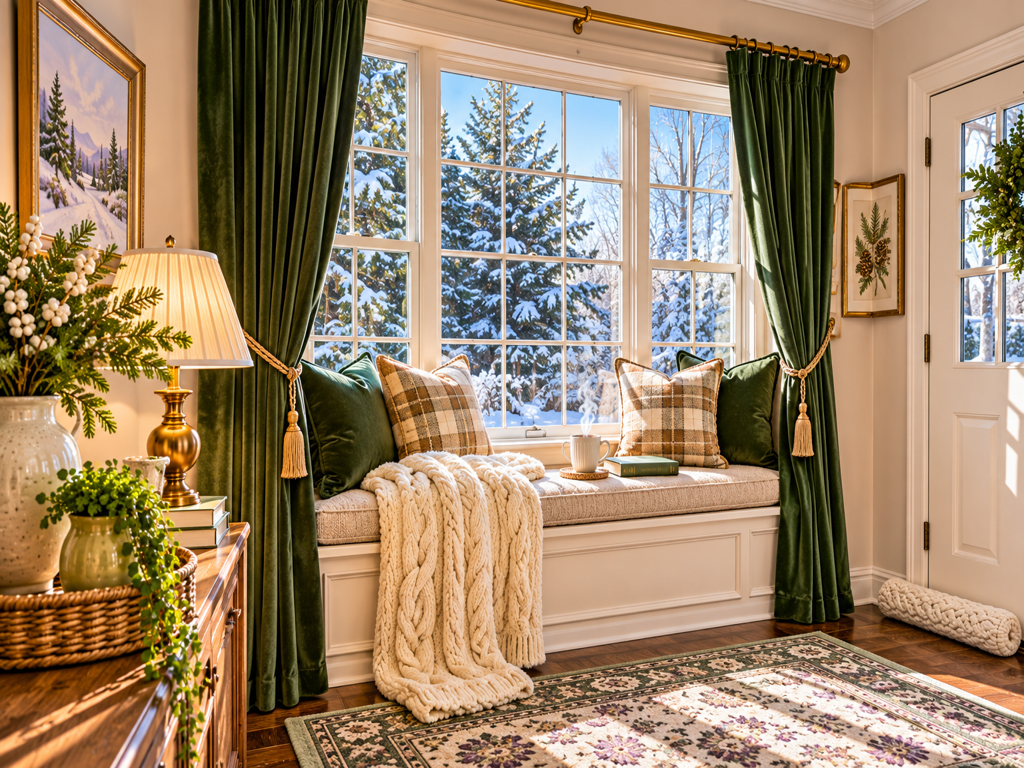
Windows let in precious winter daylight but also let warmth escape. Insulating window coverings that you open during the day and close at night keep rooms brighter by day and warmer by night.
Do curtains really help keep a room warm in winter?
They can. According to the U.S. Department of Energy, windows let heat escape during cooler months, and in Oak Ridge National Laboratory testing, cellular shades reduced heating energy by up to 20% compared with no shades. Lined or thermal curtains help too, especially when they’re closed at night.
The trick is to use your windows on purpose. Open everything wide on sunny winter days to let the light and warmth in. Then close the shades and curtains as the sun goes down to hold the heat and make the room feel enclosed and snug.
Winter curtains are also a great place for color and texture. Velvet or heavy linen in a rich shade makes a room feel finished, and hanging the rod high and wide above the window makes the ceiling look taller.
Window Ideas for Winter
- Cellular or honeycomb shades for insulation
- Lined, thermal or velvet curtains for the rooms you use at night
- Sheer panels behind heavier curtains so daylight still gets in
- A draft stopper along the bottom of a drafty door or window
- A cushioned window seat or bench to enjoy the winter view
Homey Hygge Recommendation
If you love your current curtains, add a thermal liner behind them rather than replacing them. Most attach with simple hooks and add warmth without changing the look.
Bring In Deeper Winter Color
Winter is the perfect season for richer, deeper colors. Jewel tones like plum, forest green, navy and deep teal look warm and wrapped in lamplight, and they balance the gray light outside.

Does winter decor have to be white and neutral?
No. White and silver are one way to decorate for winter, but they can feel cold in a room you’re trying to warm up. Deeper colors, warm wood and soft metallics like brass often feel cozier on a dark evening.
If you already have a colorful home, winter is the time to lean in. If your home is mostly neutral, you can add color without painting anything: a plum velvet pillow, a forest green throw, a navy quilt or a stack of books with rich spines.
For me, it’s purple. Plum and lavender with sage and warm brass feel right in winter. Choose the deep shade you’re drawn to, and repeat it in two or three places around the room so it looks intentional. Our Colorful Hygge guide has more ideas for making color feel calm.
Winter Color Combinations to Try
- Plum, sage and brass
- Forest green, cream and warm wood
- Navy, camel and ivory
- Deep teal, mustard and walnut
- Aubergine, mauve and soft gray
Homey Hygge Tip
Test a winter color in fabric before paint. Drape a throw or pillow in that shade over your sofa for a week. If you still love it on a gray afternoon and under evening lamplight, it’s a good choice for your room.
Add Natural Winter Touches and Seasonal Scent
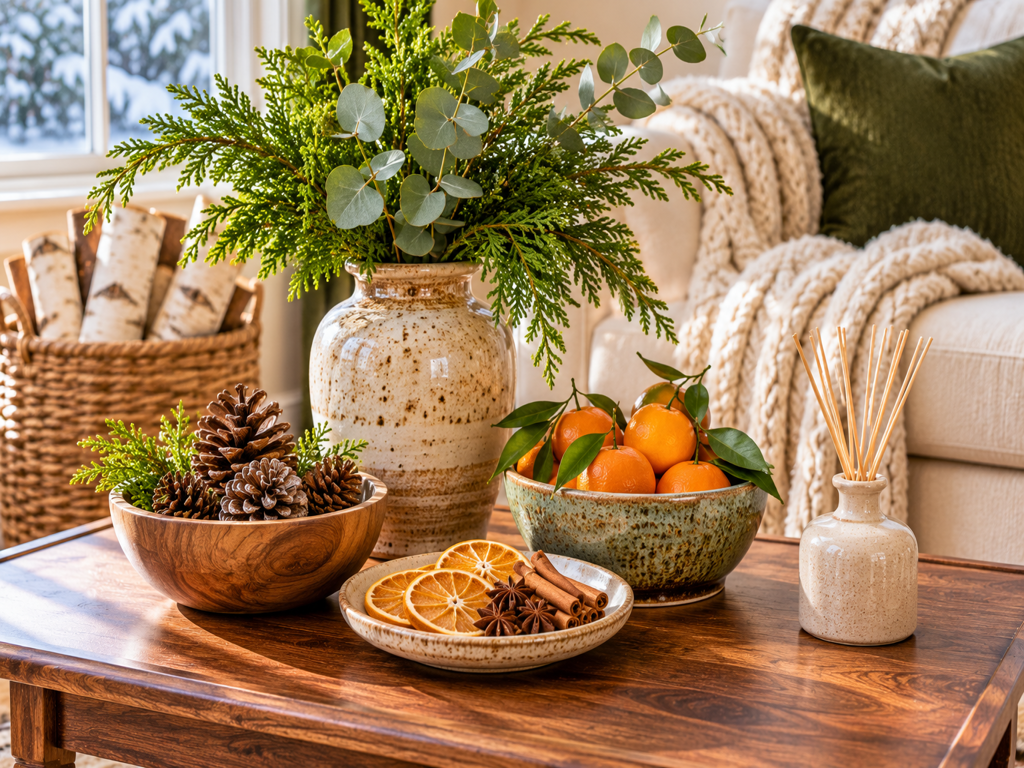
Natural elements bring winter inside in a quieter way than themed decorations. Evergreen branches, pinecones, wood, wool and a bowl of citrus feel seasonal without looking like holiday decor.
What can I decorate with after Christmas that still feels wintery?
Evergreen branches, eucalyptus, birch logs, pinecones and dried orange slices all feel like winter without saying Christmas. Since they aren’t tied to a holiday, they can stay out from December through February.
You don’t need a houseful of plants to bring nature in. A few cut evergreen branches in a tall vase, a bowl of pinecones on the coffee table, or a stack of birch logs by the hearth is enough. Natural wood, wool and ceramic add warmth too.
Winter is also a lovely season for scent. I can’t do most floral scents, so I stick with citrus, woodsy and spice scents, which are perfect in winter. A simmer pot of orange peel and cinnamon, a reed diffuser or a bowl of clementines can make the house smell like the season.
Natural Touches for Winter
- Cut evergreen, cedar or eucalyptus branches in a tall vase
- A bowl of pinecones, clementines or dried orange slices
- Birch or firewood logs stacked in a basket
- Wool, sheepskin and warm wood accessories
- A stovetop simmer pot of citrus peel, cinnamon and cloves
Homey Hygge Recommendation
Choose one natural centerpiece and refresh it through the season instead of decorating every surface. Evergreen in December, citrus and branches in January, and a few early tulips or forced bulbs in February keep the room feeling alive.
Create One Warm Gathering Spot
Every winter home needs one spot where everyone naturally ends up in the evening. Arrange your seating close together around a focal point, like a fireplace, a lit bookshelf or a coffee table, so the space invites conversation and slow evenings.

How can I make a room feel cozy without a fireplace?
Create a glowing focal point another way: a cluster of lamps, string lights in a lantern or on a bookshelf, or an electric fireplace insert. Then pull your seating in close around it and pile on the blankets.
In winter, people want to be close to warmth and to each other. Pulling the sofa and chairs a little closer together, adding a soft rug in the middle and keeping a tray of mugs and a board game nearby makes the room feel like the place to be. Our hygge living room ideas cover seating layouts in more detail.
If you use a space heater to warm up a chilly room, use it carefully. The National Fire Protection Association reports that space heaters account for about one-third of home heating fires and 80% of home heating fire deaths, and nearly half of home heating fires happen in December, January and February. Keep anything that can burn, including blankets, curtains and furniture, at least three feet away, plug it directly into a wall outlet, and turn it off when you leave the room or go to bed.
What Makes a Great Winter Gathering Spot
- Seating arranged close together, facing each other
- A focal point that glows: a fireplace, lamps or string lights
- Blankets within reach of every seat
- A coffee table or tray for mugs, snacks and games
- A soft rug underfoot
Homey Hygge Tip
Keep a winter basket near your gathering spot with a few board games, a deck of cards, a puzzle and an extra throw. When everything you need for a cozy evening is in one place, it’s much easier to say yes to one.
Make a Corner for Winter Hobbies
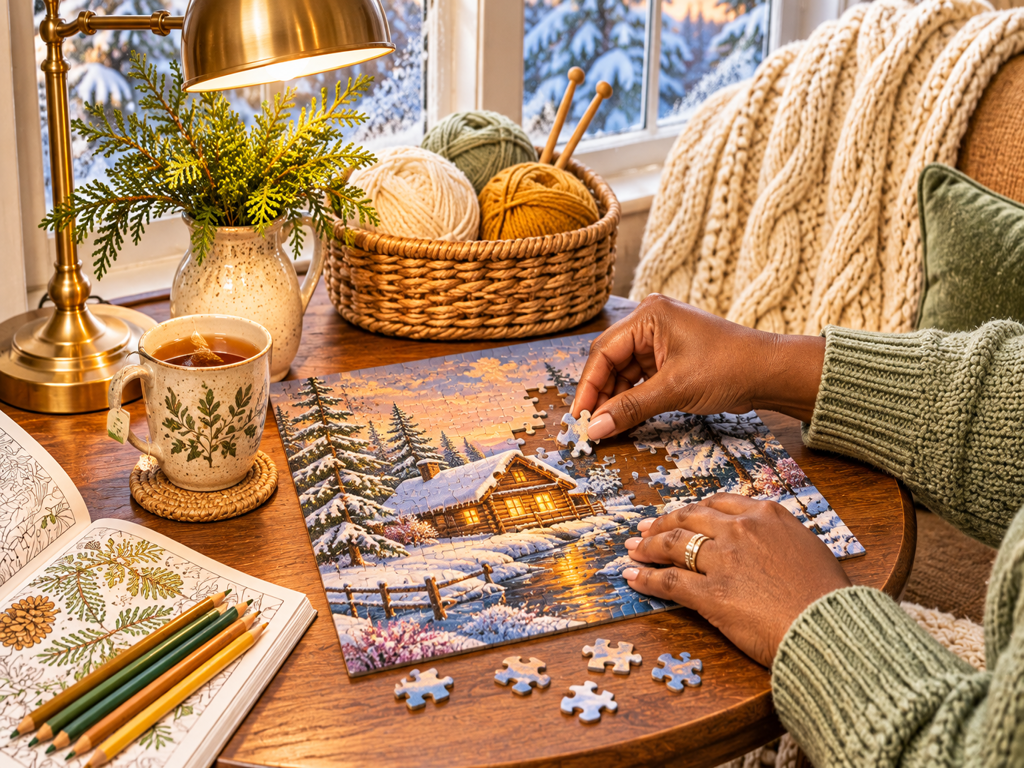
Long winter evenings are perfect for slow, hands-on hobbies. A small, well-lit corner with a comfortable chair and everything you need within reach makes it easy to read, craft or color instead of scrolling.
What are good cozy hobbies for winter?
Reading, puzzles, adult coloring, journaling, knitting, crochet and baking are all wonderful winter hobbies. They’re relaxing and hands-on, and they give you a reason to put the phone down and settle in.
A hobby corner doesn’t need its own room. A chair by the window, a good lamp, a small table and a basket for supplies is enough. Pick the hobby you actually want to do more of this winter, and set up the corner around it.
My own favorite winter spot is my reading nook, with a comfy chair, a lamp, a heated blanket and a plant stand whose grow light gives off a soft glow in the evening. Our guide to creating a cozy reading nook walks through how to set one up in any space.
Winter Hobby Corner Essentials
- A comfortable chair that fits your body
- A good task lamp with a warm bulb
- A side table big enough for a mug and your project
- A basket or caddy for books, yarn, puzzles or coloring supplies
- A warm blanket draped over the arm
Homey Hygge Tip
Leave your current project out instead of putting it away. A half-finished puzzle, a coloring book open to a page or a basket of yarn by the chair invites you back far more than a perfectly tidy corner does.
Get the Entryway Ready for Cold Weather
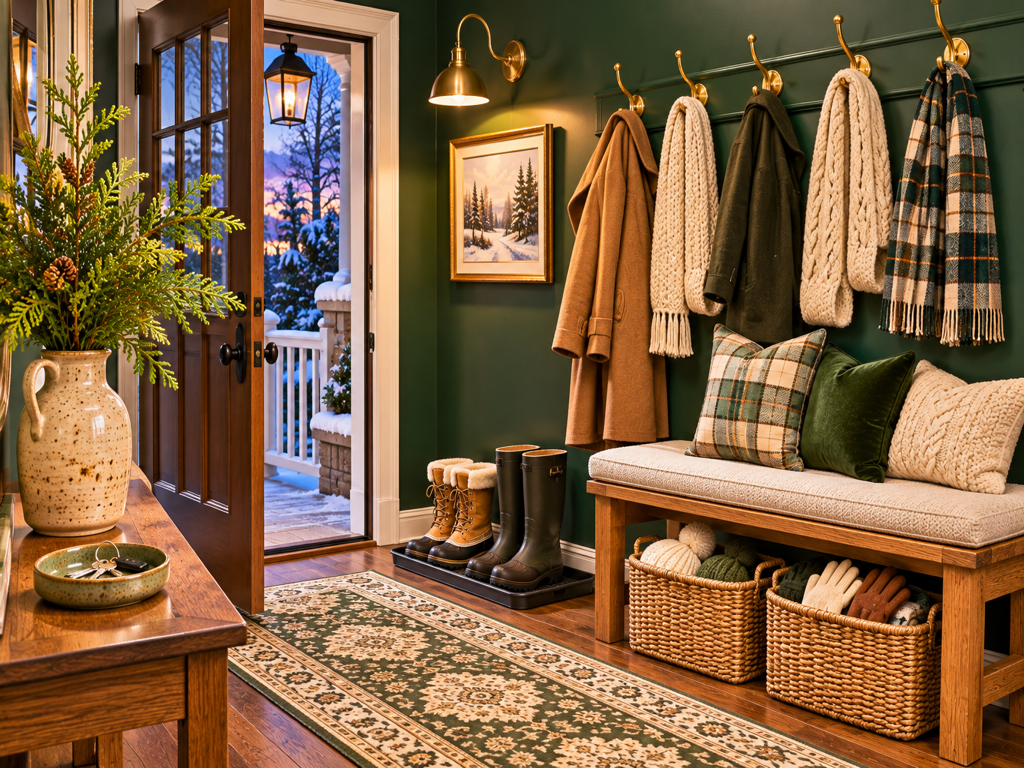
The entryway sets the tone the moment you walk in from the cold. A spot for wet boots, a hook for every coat and a basket for hats and gloves keeps winter mess contained and makes coming home feel welcoming.
How do I keep a winter entryway from getting cluttered?
Give every winter item a place: a boot tray for wet shoes, hooks at the right height for each person, and one basket for hats, scarves and gloves. When everything has a spot, it’s easy to put away at the door.
Winter is hard on entryways. Wet boots, bulky coats and dropped bags can pile up fast, and a cluttered entry makes the whole house feel less calm. A little organization here pays off every single day of the season.
It can still be cozy. A sturdy washable rug, a small bench for pulling off boots, a lamp or plug-in sconce instead of a harsh overhead light, and a simple seasonal touch like an evergreen branch make the entry feel like a warm welcome rather than a drop zone.
Winter Entryway Must-Haves
- A boot tray or washable mat for wet shoes
- Enough hooks for every coat, at heights everyone can reach
- A basket for hats, scarves and gloves
- A small bench or stool for putting on and taking off boots
- A warm light source, like a small lamp or plug-in sconce
Homey Hygge Recommendation
Add a second, smaller basket for each family member if you have room. Everyone’s gloves and hats stay together, and nobody has to dig through a shared pile on a cold morning.
Keep the Winter Feeling After the Holidays
The weeks after Christmas can feel bare once the decorations come down. Keeping the lights, greenery, blankets and winter colors out through February gives your home a cozy, seasonal feel without looking like you forgot to take the tree down.

What should I keep out after taking down Christmas decorations?
Keep anything that says winter rather than Christmas: string lights, evergreen branches, pinecones, plaid or knit throws, wool textures and candles or flameless candles. Put away the ornaments, Santas and holiday-specific signs.
January and February can be the hardest months of winter: the holiday sparkle is gone, but it’s still cold and dark. This is exactly when hygge matters most, and when a cozy home can make the biggest difference to how you feel.
As you pack up the holidays, sort decorations into “Christmas” and “winter” piles. The winter pile stays out. Our article on hygge Christmas decor shows how to decorate in a way that makes this transition easy from the start.
Winter Decor That Can Stay Out Through February
- String lights and fairy lights
- Evergreen branches, pinecones and birch
- Knit, plaid and faux fur throws and pillows
- Winter scents like citrus, cedar and spice
- Deep jewel-tone accents in plum, green or navy
Homey Hygge Tip
Take down the Christmas decorations one evening, then do a quick “winter reset” the next day: fluff the blankets, rearrange the string lights, and put a fresh bowl of clementines on the table. The house feels refreshed instead of empty.
Frequently Asked Questions About Cozy Winter Decor Inspired by Hygge
What is hygge winter decor?
Hygge winter decor focuses on comfort and warmth rather than a specific look. It usually means layered blankets and soft textiles, warm low lighting, natural materials and a few personal touches that make the home feel welcoming on cold, dark days.
How do I make my house feel cozy in winter on a budget?
Start with what you already own. Move blankets to where you actually sit, swap pillow covers, switch to warm white bulbs and pull your seating closer together. Evergreen branches, pinecones and a bowl of citrus cost little and make a room feel seasonal.
When should I put up winter decor?
Many people bring out winter textiles and lighting in November as the evenings get darker, then add holiday decor in December. The winter pieces can stay out until late February or early March, whenever your weather starts to warm up.
How do I make a cold room feel warmer without turning up the heat?
Layer a thick rug, close insulating curtains or cellular shades at night, add warm lamplight and keep blankets on every seat. Draft stoppers on doors and windows can make a noticeable difference in a chilly room too.
Can winter decor be colorful?
Yes. Deep jewel tones like plum, forest green, navy and teal look especially warm in winter lamplight. Pair them with natural wood, brass and cream for a look that feels rich and cozy instead of cold.
Make Your Home the Warmest Part of Winter
Winter decor doesn’t have to mean a new look or a long shopping list. Most of what makes a home feel cozy in the cold months is already there, waiting to be pulled out, layered up and turned on. For room-by-room ideas, start with The Complete Hygge Home Guide to Cozy Rooms.
Start with what you touch: the biggest, softest blankets you own, fabrics that feel warm and a rug under your feet. Then think about light, because winter evenings are long, and a house full of warm lamplight is a much happier place to spend them. Windows, color and a few natural touches round out the season.
The spaces matter as much as the decor. One warm spot where everyone gathers, one corner where you can read or make something, and an entryway that welcomes you in from the cold make winter something to settle into rather than just get through.
And when the holidays are over, don’t let the house go bare. Keep the lights, the greenery and the blankets out. January and February are when a cozy home matters most.
Continue Creating Your Homey Hygge Home
Winter evenings are long, and the right lighting makes them the best part of the day. Read Hygge Lighting: How to Create a Warm, Cozy Glow at Home next to learn how to layer lamps, choose warm bulbs and use dimmers in every room.