
A hygge home is not created by filling every room with candles, chunky blankets, and beige furniture. It comes from shaping your home around comfort, warmth, connection, personality, and the way you actually want to live.
That is the part of hygge I find most interesting as I bring more of it into my own home. I love beautiful spaces, but I want ours to do more than photograph well. I want places where my family naturally gathers, where I can settle into a hobby, where the lighting feels softer at the end of the day, and where the colors and things around us actually feel like us.
You also do not need to start with a major renovation or a shopping cart full of “hygge decor.” Creating a more welcoming home can begin with something as small as moving a chair, changing the lighting, making room for an activity you enjoy, or noticing what already makes you feel comfortable.
TL;DR: Creating a Hygge Home
A hygge home combines comfort, warmth, personality, and spaces that support the way you want to live. Focus on comfortable furniture, softer layered lighting, inviting textures, colors you enjoy, meaningful belongings, manageable clutter, and room layouts that encourage relaxing and connecting. You do not need a neutral color palette, minimalist decor, expensive furniture, or a perfectly styled home to make your space feel hygge.
Start With the Feeling You Want at Home
Creating a hygge home starts with deciding how you want your space to feel before deciding how you want it to look. Comfort, ease, connection, warmth, and enjoyment should guide the decorating choices that follow.
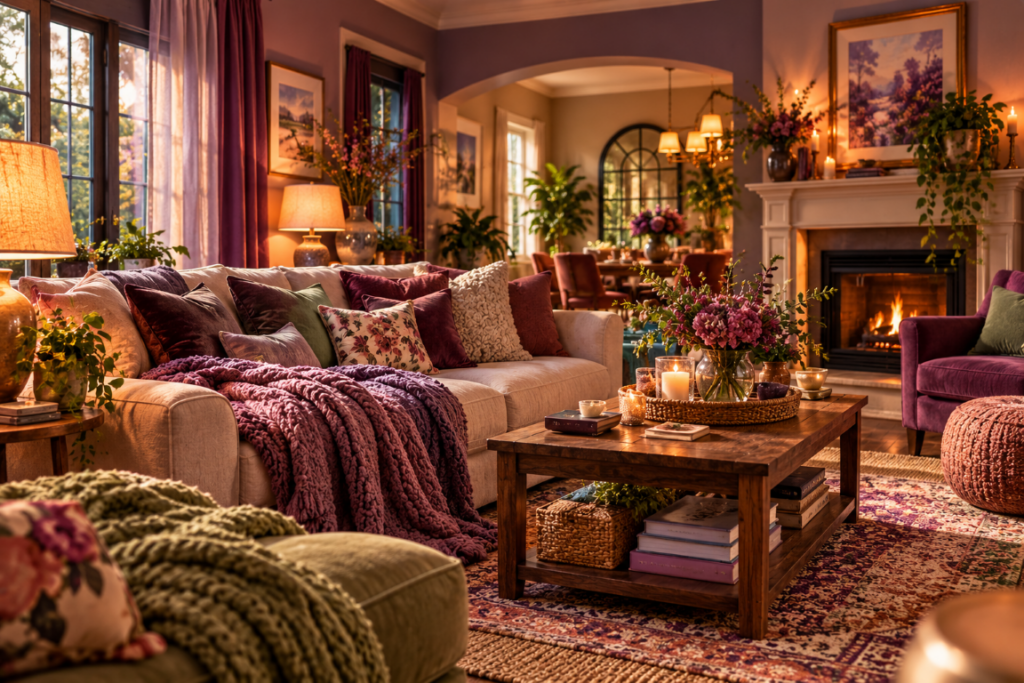
What should a hygge home feel like?
A hygge home should feel easy to settle into and enjoyable to spend time in. That can mean calm and quiet in one room, warm and social in another, and colorful or creative somewhere else.
Before shopping for anything, think about what you want each part of your home to make easier. Maybe you want your living room to encourage everyone to pile onto the sofa for movie night, your bedroom to help you wind down, or your kitchen to feel like a place where people linger rather than grab food and disappear.
Starting with the feeling changes the decorating process. Instead of asking, “What do I need to buy to make this room look hygge?” you can ask, “What would make this room more enjoyable for us to actually use?”
Sometimes the answer is a new lamp or a better chair. Other times it is moving furniture, removing something that constantly gets in the way, bringing out a blanket you already own, or finally creating a spot for something you keep saying you want to do.
What to Think About First
- How you want the room to feel
- What you naturally do there
- What currently makes the space uncomfortable or inconvenient
- Which activities you want the room to support
- What would make you want to spend more time there
Homey Hygge Tip
Walk into the room without thinking about decorating and ask yourself, “What keeps me from fully enjoying this space?” That answer is often more useful than starting with what you think the room needs to look like.
Build Comfort Into the Spaces You Use Most
Comfort is one of the foundations of a hygge home because a room cannot feel genuinely inviting if it is inconvenient or uncomfortable to use. Focus first on furniture, textiles, temperature, and small details that make everyday activities easier and more pleasant.
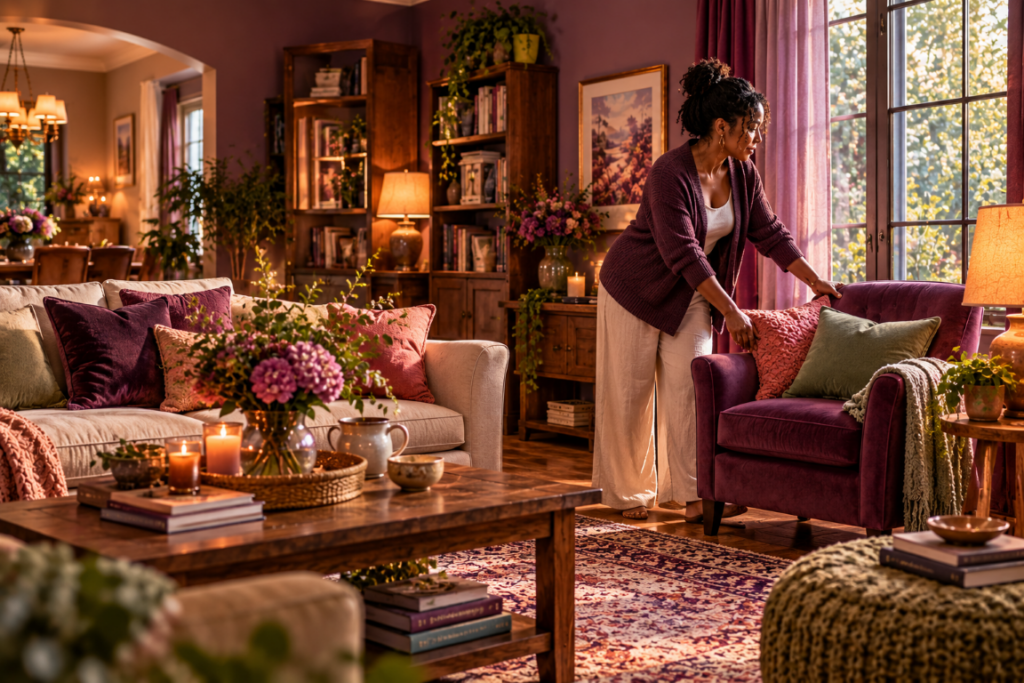
Does hygge mean filling every room with soft things?
No. Soft textures can contribute to comfort, but hygge is not about covering every surface with blankets and cushions. The goal is practical comfort that suits the way you use the room.
A beautiful chair nobody enjoys sitting in does not add much to everyday life. Neither does a sofa buried beneath so many decorative pillows that sitting down becomes a small excavation project.
Think about what your household actually does in each room. If you watch movies together, seating should make that comfortable. If someone reads in the living room, good lighting and somewhere to put a drink may matter more than another decorative accessory.
Comfort can come from smaller changes too. A rug underfoot, curtains that soften a room, a footstool, an extra throw, supportive cushions, or a side table within reach can make a space feel noticeably more inviting without changing its entire design.
Comfort Priorities
- Seating you genuinely enjoy using
- Softness where it makes sense
- Easy access to the things you use often
- Comfortable temperature and lighting
- Furniture that works with your body and routines
- Clear pathways through the room
Homey Hygge Tip
Do not judge comfort from the doorway. Sit where you normally sit, lie where you normally relax, or spend ten minutes doing what you usually do in the room. The inconvenient little things become much more obvious once you experience the space instead of simply looking at it.
Layer Lighting for a Warmer Atmosphere
Layered lighting makes a hygge home feel warmer and more adaptable by combining several smaller light sources instead of relying entirely on one bright overhead fixture. Lamps, dimmers, accent lighting, and candle-style light can help a room shift naturally from daytime activity to evening relaxation.
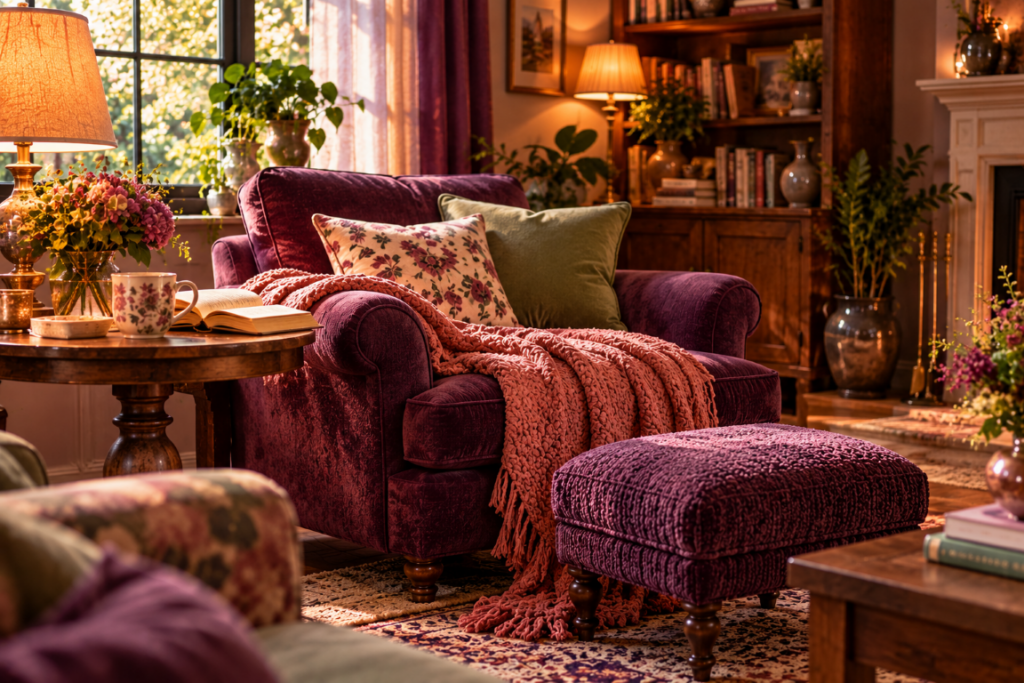
How many light sources does a cozy room need?
There is no required number, but most rooms benefit from more than one type of light. Combining general lighting with task and accent lighting gives you more control over the atmosphere and makes different parts of the room more useful.
Lighting can completely change the personality of a room without requiring a major decorating project. A space that feels perfectly fine during the day can suddenly feel flat or harsh at night if the only option is one bright ceiling light.
Table lamps can soften a living room, while a floor lamp beside a chair can create a comfortable reading spot. Smaller accent lights can warm darker corners, and dimmers make it easier to change the same space depending on what you are doing.
Candles are famously associated with hygge, but they are not required. If candles are impractical for your household, flameless candles, lanterns, smart bulbs, dimmable lamps, and other softer light sources can create the same type of visual warmth.
Lighting to Consider
- Table lamps for soft pools of light
- Floor lamps near seating and reading areas
- Task lighting where you read, craft, or work
- Dimmers or adjustable bulbs
- Accent lights for shelves and darker corners
- Flameless candlelight where open flames are not practical
Homey Hygge Tip
After sunset, turn off the overhead light and walk through the room. Wherever you immediately think, “I cannot see a thing over here,” is probably where another layer of lighting would make the biggest difference.
Use Color and Texture Without Losing Your Personality
A hygge home can be colorful, layered, and expressive as long as the colors and textures help the space feel comfortable and personal. Neutral Scandinavian interiors are one version of hygge, not a rule you have to follow.
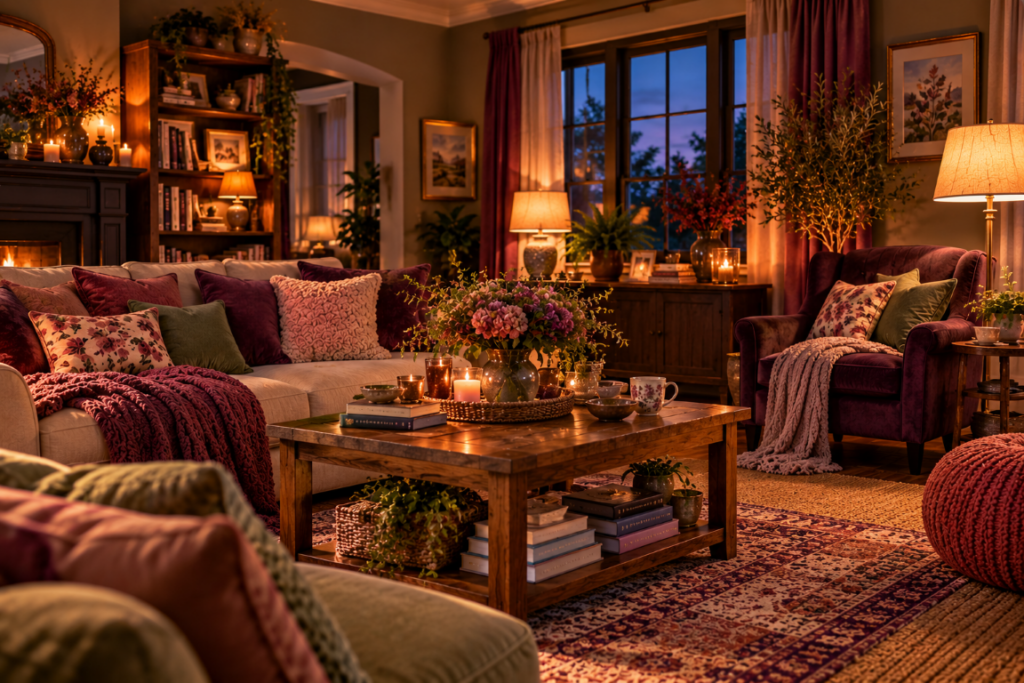
Do hygge homes have to use neutral colors?
No. Neutral colors are common in Scandinavian-inspired interiors, but hygge itself is about atmosphere and experience rather than one approved palette. Richer colors can feel just as warm and welcoming when they work together comfortably.
This is especially important for Homey Hygge because I am not interested in stripping the personality out of a room in the name of coziness. I am personally drawn toward purple, and I want to explore how plum, lavender, berry, aubergine, and other purple tones can work alongside warm wood, sage, coral, cream, and softer lighting.
Your palette may look completely different. Deep blue, earthy green, rust, burgundy, mustard, pink, or brighter accents can all belong in a cozy home if those colors make the space feel like yours.
Texture adds another layer of warmth. Rugs, curtains, upholstery, blankets, pillows, baskets, wood, linen, cotton, wool, and other tactile materials can make a room feel more dimensional and lived in.
The goal is not to pile on every texture at once. A few well-chosen layers usually create more warmth than a room overloaded with things added simply because they look cozy.
If you want to dive deeper into using color to create your Hygge Home, checkout our guide that walks you through everything you need to know to get a little bold without going crazy.
Easy Ways to Add Color and Texture
- Throws and cushions
- Rugs
- Curtains
- Upholstered furniture
- Artwork
- Painted furniture or walls
- Wood and woven materials
- Books and decorative objects
- Seasonal textiles
Homey Hygge Recommendation
Choose one or two colors you already love and build outward from there instead of starting with a preset “hygge palette.” Your home will feel more personal, and you are much less likely to get tired of it because the colors came from your own preferences rather than a trend board.
Arrange Rooms Around Real Life
A hygge room should support the activities and relationships that actually happen there. Furniture placement, pathways, conversation areas, lighting, and storage all work better when they are planned around everyday habits instead of appearance alone.
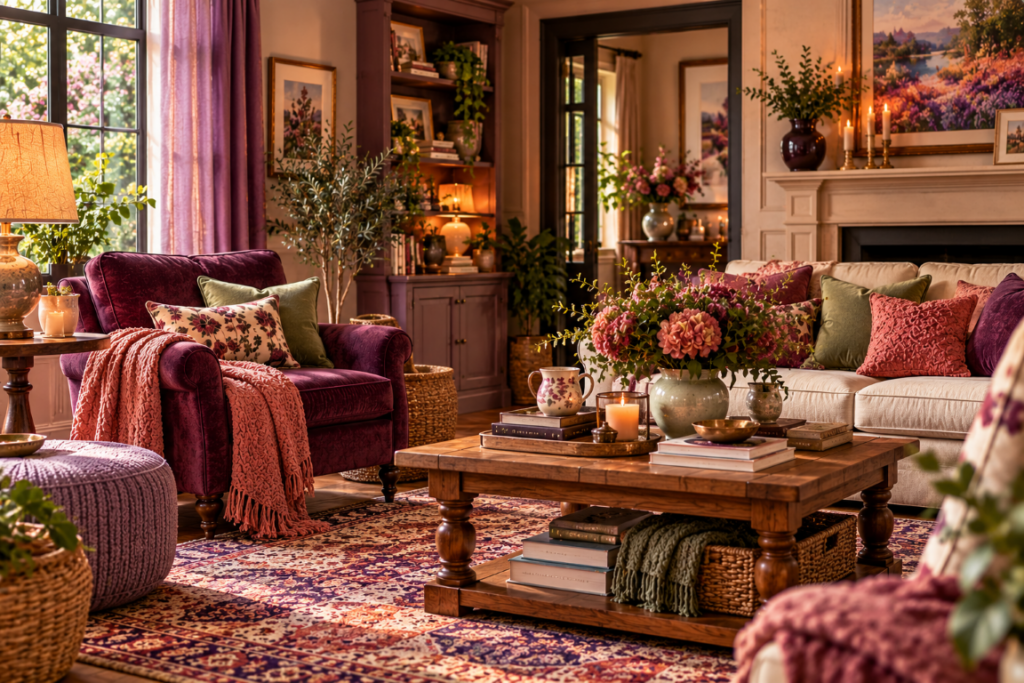
What makes a room layout feel more inviting?
An inviting layout makes it easy to sit, move, talk, relax, and use the room without constantly rearranging things. Seating should relate naturally to other seating, tables should be useful, and frequently used items should be easy to reach.
Furniture placement can quietly help or hinder the atmosphere of a room. A living room where every seat feels isolated creates a different experience from one where people can comfortably talk to one another.
A reading chair placed far away from a usable light source may look lovely but probably will not become much of a reading spot. A dining table constantly covered with things that belong elsewhere makes lingering over meals less likely.
Pay attention to the natural activities in each space. If your family gathers in the living room, make gathering easy. If you drink coffee in the same kitchen corner every morning, make that spot enjoyable.
A hygge home should work with your habits rather than constantly requiring you to work around the room.
Layout Priorities
- Easy conversation between seats
- Useful surfaces within reach
- Comfortable pathways
- Lighting positioned where activities happen
- Clear places for everyday items
- Furniture scaled appropriately for the room
Homey Hygge Tip
Notice where people naturally sit, stand, gather, and drop things before changing the layout. Your household has probably already created an unofficial floor plan through habit, and working with those patterns is often easier than fighting them.
Make Space for the Things You Enjoy
A hygge home should make enjoyable everyday activities easier to start. Creating visible, comfortable places for reading, coloring, games, coffee, music, or conversation can turn hobbies and small rituals into a more natural part of home life.
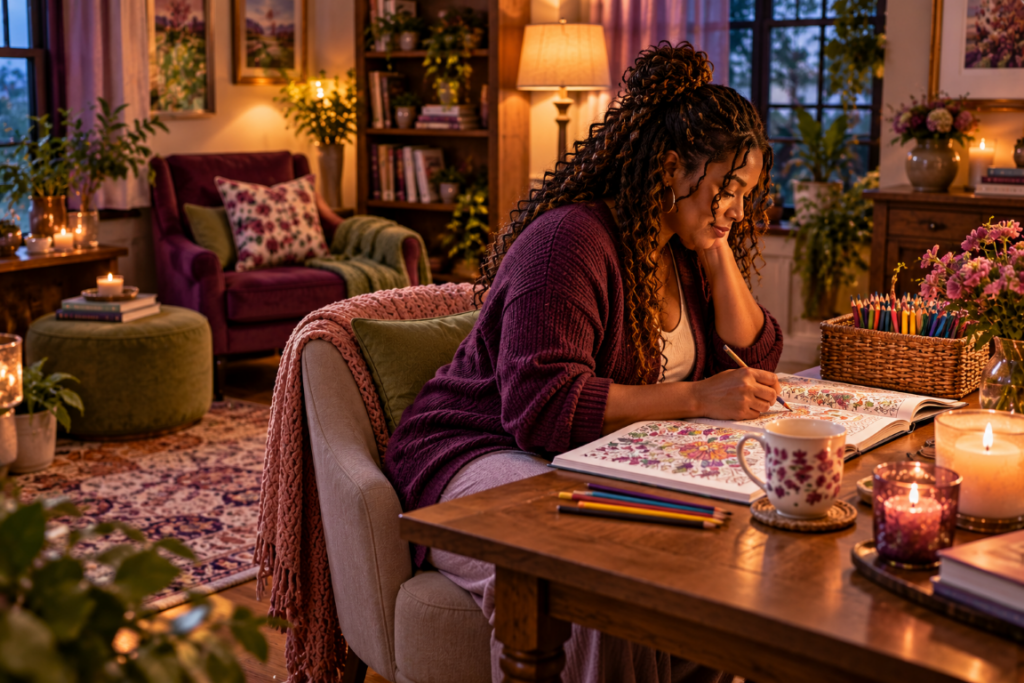
Can hobbies really make a home feel more hygge?
Yes. Hygge is strongly connected with enjoying ordinary moments, so activities that help you slow down, create, connect, or relax fit naturally into a hygge home.
This is one of my favorite parts of the idea because the home becomes more than a backdrop. It can actively make it easier to do more of the things you say you want to do.
If you want to read more, create somewhere comfortable to read. If you enjoy coloring or journaling, keep the supplies somewhere easy to reach instead of storing them so thoroughly that they vanish from your life for six months.
A basket of games can make family game night easier to start. A pleasant dining area can encourage everyone to sit around a little longer. A coffee or tea station can make an ordinary daily habit feel more intentional.
This is where home design and lifestyle begin overlapping. You are not just making the room look nice. You are giving the things you enjoy somewhere to happen.
Cozy Activities Worth Making Room For
- Reading
- Coloring
- Journaling
- Puzzles
- Board games
- Coffee or tea
- Crafts
- Music
- Baking
- Conversation
Homey Hygge Tip
Make at least one enjoyable activity easier to start than scrolling on your phone. If the book, journal, coloring supplies, or game is already within reach, you remove one of the tiny barriers that keeps a good intention from becoming an actual habit.
Let Meaningful Objects Tell Your Story
Personal belongings can make a hygge home feel warmer because they connect the space to memories, people, and experiences that matter to you. The goal is not to display everything you own but to make room for pieces that give your home a sense of identity.
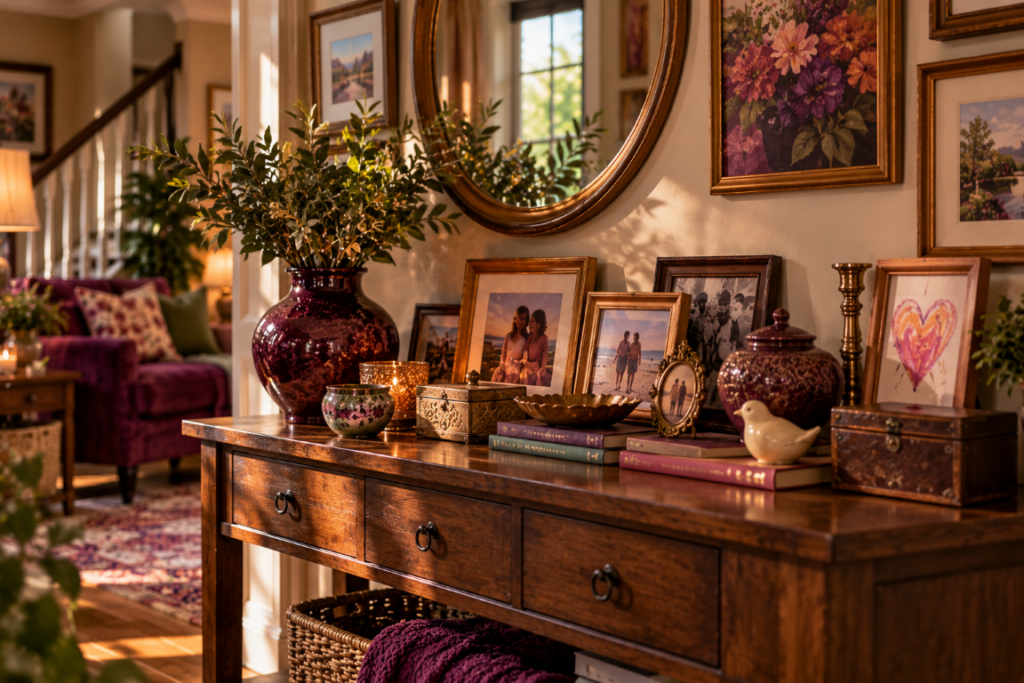
Can sentimental items still work in a stylish home?
Absolutely. Meaningful pieces often make a room more interesting because they add history and personality that cannot be duplicated by buying a coordinated set of accessories.
Family photographs, books, handmade pieces, artwork, children’s creations, travel souvenirs, inherited objects, and collections can all help a room feel personal. They give you something to connect with rather than filling shelves simply because shelves are there.
That does not mean every sentimental possession needs to be displayed at once. When too many things compete for attention, even the pieces you love can disappear into visual noise.
Choose the items that make you happy to see them and give them enough room to matter.
Meaningful Decor Can Include
- Family photographs
- Travel souvenirs
- Handmade pieces
- Books
- Art
- Heirlooms
- Children’s creations
- Collections you genuinely enjoy
Homey Hygge Tip
Before buying something new for an empty shelf or wall, look through what you already own. You may already have a meaningful object that deserves to be seen instead of another decorative filler piece.
Manage Clutter Without Removing All the Character
Hygge does not require minimalism, but reducing clutter that makes your home harder to use can help rooms feel calmer and more comfortable. The goal is not emptiness. It is giving the things you use and love somewhere to belong.
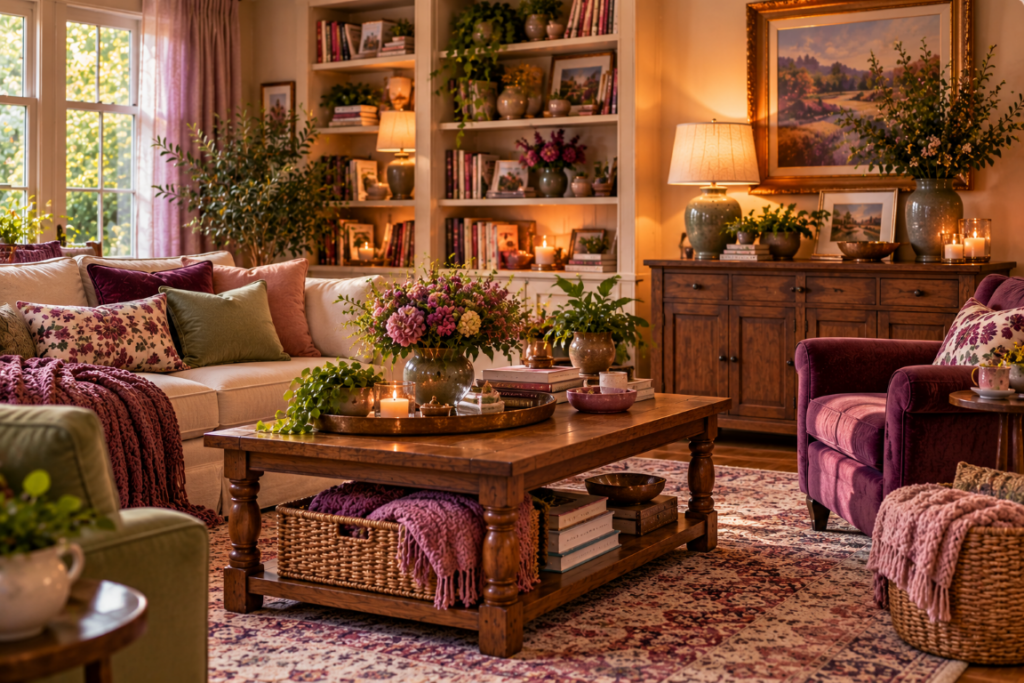
How much clutter is too much for a hygge home?
Clutter becomes a problem when it interferes with comfort, function, or your ability to enjoy the room. A layered space can still feel cozy, while a surface you constantly have to clear before using may be working against you.
There is a real difference between a home with personality and a home where every surface has quietly surrendered.
If you have to move a pile before sitting down, cannot find the supplies for a hobby, or feel constantly distracted by unfinished mess, the room may not be supporting the atmosphere you want.
The answer does not have to be ruthless decluttering. Baskets, cabinets, drawers, trays, shelving, and simple routines can keep frequently used items accessible while giving visual clutter some boundaries.
The goal is a home where the things you love remain part of the story without taking over every available inch.
What Usually Helps
- Baskets for frequently used items
- Trays to visually contain smaller objects
- Closed storage for less attractive necessities
- Shelves for books and collections
- Regular homes for everyday clutter
- Clear surfaces where you actually need them
Homey Hygge Tip
Do not declutter based only on how a room looks. Declutter based on friction. If something constantly needs to be moved, searched for, stepped around, or cleaned before you can use the room, that is a better clue that something needs to change.
Create Hygge With the Home and Budget You Have
You can create a hygge home without owning a large house, renovating, or spending heavily on decor. Small homes, rentals, and limited budgets can all support hygge through comfortable furniture, flexible lighting, useful storage, meaningful objects, and intentional routines.
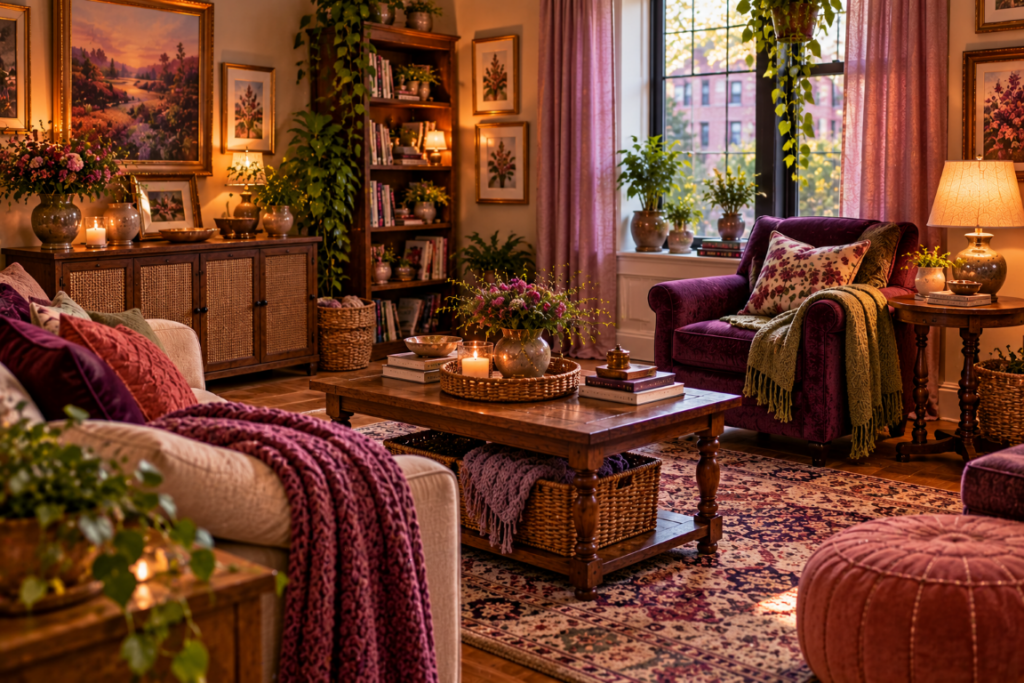
What is the easiest way to make a home feel cozier without spending much?
Start by rearranging and reusing what you already own. Moving furniture, changing lamp placement, bringing out stored textiles, displaying meaningful pieces, and creating a more useful corner can change a room without requiring a large purchase.
Some of the most effective changes cost very little. Rearranging furniture, moving a lamp, clearing a surface, bringing out a blanket, or creating a routine around a space can noticeably change how it feels.
When you do buy something, focus first on pieces that improve everyday life. A lamp beside the chair you use every evening may add more comfort than five decorative objects that exist only to fill a shelf.
Renters can concentrate on portable changes such as rugs, curtains, lamps, artwork, textiles, freestanding storage, and furniture placement. Small homes can benefit from creating intentional zones where one area comfortably supports several activities.
A corner can become a reading nook. A small table can become the center of meals, coloring, games, and conversation.
Hygge works with the home you have now. You do not have to wait for the mythical future house where everything finally becomes perfect.
Budget-Friendly Hygge Ideas
- Rearrange existing furniture
- Shop your own home before buying new decor
- Use secondhand furniture and accessories
- Improve one lighting problem at a time
- Create a small cozy zone
- Display meaningful pieces you already own
- Use textiles seasonally instead of replacing everything
Homey Hygge Recommendation
If you are spending money, prioritize the thing that solves the most annoying everyday problem first. Comfort and usefulness usually give you more lasting value than adding another decorative object.
Let Your Hygge Home Change With Everyday Life
A hygge home should be flexible enough to change with your routines, family needs, seasons, and interests. The feeling of comfort can stay consistent even when the colors, textiles, activities, and atmosphere shift throughout the year.
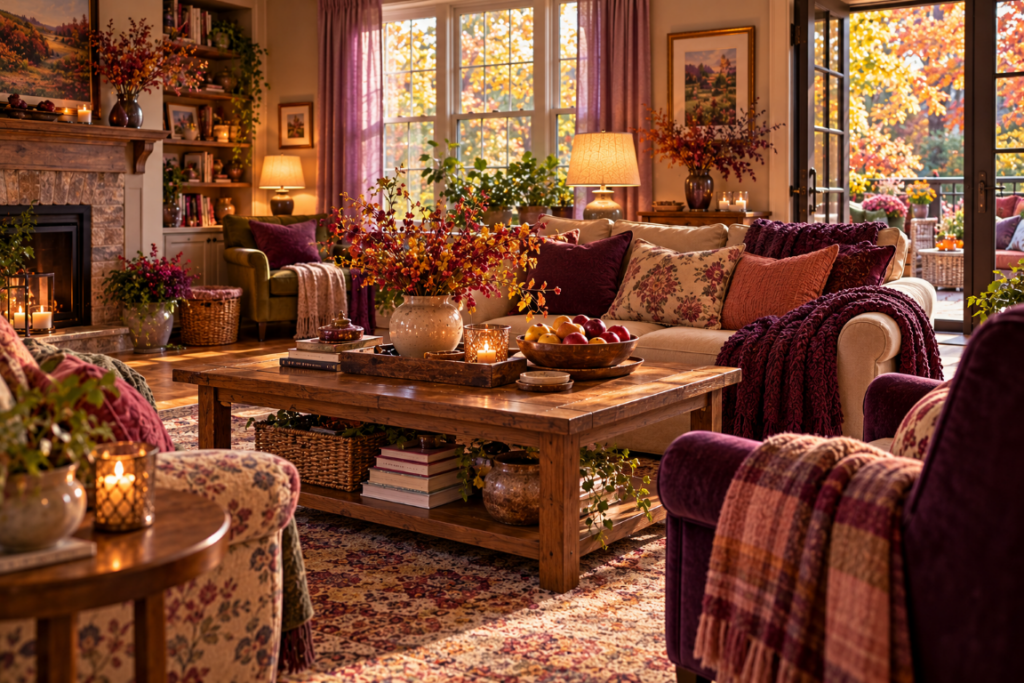
Does a hygge home need to look the same year-round?
No. Seasonal changes are a natural way to keep your home feeling comfortable and connected to everyday life. The underlying feeling can remain the same while the materials, colors, lighting, and activities change.
Fall and winter naturally invite warmer lighting, deeper colors, heavier blankets, baking, and more indoor activities. Spring might bring open windows, flowers, lighter textures, and fresh routines.
Summer hygge can move outdoors through family meals, patios, porches, picnics, beach days, gardening, and long evenings spent talking outside.
You do not need to buy an entirely new collection of seasonal decor every few months. Changing a few textiles, bringing seasonal elements indoors, shifting what you display, or making room for different activities can be enough to change the atmosphere.
Your home should be allowed to evolve with you.
Seasonal Shifts to Try
- Change throw blankets and cushions
- Adjust lighting as daylight changes
- Rotate seasonal hobbies and activities
- Bring natural seasonal elements indoors
- Refresh table settings or textiles
- Move gathering outdoors when the weather allows
Homey Hygge Tip
Think seasonally about how you live, not just how you decorate. A summer porch dinner can be every bit as hygge as a winter evening under a blanket.
My Approach to Creating a Homey Hygge Home
My approach to hygge is to create a home that feels warm, personal, colorful, and useful for real family life rather than trying to copy a prescribed Scandinavian aesthetic. I am treating Homey Hygge as an ongoing journey of testing what genuinely makes our home better to live in.
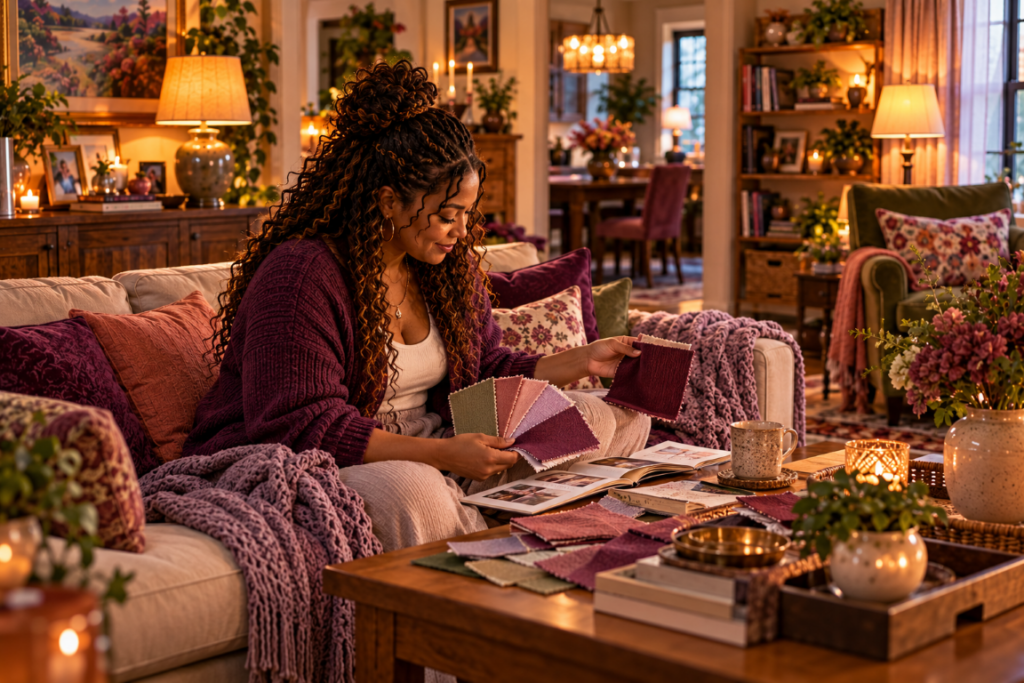
No. I want to borrow the comfort, intentionality, and everyday enjoyment associated with hygge without giving up the colors, belongings, hobbies, and personality that make our home ours.
As I start bringing more of this into my own home, I do not want to design rooms according to a checklist of things a hygge home is supposedly required to have. I want to pay attention to how we actually live.
Where do we naturally gather? Which rooms already feel comfortable? Which spaces do we avoid? What do I wish we did more often at home? What colors make me happy? Where could one small change improve something we already do every day?
Purple is going to be part of that, along with warmer complementary colors, layered textures, family life, hobbies, and pieces that have meaning to us.
Some ideas will work beautifully. Others probably will not survive contact with actual family life, and that is useful information too.
I am not decorating a showroom. I am figuring out how to create a home we genuinely enjoy living in.
What I Want Homey Hygge to Prioritize
- Comfort over perfection
- Personality over prescribed aesthetics
- Color without sacrificing coziness
- Useful spaces for hobbies and connection
- Real-life testing instead of decorative theory
- Thoughtful purchases instead of shopping for the sake of shopping
Homey Hygge Tip
Give yourself permission to let your home develop gradually. A space built around your actual habits, memories, and preferences will usually feel more personal than one recreated from a single inspiration photo in a weekend.
Frequently Asked Questions About Creating a Hygge Home
What makes a home hygge?
A hygge home feels comfortable, welcoming, personal, and enjoyable to use. Lighting, furniture, texture, color, meaningful belongings, room layout, and everyday routines can all help create that atmosphere.
Do I need neutral colors for a hygge home?
No. Neutral colors are common in Scandinavian-inspired interiors, but they are not required for hygge. A colorful home can feel just as cozy when the palette feels comfortable and personal to you.
Does a hygge home need candles?
No. Candles can add atmosphere, but lamps, dimmers, lanterns, smart lighting, and flameless candles can create soft, warm lighting too.
Can I create a hygge home on a budget?
Yes. Rearranging furniture, using things you already own, improving lighting, creating comfortable activity zones, displaying meaningful belongings, and establishing cozy routines can all make a home feel more hygge without requiring a large decorating budget.
Can a small home or apartment feel hygge?
Absolutely. Smaller homes can work especially well for hygge because intentional furniture placement, layered lighting, useful storage, and small activity zones can make every part of the space feel more purposeful.
Does hygge mean getting rid of clutter?
Not necessarily. Hygge does not require minimalism, but reducing clutter that interferes with comfort and function can make a home easier to enjoy.
Can a modern home be hygge?
Yes. Hygge describes an atmosphere and experience rather than one architectural or decorating style. Modern, traditional, colorful, vintage, cottage-inspired, and many other types of homes can all feel hygge.
Create a Home You Want to Spend Time In
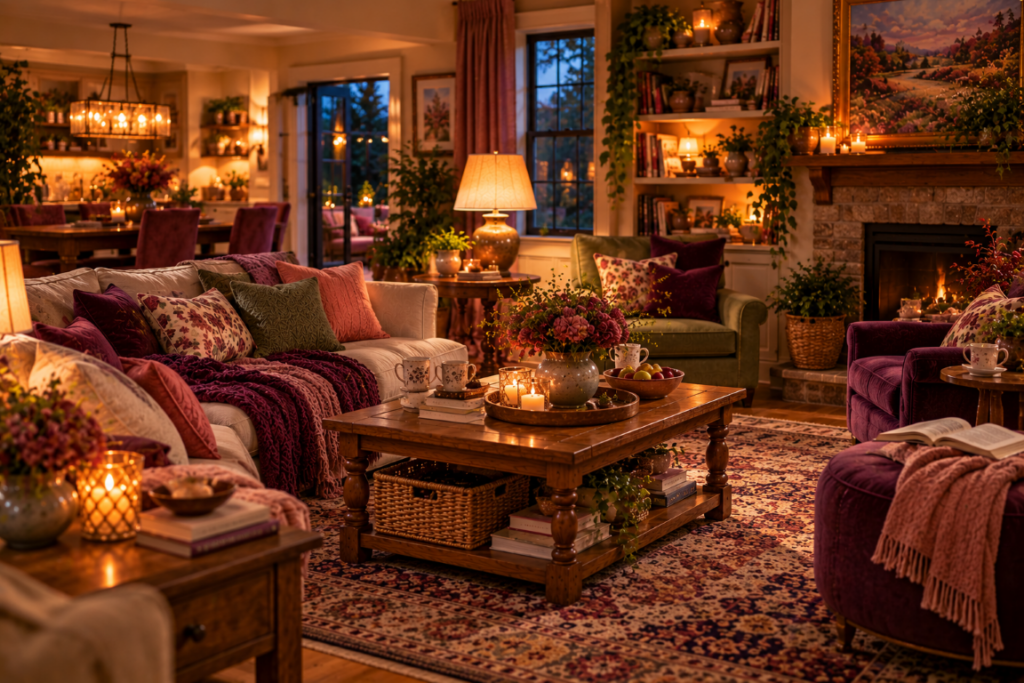
A hygge home does not have to look like anyone else’s. It does not need to be completely neutral, perfectly uncluttered, filled with Scandinavian furniture, or illuminated exclusively by candlelight.
It needs to work for the people who live there.
For me, that means creating spaces comfortable enough to relax in, colorful enough to feel personal, useful enough for real family life, and welcoming enough that we actually want to spend time there.
Start with one room, one corner, or even one everyday routine. Then come back to the Homey Hygge test:
Does this make the space more comfortable, welcoming, personal, or enjoyable to actually use?
If the answer is yes, you are already moving in the right direction.
Continue creating your Homey Hygge home: Next, explore Hygge Living Room Ideas for a Cozy, Inviting Space for ways to bring comfort, color, softer lighting, and more connection into one of the most-used rooms in your home.