
A reading nook, sometimes called a reading corner or book nook, is one of the simplest, most satisfying ways to bring hygge into a home. It is a small spot set aside for one thing: getting comfortable with a book and letting the rest of the day fall away. You do not need a library, a window seat, or a spare room to have one.
The Danes have a word for this kind of spot, hyggekrog, which roughly means a cozy nook or corner. It can be an armchair tucked beside a bookshelf, a corner of the bedroom, the end of a hallway, or even a well-dressed bed. What makes it work is not the square footage but the details: a seat you actually want to sink into, light that is easy on your eyes, a blanket within reach, and a place to set down your tea.
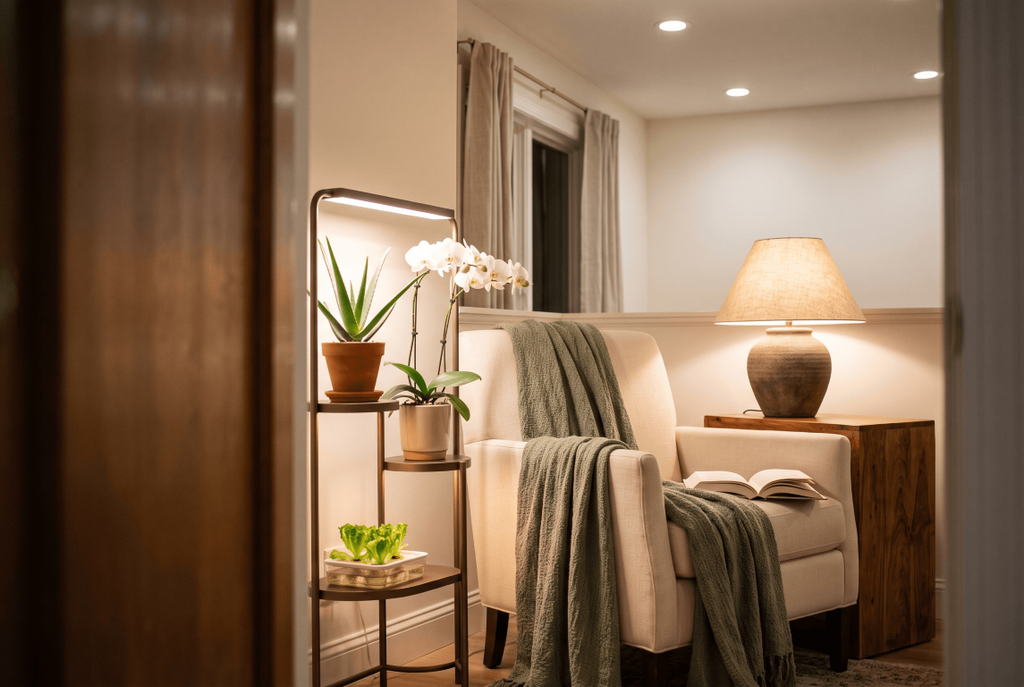
As I have started intentionally creating more hygge in our home, my own reading nook has become one of my favorite spots. It is simple: a comfy chair, a lamp, a heated blanket, and a plant stand whose grow light gives the corner a soft glow in the evening. This guide walks through choosing the spot, the chair, the lighting, and the finishing touches, so you can create a cozy reading nook in whatever space you have.
TL;DR: How to Create a Cozy Reading Nook in Any Space
A cozy reading nook needs four things: a comfortable seat, good reading light, soft textiles, and a nearby surface for books and a drink. Choose a quiet corner, ideally near a window, add a supportive chair or other seat, layer warm task and ambient light, and keep a blanket and your current read within arm’s reach. Finish it with colors and objects you love, and the smallest space can become a favorite spot.
Cozy Reading Nook Ideas at a Glance
- Understand what makes a nook feel hygge: comfort, a sense of enclosure, and calm.
- Find the right spot: corners, windows, landings, bedrooms, and even closets can work.
- Choose a chair you will actually sit in: support and scale matter more than looks.
- Light it for reading and relaxing: pair focused task light with soft, warm ambient light.
- Layer soft textiles: a long blanket, pillows, and a rug make the spot inviting.
- Anchor the nook with a rug: define the space and warm your feet.
- Keep books and essentials within reach: a side table and simple storage make it practical.
- Add color and personality: let the nook reflect what you love.
- Make it work in small spaces and rentals: flexible, renter-friendly ideas for tight spots.
- Make it a cozy evening spot: use it for reading, journaling, or coloring.
What Makes a Reading Nook Feel Hygge
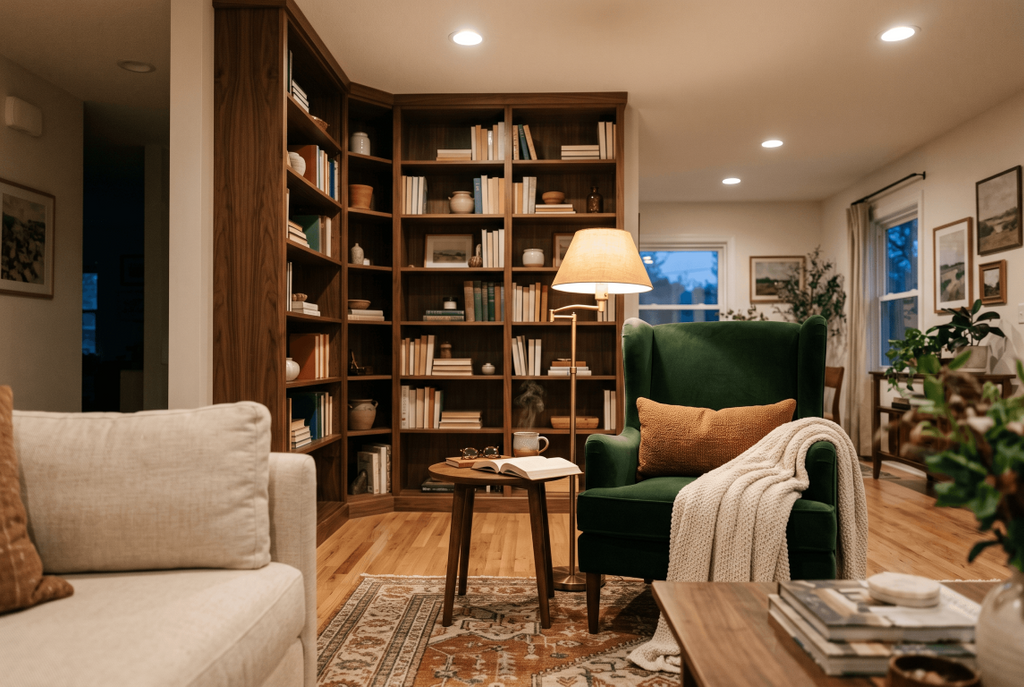
A reading nook feels hygge when it is comfortable, a little tucked away, and calm enough that you can settle in without distraction. In Danish homes this kind of spot is called a hyggekrog, a cozy corner designed purely for relaxing.
What is a hyggekrog?
Hyggekrog is the Danish word for a cozy nook or corner in the home where you go to relax, read, or simply unwind. It usually includes a comfortable seat, soft textiles, and gentle lighting, and it can be as small as a single armchair or as simple as a bed piled with pillows.
The feeling of a good nook comes partly from a sense of enclosure. Being tucked into a corner, beside a bookcase, or under a sloped ceiling makes many of us feel more relaxed, especially when we can still see out into the room. That is why corners and alcoves so often become favorite reading spots.
Comfort is the other half. A nook that looks beautiful but has a stiff chair, harsh light, or nowhere to put your mug will not get used. The best hyggekrog is designed around how you actually like to read, whether that is sitting upright, curling up sideways, or stretching out with your feet up.
Finally, a hygge nook feels calm. It does not need to be minimalist, but it should be free of the visual noise of laundry piles, chargers, and work papers. When you sit down, the space should invite you to slow down.
What Makes a Nook Work
- A sense of shelter: a corner, alcove, or wall at your back makes the spot feel protected.
- Real comfort: a seat that supports how you like to read.
- Gentle, adjustable light: enough to read by, soft enough to relax in.
- Soft textiles: a blanket, pillows, and something underfoot.
- A clear surface: a place for your book, glasses, and drink.
- Calm surroundings: as little clutter and screen distraction as possible.
Homey Hygge Tip
Before buying anything, notice where you already tend to curl up with a book or your phone. That spot is often the natural home for your nook, because it already has the light, quiet, or view that draws you in.
Find the Right Spot for Your Reading Nook
The best spot for a reading nook is a quiet corner with good natural light during the day and room for a seat, a lamp, and a small table. Corners, windows, bedroom nooks, stair landings, and even closets can all become a cozy reading spot.
Where should I put a reading nook in a small home?
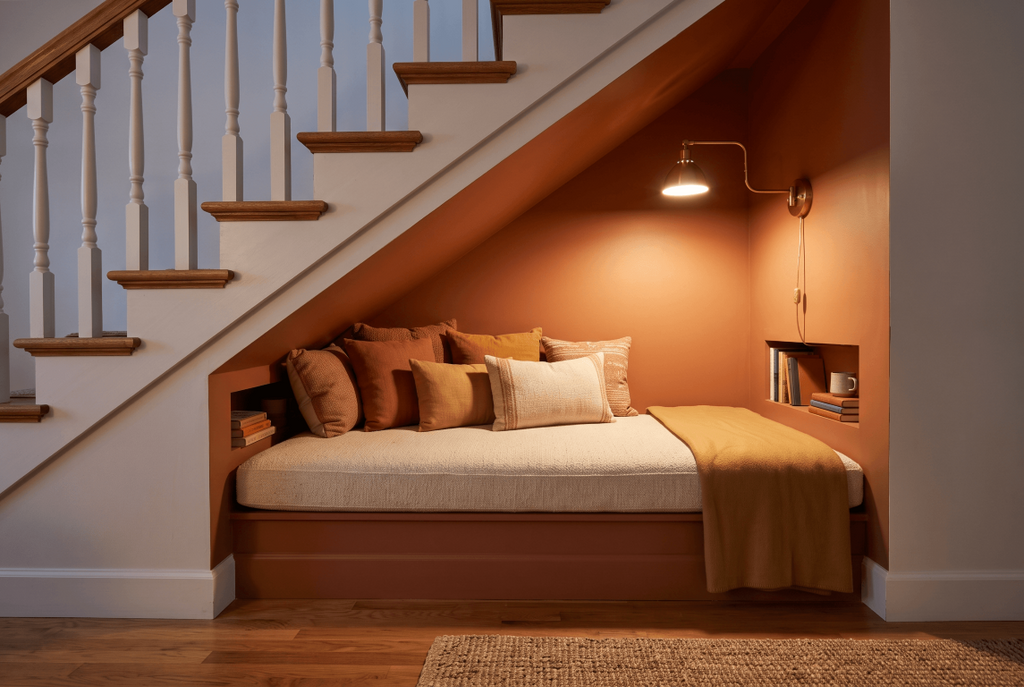
Look for underused spots like the corner of a bedroom or living room, the space beside a window, the end of a hallway, a stair landing, or a closet with the doors removed. All you need is enough room for a seat, a light source, and somewhere to set down a book.
Corners are classic for a reason. With walls on two sides, a corner naturally feels sheltered, and positioning your chair so it faces out into the room gives you that tucked-in feeling while still letting you see what is going on. Windows are another favorite, since daylight is wonderful for reading and a view gives your eyes a place to rest between chapters.
Do not overlook bedrooms. A chair beside the bed or in front of a window can become a quiet retreat away from the busier parts of the house. A bed itself can also serve as a hyggekrog when it is set up with good reading light and plenty of pillows.
Think about noise and traffic, too. A nook right beside the television or in a busy walkway will be hard to enjoy. A slightly out-of-the-way spot is usually worth more than a perfectly styled one in the middle of the action.
Places to Look for a Nook
- Living room corners: add a chair and lamp beside a bookcase.
- Beside a window: take advantage of daylight and a view.
- Bedroom corners: create a quiet retreat away from shared spaces.
- Stair landings, hallway ends, and under the stairs: turn wasted space into a destination.
- Closets and alcoves: remove the doors and build in a seat or cushion.
- Under a sloped ceiling: attic and dormer spaces feel naturally snug.
- Your bed: add a reading light and supportive pillows.
Homey Hygge Recommendation
Sit in your potential spot at the time of day you are most likely to read, both on a sunny afternoon and in the evening. Notice the light, the noise, and how comfortable it feels to stay put for twenty minutes. A spot that passes that test will become a nook you actually use.
Choose a Chair You’ll Actually Sit In
The heart of any reading nook is a seat that supports how you like to read. Look for a supportive back, a comfortable cushion, a seat depth that fits your body, and a size that suits the space, then test it for longer than a minute before you commit.
What makes a good reading chair?
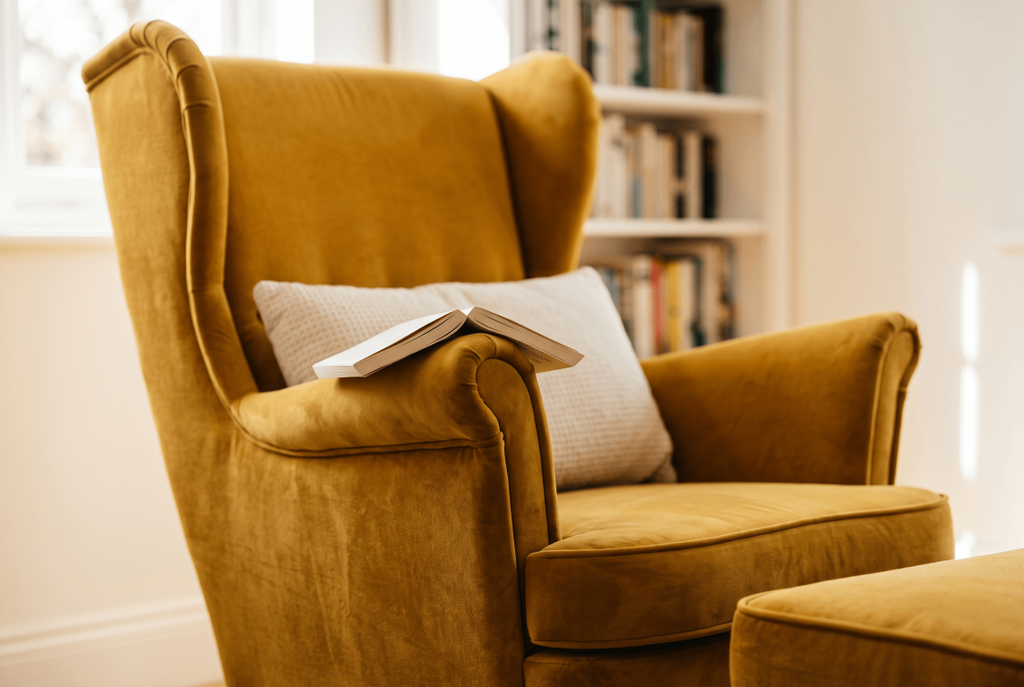
A good reading chair has a supportive back that reaches high enough for your shoulders, and ideally your head, plus a comfortable cushion and a seat depth that fits your legs. Armrests help support your arms while you hold a book, and soft, durable upholstery makes it inviting for long sessions.
Comfort is personal, so think about your reading posture first. If you sit upright, a high-backed chair or wingback gives your neck and shoulders support. If you like to curl up with your legs tucked under you, a deeper or wider seat, sometimes sold as a chair-and-a-half, gives you room to shift around.
Body size matters more than most furniture listings admit. I am tall, so I pay close attention to seat depth and back height, because a chair that hits me in the middle of my shoulder blades will never feel cozy no matter how pretty it is. If you are shorter, a shallower seat that lets your feet rest on the floor may be far more comfortable.
An armchair is not the only option. A chaise, a loveseat, a cushioned bench, a window seat with a thick cushion, a floor cushion, or even a well-pillowed bed can all work. An ottoman or footstool adds a lot of comfort for very little space, especially if you like to put your feet up.
What to Look For in a Reading Seat
- Back height: high enough to support your shoulders, and ideally your head.
- Seat depth: deep enough to support your thighs without forcing you to slouch.
- Cushioning: soft enough to relax into, firm enough to stay supportive.
- Armrests: a place to rest your elbows while holding a book.
- Upholstery: soft, durable fabric that feels good against your skin.
- Scale: a size that fits the nook without crowding walkways.
- A footrest: an ottoman or stool for stretching out.
Homey Hygge Tip
When shopping in person, bring a book and actually read in the chair for ten minutes. Notice where your neck, shoulders, and lower back start to complain. A chair that is comfortable for a quick sit is not always comfortable for a full chapter.
Light It for Reading and for Relaxing
A reading nook needs two kinds of light: a focused task light aimed at your book and a softer ambient glow that keeps the space feeling cozy. Warm, dimmable bulbs and a lamp positioned to the side or slightly behind you make reading easier on your eyes.
What kind of lamp is best for a reading nook?
A floor lamp with an adjustable arm or head, or a table lamp tall enough that the light falls onto your page, works best. For comfortable reading, many lighting guides suggest roughly 450 to 800 lumens at the page, and a dimmer lets you turn the light down when you want a softer mood.
Placement matters as much as the lamp itself. Light should come from the side or from slightly behind your shoulder so it falls across the page without glaring back at you or casting your shadow over the words. For a table lamp, a height of roughly 26 to 32 inches is often recommended, with taller lamps suiting people who sit upright and shorter ones suiting people who lounge.
Color temperature affects the mood. Warm white bulbs feel cozy, while slightly cooler, neutral white light can feel crisper for longer reading sessions. In our home, I rely on lamps with built-in dimmers and color-adjustable smart bulbs on larger side tables, which makes it easy to brighten the light for reading and warm it up as the evening winds down. Overhead, I prefer recessed lighting to anything that hangs low, especially since I am tall.
Accent light adds another layer of coziness. In my own nook, the light on my plant stand does double duty: it keeps my aloe, my orchid, and the lettuce I have started regrowing from scraps happy, and when it is on in the evening, it gives the whole corner a warm, cozy glow alongside my lamp. A small accent lamp, a lit shelf, or a plant light can do the same in yours.
Daylight is a bonus. A nook near a window is lovely for afternoon reading, and a sheer curtain can soften harsh sun without blocking it. For more on layering lamps throughout the home, our guide to Hygge Lighting: How to Create a Warm, Cozy Glow at Home covers the full system.
Lighting Layers for a Reading Nook
- Task light: an adjustable floor lamp, swing-arm wall sconce, or tall table lamp aimed at your book.
- Ambient light: a second lamp or soft overhead light so the area is not dark around you.
- Natural light: a nearby window for daytime reading.
- Dimmers or smart bulbs: to shift from bright reading light to a softer evening glow.
- Warm bulbs: for a cozy feel, with a slightly cooler setting available for longer reads.
Homey Hygge Recommendation
If floor space is tight, consider a plug-in swing-arm wall sconce mounted beside your chair. It puts adjustable reading light exactly where you need it, frees up the side table, and many models can be installed without hardwiring, which makes them a good fit for renters.
Layer Soft Textiles for Comfort
Textiles turn a chair in a corner into a nook you want to curl up in. A long, soft blanket, a couple of supportive pillows, and a rug underfoot add warmth, comfort, and a sense that the space was made for lingering.
What blanket is best for a reading nook?
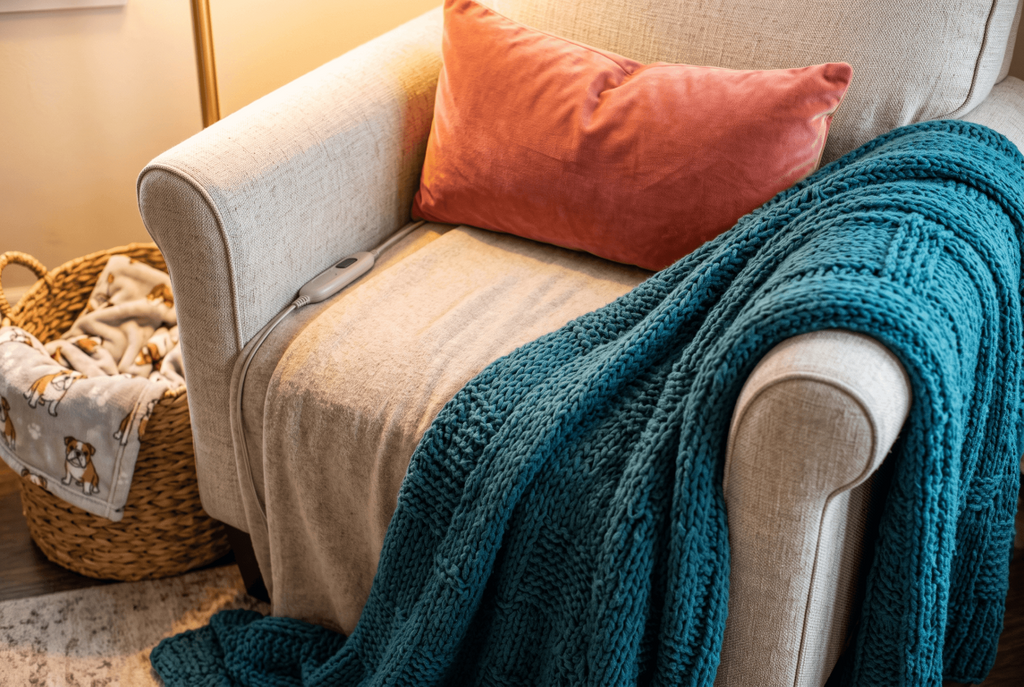
Choose a blanket that is soft, warm, and long enough to cover you when you are curled up or stretched out. Chunky knit, chenille, fleece, crochet, and wool throws all work well, and keeping one folded over the chair arm or in a basket means it is always within reach.
The blanket is the single most important textile in a reading nook, and length matters more than most people think. I am tall, so standard throws rarely cover me, and I always look for long ones. Some of mine are chunky knits, some are chenille or crochet, and a few have fun designs like dogs or coffee mugs. In my reading nook, a heated blanket is the one I reach for most on chilly evenings, and having it ready makes it far more likely I will actually sit down and stay a while.
Pillows provide support as much as decoration. A lumbar pillow at your lower back or a firm cushion behind your shoulders can make an ordinary chair feel custom-fitted for reading. One or two pillows chosen for support usually work better than a pile chosen for looks.
A rug defines the nook and keeps your feet warm. The next section covers how to choose one.
Textiles That Make a Nook Cozy
- A long blanket: at least long enough to cover you from shoulders to toes.
- A supportive pillow: lumbar or back cushions for long reading sessions.
- A small rug: to define the space and warm your feet.
- A footstool cushion or pouf: soft support for putting your feet up.
- Curtains: to soften a window nook and control light.
- Seasonal swaps: lighter throws in summer, heavier knits in winter.
Homey Hygge Tip
Keep a basket beside your nook to hold a second blanket and spare pillow. It keeps the chair from looking overloaded, makes it easy to share the space with someone else, and gives you a quick way to switch textiles with the seasons.
Anchor the Nook With a Rug
A rug is one of the easiest ways to turn a chair in a corner into a defined reading nook. It visually separates the space from the rest of the room, adds softness and warmth underfoot, and brings in color or pattern without any paint.
What size rug works for a reading nook?
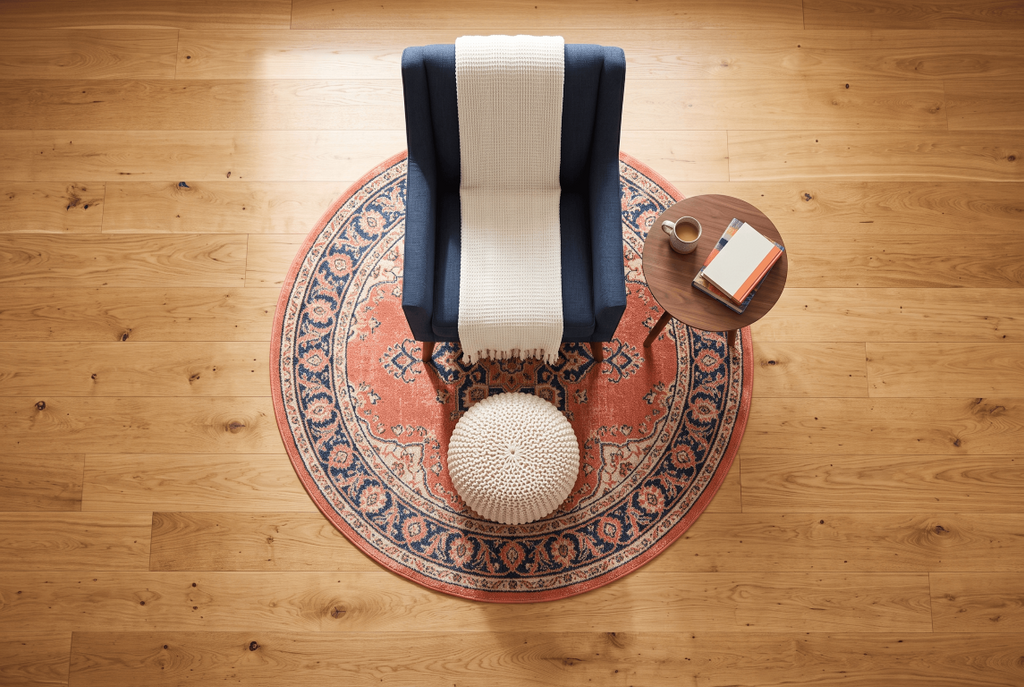
A good rule of thumb is a rug large enough for at least the front legs of your chair and your footstool to rest on it. In most corners that means a small rectangular rug, often around 3 by 5 or 4 by 6 feet, or a round rug about 4 to 5 feet across, but measure your nook first so the rug frames the seat without crowding walkways.
The rug does more than keep your feet warm. When the chair, side table, and lamp all sit on or around the same rug, your eye reads them as one intentional spot instead of furniture pushed into a corner. That is especially helpful in living rooms and bedrooms where the nook shares space with everything else.
Texture matters as much as size. A soft wool, shag, or plush rug feels wonderful under bare feet on a cold evening, while a flatweave or jute rug holds up better in a high-traffic spot. If you already have a large area rug in the room, layering a smaller, softer rug on top in the nook adds coziness and helps define the corner.
A rug is also an easy way to bring in color or pattern. A vintage-style rug, a bold stripe, or a warm floral can set the palette for the whole nook, with pillows and the blanket pulling colors from it.
Rug Choices to Consider
- Size: big enough for at least the chair’s front legs and a footstool.
- Shape: round rugs soften a corner, while rectangles suit a chair beside a bookcase.
- Softness: wool and plush rugs feel coziest underfoot.
- Durability: flatweave, jute, or low-pile rugs handle busier spots.
- Layering: a smaller soft rug on top of a larger one defines the nook.
- Color and pattern: use the rug to set the nook’s palette.
Homey Hygge Tip
Put a rug pad under your nook rug, especially on hardwood or tile. It keeps the rug from sliding when you get in and out of the chair, adds extra cushioning underfoot, and helps protect your floors.
Keep Books and Essentials Within Reach
A reading nook works best when everything you need is within arm’s reach: your current book, reading glasses, a drink, and a place to set them down. A small side table and a bit of simple storage keep the nook practical and clutter-free.
How do I store books in a small reading nook?
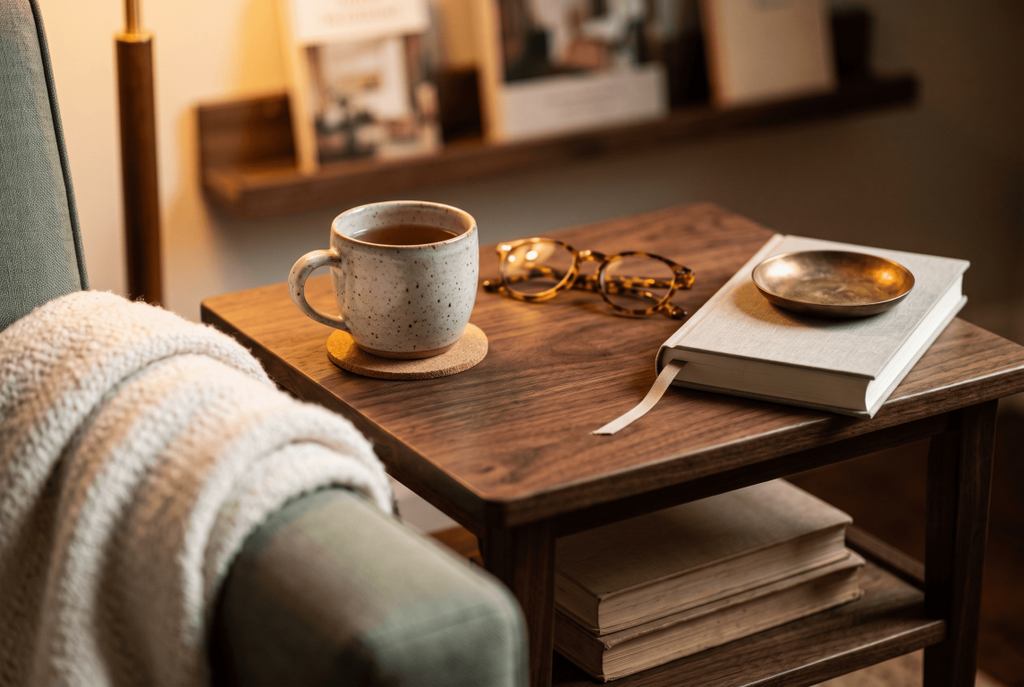
Use vertical storage like a narrow bookcase, wall-mounted shelves, or picture ledges that display covers face-out. A side table with a lower shelf, a basket beside the chair, or a small stack of books on the floor can also hold your current reads without taking up much space.
The side table is the unsung hero of a reading nook. It gives you a place for your tea, your glasses, a bookmark, and your lamp, and without one you end up balancing a mug on the floor. A small round table, a stool, or a C-shaped table that slides over the chair arm all work well in tight spaces.
Book storage can be as simple or as generous as your space allows. A full bookcase beside the chair creates a library feel, while a single shelf or a basket of current reads keeps things light. Picture ledges are especially useful for small spaces, since they let you display a few favorite covers like art.
Keep the nook for reading, not storage overflow. Rotate books in and out, and resist letting mail, laundry, or devices pile up in the space. The calmer the surroundings, the easier it is to settle in.
Reading Nook Essentials
- A side table: for your drink, glasses, and lamp.
- Book storage: a shelf, ledge, basket, or small bookcase.
- A coaster or tray: to protect furniture and corral small items.
- Bookmarks and reading glasses: kept in a small dish or drawer.
- A spot for a notebook and pen: for jotting down favorite passages.
- A charging spot nearby: for an e-reader, placed so it does not clutter the nook.
Homey Hygge Recommendation
Keep a small “up next” stack of two or three books in the nook rather than your whole collection. It keeps the space tidy, makes choosing your next read easy, and gives you a natural reason to rotate in new titles from your shelves or the library.
Give Your Nook Color and Personality
A reading nook is a perfect small space to express your style, because it is contained and easy to change. A colorful chair, a painted wall, a patterned rug, or a few meaningful objects can make the corner feel distinctly yours.
What colors work best for a reading nook?
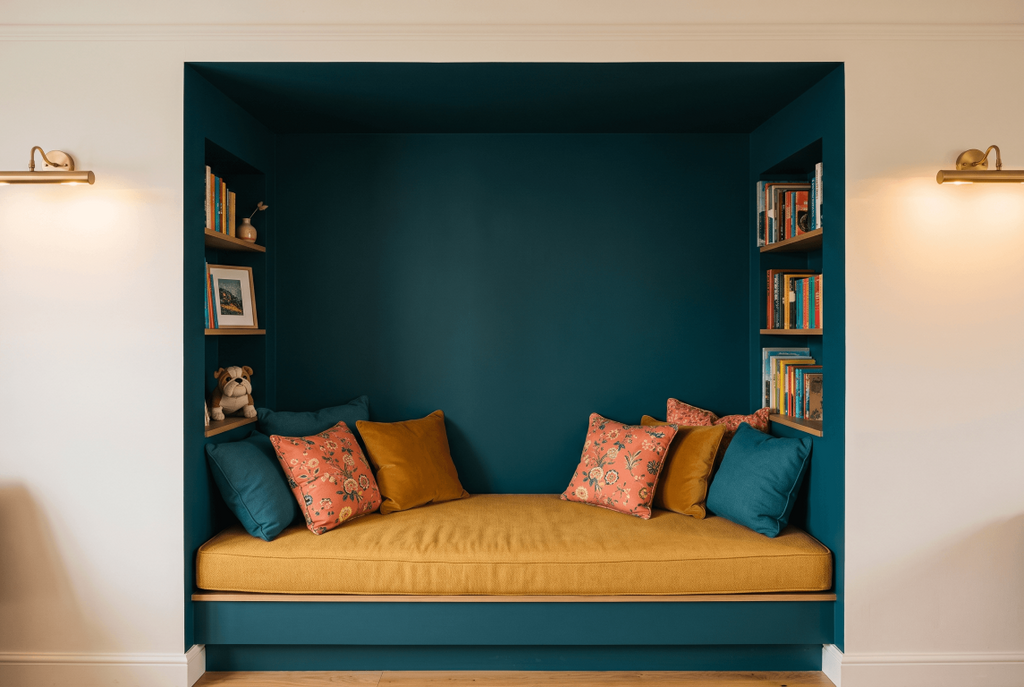
Warm, enveloping colors like forest green, deep blue, terracotta, mustard, or soft sage tend to make a nook feel tucked away and calm, while lighter colors keep a small corner feeling airy. The best choice is a color you love being surrounded by, balanced with wood, warm neutrals, and good lighting.
Because a nook is small, it is a low-risk place to try color you might be nervous to use elsewhere. Painting just the wall behind the chair, the back of a bookcase, or an alcove in a deep green or warm terracotta can make the space feel like its own little room. A velvet chair in mustard or teal can do the same without any paint at all.
Personal touches matter just as much. Framed prints, a favorite photo, a small collection, a souvenir from a trip, or even a cute stuffed animal tucked on a shelf can make the nook feel like it belongs to you. A few meaningful pieces will always feel cozier than a styled vignette that could belong to anyone.
If you want help choosing colors, our guides to Colorful Hygge: How to Create a Cozy Home Without Going Neutral and The Best Hygge Color Palettes for a Cozy Home go deeper on combining color with comfort.
Ways to Make It Yours
- A statement chair: velvet, pattern, or a bold color as the nook’s focal point.
- A painted backdrop: one wall, an alcove, or the back of a bookcase.
- Art at eye level: a print or photo you enjoy looking up at between chapters.
- Favorite objects: a small collection, souvenir, or playful keepsake.
- Books as decor: colorful spines and favorite covers on display.
- A patterned rug or pillow: to tie colors together.
Homey Hygge Tip
Choose one accent color for your nook and repeat it in three small places, such as the blanket, a pillow, and a book cover or print. It makes even a tiny corner look intentional and pulled together.
Make a Reading Nook in a Small Space or Rental
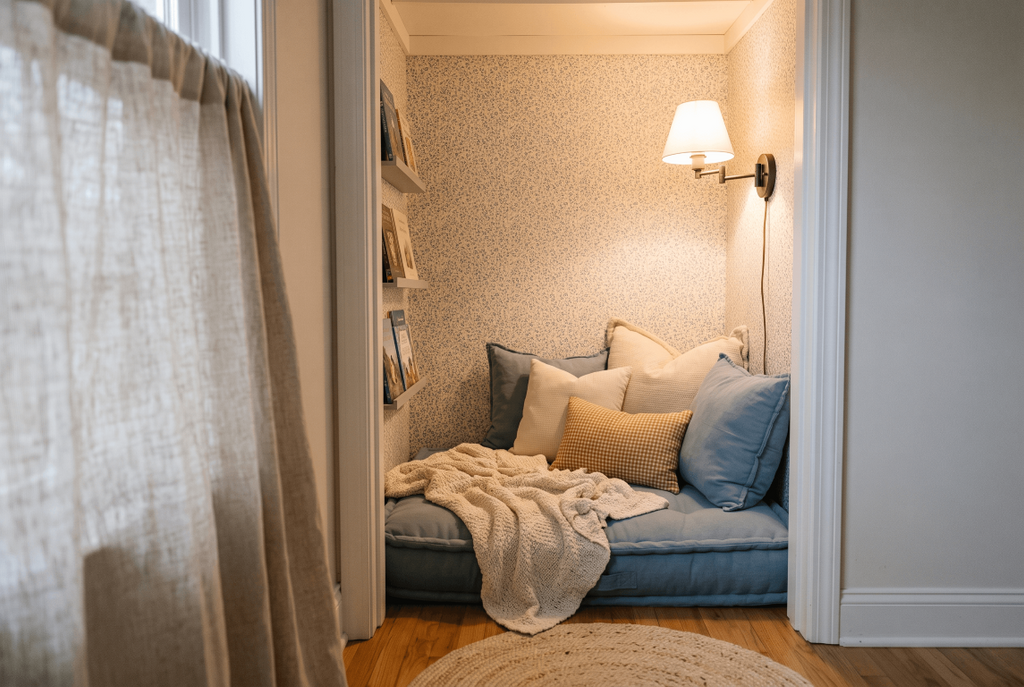
You can create a cozy reading nook in almost any small space by choosing compact furniture, using vertical storage, and relying on renter-friendly lighting and decor. Even a single chair, a plug-in lamp, and a blanket can transform an unused corner.
How can I make a reading nook without much space?
Choose a compact chair or floor cushion, use a wall-mounted shelf or ledge instead of a bookcase, and add a plug-in sconce or slim floor lamp instead of a bulky table lamp. Defining the area with a small rug helps it feel like a separate spot even in a busy room.
Small-space nooks are all about scale. A slipper chair, a compact armchair, or a deep floor cushion takes up far less room than a full recliner, and a small round side table or C-table tucks neatly beside it. A pouf can double as a footrest and extra seat.
Go vertical wherever you can. Wall shelves, picture ledges, and tall, narrow bookcases store books without eating into floor space. In a closet or alcove, a built-in bench or a thick cushion on the floor with pillows against the wall can create a snug, enclosed nook.
Renters have plenty of options, too. Plug-in wall sconces, removable wallpaper, freestanding bookcases, curtains on tension rods, and a good rug can all create a defined, cozy nook without changing anything permanent.
Small-Space and Renter-Friendly Ideas
- Compact seating: slipper chairs, small armchairs, floor cushions, or a pouf.
- Vertical storage: wall shelves, picture ledges, and narrow bookcases.
- Plug-in lighting: swing-arm sconces and slim floor lamps.
- Removable decor: peel-and-stick wallpaper and freestanding pieces.
- Curtains or screens: to separate the nook from the rest of the room.
- A small rug: to define the reading zone.
Homey Hygge Recommendation
In a shared or open room, angle your chair so it faces slightly away from the busiest part of the space, such as the television or kitchen. That small shift creates a sense of privacy and makes the nook feel like its own retreat without adding any furniture.
Make Your Nook a Cozy Evening Spot for Reading, Journaling, and Coloring
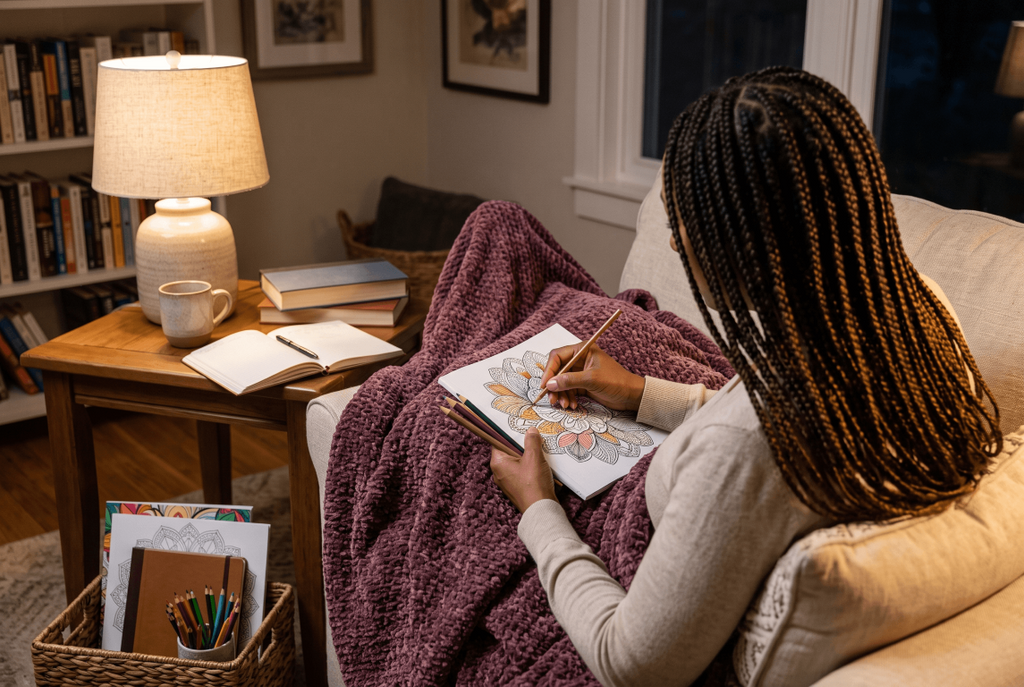
A reading nook becomes truly hygge when it becomes part of your evenings, whether you spend that time reading, journaling, or coloring. Small rituals like making a cup of tea, putting your phone away, wrapping up in a blanket, and dimming the lights signal that it is time to slow down and enjoy a book.
How do I make reading time more relaxing?
Set aside a regular time to read, leave your phone in another room or on silent, and gather everything you need before you sit down. A warm drink, a soft blanket, gentle lighting, and a calming scent or quiet music can turn reading into something you look forward to.
Rituals help because they make relaxation easier to start. When the same small steps happen each time, such as filling the kettle, turning on the reading lamp, and pulling the blanket over your lap, your mind begins to associate them with winding down.
Screens are the biggest obstacle. Keeping your phone out of reach, or at least out of sight, makes it much easier to stay with a book instead of drifting to notifications. An e-reader set to warm light is a good alternative if you prefer digital books.
Scent and sound can add to the atmosphere. For scents, I lean toward citrus, woodsy, and spice notes rather than florals, but the best choice is whatever helps you relax. Soft instrumental music or simple quiet can both work, depending on how you like to read.
Your nook does not have to be only for books. The same chair, lamp, and blanket make a lovely spot for journaling, coloring, or any quiet, screen-free hobby. Keeping a small basket nearby with a journal, a coloring book, and a few colored pencils makes it easy to switch from a chapter to a page of coloring when you want something different for your hands and eyes.
A reading log is another simple way to make the nook part of your routine. Jotting down what you read, a favorite line, or what you want to read next turns quiet evenings into something you can look back on.
Things to Try
- A set reading time: a few evenings a week or a weekend morning.
- A warm drink: tea, coffee, cocoa, or a favorite seasonal drink.
- A phone-free rule: leave devices in another room while you read.
- A lighting cue: switch on the reading lamp and dim other lights.
- A calming scent or sound: a gentle scent, soft music, or simple quiet.
- A reading journal: jot down favorite lines or books you want to read next.
Homey Hygge Tip
Start with just fifteen minutes in your nook before bed, with your phone in another room. Small, consistent sessions are easier to keep up than long ones, and they quickly turn the nook into a place you look forward to.
Cozy Reading Nook FAQs: Creating a Reading Corner at Home
What do you need for a cozy reading nook?
At minimum, you need a comfortable seat, a good reading light, a soft blanket, and a small surface for your book and drink. Pillows, a rug, book storage, and a few personal touches make the nook feel even more inviting.
How much space do you need for a reading nook?
Very little. A corner large enough for one chair, a slim lamp, and a small side table is usually enough, and even a floor cushion in a closet or alcove can work. The key is a spot that feels a bit tucked away and has access to good light.
What is the best light for reading in a nook?
An adjustable floor lamp, swing-arm sconce, or tall table lamp that directs light onto your page works best. Many lighting guides suggest roughly 450 to 800 lumens for reading, with warm or neutral white bulbs and a dimmer so you can adjust the mood.
Can a bed be a reading nook?
Yes. A bed can be a cozy hyggekrog when it has supportive pillows, a good bedside reading light, and a blanket you love. Adding a backrest pillow or a small shelf for books nearby makes it even more comfortable.
How do I make a reading nook feel cozy and not cluttered?
Keep only your current reads and a few essentials in the nook, use a basket or shelf for storage, and limit decorative objects to a few meaningful pieces. Soft textiles and warm lighting add coziness without adding clutter.
Where is the best place for a reading nook?
A quiet corner near a window is ideal, because it offers natural light and a sense of shelter. Bedroom corners, stair landings, alcoves, and the end of a hallway are also good options, especially in smaller homes.
Can you make a reading nook without a window?
Yes. Without daylight, layered lighting does the work: an adjustable task lamp aimed at your page, plus a softer ambient lamp or accent light so the corner never feels dark. Warm, light-reflecting colors, a mirror, and a few cozy textiles help a windowless nook feel bright and inviting.
Why does my reading nook feel uncomfortable?
The most common culprits are a seat that does not fit your body, light that glares or is too dim, clutter, and drafts or noise. Check the chair’s seat depth and back height, move your lamp to the side or slightly behind you, add a lumbar pillow and blanket, and clear anything that does not belong in the nook.
Make Room for a Good Book
A cozy reading nook does not require a big home or a big budget. It needs a comfortable seat, light that is kind to your eyes, a blanket within reach, and a corner where you can let the rest of the day fade for a while.
Start with what you have: a favorite chair, a lamp, and the blanket you always reach for. Build from there, adding color and personal touches as you go, until the nook feels like the place you look forward to sinking into at the end of the day.
Continue Creating Your Homey Hygge Home
A reading nook is one of the best ways to make a living room feel more inviting. Read Hygge Living Room Ideas for a Cozy, Inviting Space for more ways to arrange seating, layer lighting and textiles, and make your whole living room a place where people want to linger.