
A hygge bed is a bed made in soft, removable layers, from a comfortable base to sheets, blankets, a comforter and pillows, so it looks inviting and feels just right on any night. Mixing textures like smooth cotton, nubby knits, plush velvet and quilted cotton is what turns a made bed into the coziest spot in the house.
Your bed is where you start and end every day, so it’s worth making it a place you actually look forward to. Layers do more than look nice. They let you add warmth on cold nights and peel it back on warm ones, without swapping out your whole bedding set every season.
The Homey Hygge approach is to build the bed from the bottom up, starting with what you feel and finishing with what you see. You don’t need a pile of matching decorative pillows or a showroom bedspread. You need a few good layers that feel wonderful, in colors and textures you love.
TL;DR: Creating a Hygge Home
Start with a comfortable base, using a mattress pad or topper if your bed needs it. Choose sheets that suit how you sleep, then add a middle blanket and a comforter or duvet you can adjust through the seasons. Fold a quilt at the foot and drape a long, textured throw where you’ll reach for it. Build a pillow stack you can sleep on, not just look at, and mix smooth, nubby and plush textures on purpose. Pick a simple color story and frame the bed with a soft headboard, a rug and warm bedside lamps.
10 Ways to Create a Hygge Bed

Think of these as layers, from the bottom of the bed to the wall behind it. You don’t need every one. Start with the layers you’ll feel every night, then add the ones that make the bed look as cozy as it is.
Hygge Bed Ideas at a Glance
- Start with a comfortable base.
- Choose sheets that match how you sleep.
- Add a middle blanket layer.
- Top the bed with a comforter or duvet.
- Fold a quilt or coverlet at the foot.
- Drape a long, textured throw.
- Build a pillow stack you can actually use.
- Mix textures on purpose.
- Give the bed a simple color story.
- Frame the bed with a headboard, rug and lamps.
Start With a Comfortable Base
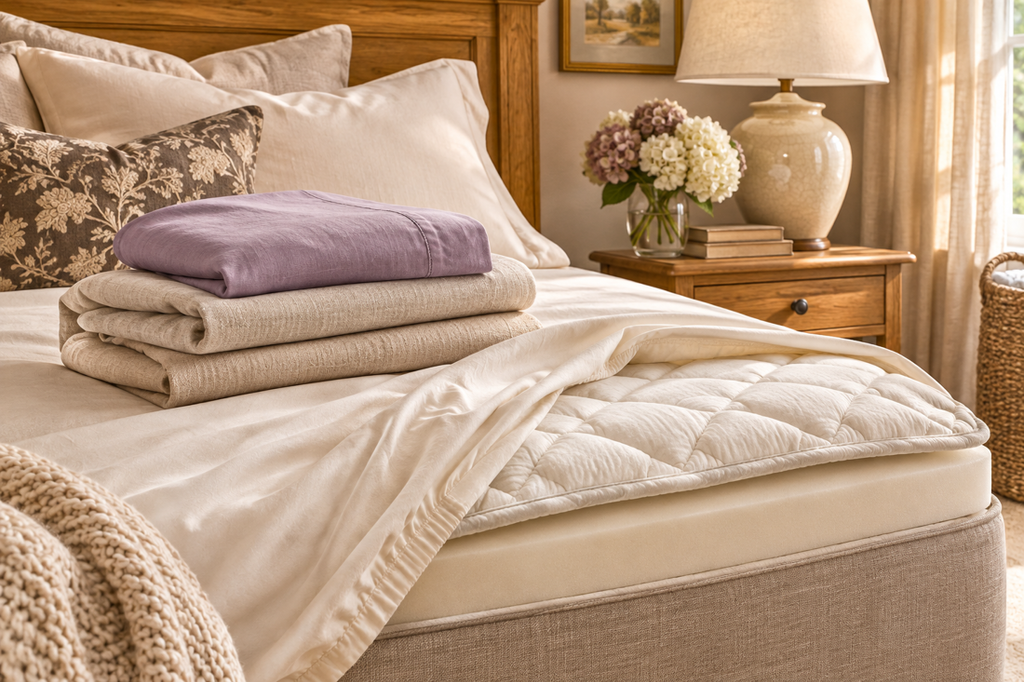
A cozy bed starts under the sheets. If your mattress feels too firm, too thin or a little tired, a mattress pad or topper can change how the whole bed feels before you add a single blanket.
What’s the difference between a mattress pad and a mattress topper?
A mattress pad is thin, usually 1 to 2 inches at most, and adds a little softness plus some protection from spills and dust. A topper is thicker, often 1 to 4 inches, and is made to noticeably change how firm or soft the bed feels.
If your mattress is comfortable, a quilted mattress pad is usually all you need. It adds a soft, cushioned layer and keeps the mattress clean, which makes it a smart first step for any bed.
If the bed feels hard or you wake up sore, a topper can make a bigger difference than any blanket. Memory foam and latex toppers add pressure relief, while down or fiber toppers feel more like sinking into a cloud. Wool toppers are worth a look if you sleep warm, because they breathe well.
What Usually Helps
- A quilted mattress pad for softness and protection
- A topper if the bed feels too firm or you wake up sore
- A waterproof protector under everything for kids, pets or allergies
- Fitted sheets with pockets deep enough to cover the extra height
Homey Hygge Tip
Measure your mattress height with the pad or topper on before you buy new sheets. A fitted sheet that keeps popping off the corner is the opposite of cozy.
Choose Sheets That Match How You Sleep
Sheets are the layer you feel most, so choose them for comfort first. The right fabric depends on whether you run warm or cold, and on what feels good against your skin.

Which sheets are best for a cozy bed?
It depends on how you sleep. Flannel and sateen feel warmer, percale stays cool and crisp, and linen breathes well while adding a relaxed, textured look.
Percale has a crisp, matte finish and is a favorite for hot sleepers because it breathes so well. Sateen feels smooth and silky with a soft sheen, and it holds a little more warmth. Linen is airy and slightly nubby, and it gets softer with every wash. Flannel is brushed for a fuzzy surface that feels warm the moment you climb in.
You don’t have to pick just one. Many people keep percale or linen for warmer months and switch to flannel or sateen when it gets cold. That one change can make the bed feel completely different without touching the rest of your layers.
Sheet Fabrics at a Glance
- Percale: crisp, cool and breathable
- Sateen: smooth, silky and a little warmer
- Linen: airy, textured and relaxed
- Flannel: brushed, fuzzy and warm
- Jersey: soft and stretchy, like your favorite T-shirt
Homey Hygge Recommendation
Keep two sets of sheets per bed, one for warm months and one for cold. Your bed changes with the seasons, and you always have a clean set ready.
For more on the warmest sheets and blankets for winter, see our guide to the best winter textiles for a warm and comfortable home.
Add a Middle Blanket Layer
A light blanket between your sheets and comforter is the secret to a bed that adjusts with you. It adds warmth when you need it and can be kicked off without losing the whole top layer.

Do I really need a blanket under my comforter?
You don’t need one, but it makes the bed far more flexible. On cool nights you get extra warmth, and on warm nights you can sleep under just the sheet and blanket.
This is the layer most people skip, and it’s the one that makes a bed feel thoughtfully made. A cotton blanket works year-round, a waffle or thermal weave adds texture, and a wool blanket brings serious warmth in winter.
It also helps when two people sleep differently. One person can stay under the comforter while the other sleeps with just the blanket, and nobody has to fight over the covers at 2 a.m.
Blanket Layers Worth Trying
- A cotton or waffle-weave blanket for year-round use
- A lightweight wool blanket for colder months
- A thin quilt as the middle layer in summer
- A cotton thermal blanket for warm sleepers
Homey Hygge Tip
Tuck the blanket in with the top sheet and fold both back together over the comforter. You get a neat, layered edge that shows off both fabrics.
Top the Bed With a Comforter or Duvet
Your comforter or duvet is the main warmth layer and the biggest visual piece on the bed. Choose one that’s lofty enough to look inviting and the right weight for how warm you sleep.

Should I choose a comforter or a duvet?
A comforter is one finished piece, so it’s simple and ready to use. A duvet is an insert that goes inside a removable cover, which makes it easy to wash and lets you change the look of the bed just by changing the cover.
For a hygge bed, a duvet cover is one of the easiest ways to add texture. Washed linen looks relaxed and lived-in, a waffle weave adds pattern without busy prints, and a soft quilted or embroidered cover gives the bed a cozy, collected feel.
Weight matters too. Most bedrooms feel best around 65 to 68°F for sleep, according to the Sleep Foundation, so an all-season comforter plus your middle blanket covers most nights. Save the extra-warm comforter for cold rooms or people who are always chilly.
Comforter and Duvet Choices
- All-season weight: works for most bedrooms year-round
- Extra-warm: for cold rooms and chilly sleepers
- Linen or waffle duvet cover: adds easy texture
- Oversized comforter: drapes over the sides for a fuller, cozier look
Homey Hygge Tip
Try a comforter one size up, like a king on a queen bed. It drapes generously over the sides, so the bed looks plush and nobody loses the covers.
Fold a Quilt or Coverlet at the Foot
A quilt folded across the foot of the bed adds color, pattern and an extra layer of warmth you can pull up on cold nights. It’s also the piece that makes a bed look finished.

Where should a quilt go on a layered bed?
Fold it in thirds and lay it across the bottom third of the bed, on top of the comforter. It looks intentional, protects the comforter from shoes and pets, and is within easy reach when you get cold.
Quilts are full of personality. A vintage or handmade quilt brings history and pattern, a stitched coverlet adds quiet texture, and a patchwork quilt is one of the easiest ways to bring color into a neutral bedroom.
In warmer months, the quilt can even replace the comforter as your top layer. That’s the beauty of layers: you rearrange what you already own instead of buying a new bed every season.
Quilt Ideas Worth Trying
- A patchwork quilt for color and pattern
- A stitched coverlet for subtle texture
- A family or handmade quilt for meaning
- A velvet or quilted throw for a richer look
Homey Hygge Recommendation
If you have a family quilt tucked away in a closet, put it on the bed. Things you love and use every day are what make a home feel like yours.
Drape a Long, Textured Throw
A big, soft throw is where the bed starts to feel truly hygge. It adds the nubby, touchable texture that makes you want to climb in, and it’s the first thing you’ll grab on a cold evening.

How do you style a throw on a bed?
Drape it loosely across one corner at the foot of the bed, or lay it over the folded quilt so it spills a little over the side. It should look casual and lived-in, not perfectly folded.
Chunky knits, chenille and crochet blankets all work beautifully here. I’m tall, so I always look for long throws that actually cover me when I’m reading in bed. A blanket that only reaches my knees isn’t doing its job.
This is also a good place for something playful. A chenille throw with a fun print, a hand-crocheted blanket or one in a favorite color adds personality without changing the whole bed.
Throws That Add Texture
- A long chunky knit for the foot of the bed
- A chenille throw for plush softness
- A crochet blanket for color and pattern
- A faux fur or sherpa throw for winter
Homey Hygge Tip
Choose a throw in a texture the bed doesn’t already have. If your bedding is smooth, go chunky. If it’s already textured, go plush. For more ways to layer throws around the house, see our guide to hygge living room ideas for a cozy, inviting space.
Build a Pillow Stack You Can Actually Use
Pillows make a bed look full and inviting, but the stack should still work when you climb in at night. Start with the pillows you sleep on, then add a few for lounging and one or two for personality.

How many pillows should go on a bed?
For a queen or king, two sleeping pillows per person, two or three Euro shams and one or two decorative pillows is plenty. Any more and bedtime starts with a pillow-moving workout.
Work from back to front. Euro shams, usually about 26 by 26 inches, sit against the headboard and give you something to lean on while you read. Your sleeping pillows go in front of them, then one or two smaller decorative pillows finish the look.
Use texture to tie the stack together. A linen sham, a velvet lumbar and a knit or embroidered accent pillow look layered and cozy even if they’re all the same color.
A Simple Pillow Stack
- Back row: two or three Euro shams against the headboard
- Middle row: your sleeping pillows in matching cases or shams
- Front: one lumbar or one or two small decorative pillows
- Optional: a reading pillow with arms for nights in bed with a book
Homey Hygge Recommendation
Keep a basket at the foot of the bed for the decorative pillows at night. They go in one toss instead of ending up on the floor.
Mix Textures on Purpose
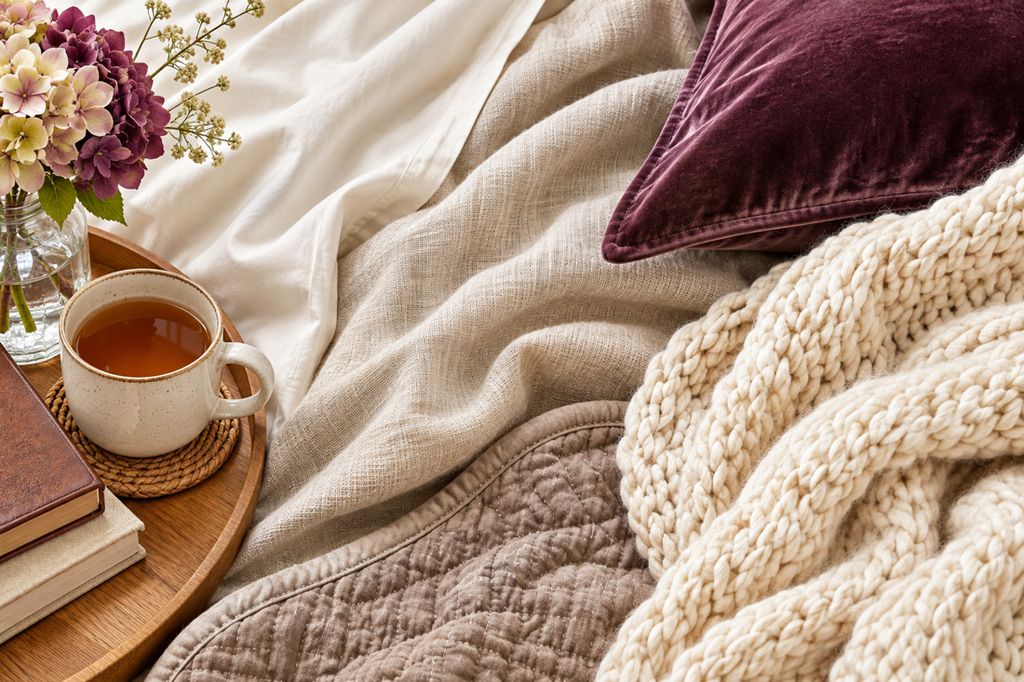
Texture is what makes a bed feel hygge instead of just tidy. Pairing smooth, nubby and plush fabrics gives the eye somewhere to rest and makes you want to touch everything.
How many textures should a bed have?
Aim for three or four. One smooth, like cotton sheets, one nubby, like linen or knit, one plush, like velvet or chenille, and one with pattern or stitching, like a quilt.
When every layer is the same flat cotton, a bed can look nice but feel a little flat. Swapping just one or two pieces for something with more texture changes the whole mood.
The trick is variety without chaos. Keep the colors related and let the textures do the talking, and even a lot of layers will feel calm instead of cluttered.
Texture Pairings That Work
- Crisp percale with a chunky knit throw
- Washed linen with velvet pillows
- Flannel sheets with a quilted coverlet
- Sateen with a crochet blanket
Homey Hygge Tip
Run your hand across the made bed from head to foot. If every layer feels the same, swap one piece for something with a very different texture.
Give the Bed a Simple Color Story
A layered bed looks cozy rather than busy when the colors are related. Pick one main color, a supporting color and one accent, then repeat them across your layers.
What colors make a bed feel cozy?
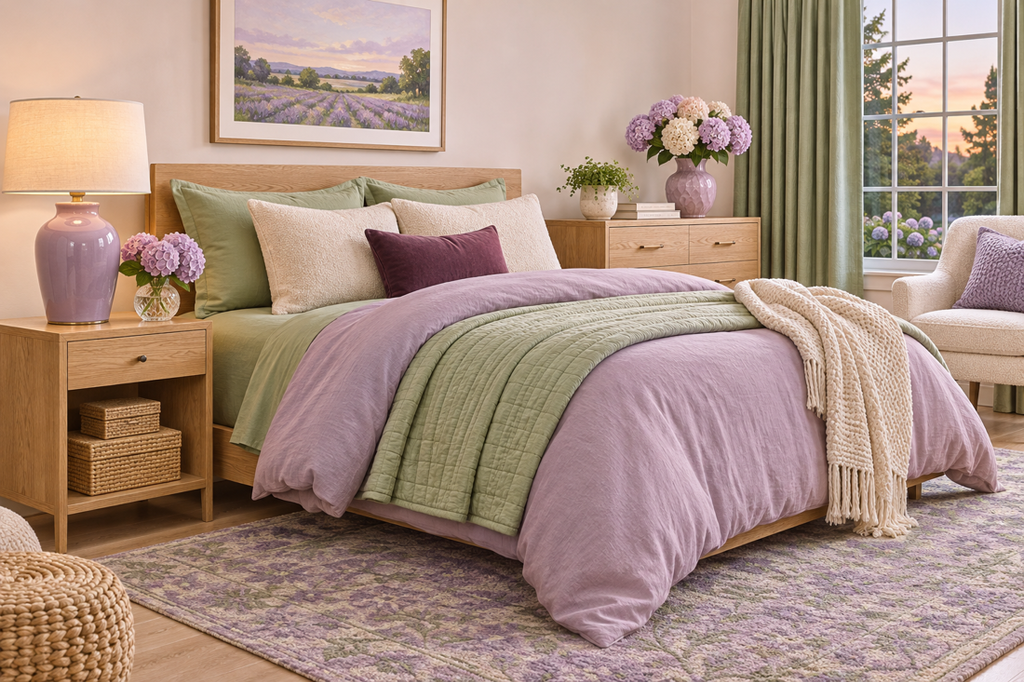
Warm, soft colors usually feel coziest, like plum and ivory, lavender and sage, forest green and cream, or warm neutrals with one favorite color. The best choice is the one you love waking up to.
Your main color might be the duvet cover, the supporting color the sheets or quilt, and the accent a single pillow or throw. Repeating each color at least twice, like an accent pillow that matches a stripe in the quilt, makes the bed look pulled together.
Purple is my color, so my bed leans plum and lavender. Yours might be sage and cream, navy and rust or a patchwork of everything you love. Hygge isn’t about one palette. It’s about colors that feel warm and welcoming to you.
Bedroom Color Stories to Try
- Plum and warm ivory with aged brass
- Lavender and sage with light oak
- Forest green and cream with camel
- Cozy blue and rust with warm wood
Homey Hygge Recommendation
Lay your bedding out on the bed in daylight and again in the evening with the lamps on. Colors shift a lot, and the bed should look cozy at night when you use it most. For help choosing a palette, see our guide to the best hygge color palettes for a cozy home.
Frame the Bed With a Headboard, Rug and Lamps
The finishing layer happens around the bed. A soft headboard, a warm rug underfoot and glowing bedside lamps turn a well-made bed into a cozy retreat.

Does a hygge bed need a headboard?
It doesn’t need one, but an upholstered headboard makes sitting up in bed far more comfortable and adds texture behind the pillows. A padded fabric panel or even a large quilt hung on the wall can work too.
Upholstered headboards in velvet, linen or boucle add softness right where you lean. Wood headboards bring warmth, especially when the pillows and throws add the texture.
Under the bed, a rug that extends at least a couple of feet on each side means your first step in the morning lands somewhere warm. Then add a lamp on each nightstand with a warm bulb and a dimmer, so the bed glows softly in the evening instead of sitting under a bright overhead light.
Finishing Touches Around the Bed
- An upholstered or padded headboard
- A rug that reaches past both sides of the bed
- Warm bedside lamps with dimmers
- A bench or trunk at the foot for extra blankets
Homey Hygge Tip
Turn your bedside lamps on about 30 minutes before bed and leave the overhead light off. The bed instantly looks warmer and more inviting. For more ideas on warm, layered light, see our guide to hygge lighting.
Make It Work in Your Home
A hygge bed should fit the way you actually live. A guest bed, a kids’ bed and the bed you share with a partner and a dog all need slightly different layers.
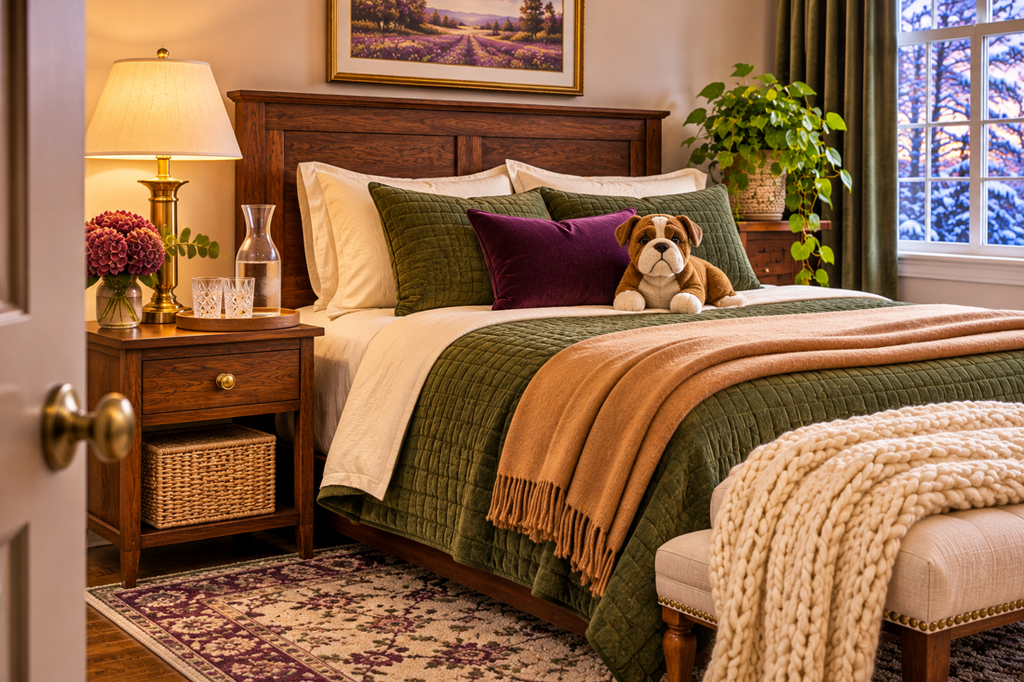
Start with what you already own. Pull every blanket, quilt and spare pillow out of the closets and try them on the bed. You’ll probably find at least one layer you forgot you had, and it costs nothing to try.
Layering by Bed
- Your own bed: sheets for your sleep style, a middle blanket, a comforter and a long throw you’ll actually use
- Shared bed: two lighter layers instead of one heavy one, so each person can adjust their side
- Guest bed: fresh sheets, a warm blanket and an extra throw folded at the foot so guests never have to ask
- Kids’ beds: washable layers like cotton quilts and fleece throws, plus one favorite pillow
- Pet-friendly beds: a washable quilt or throw on top where the dog likes to sleep
Homey Hygge Tip
Make the bed in under two minutes by keeping layers simple: pull up the sheet and blanket together, smooth the comforter, fold the quilt and toss the throw. A bed you can make quickly is a bed you’ll actually make. For more ways to make your whole bedroom feel calm and restful, see our guide to hygge bedroom ideas for a peaceful, cozy retreat.

Free 7-Day Printable
Make Your Home Feel Cozier in 7 Days
A cozy bed is a beautiful place to start. The free 7-Day Homey Hygge Home Reset walks you through one small, doable step a day to make your whole home feel warmer, calmer and more like you, and none of it starts with shopping.
Cozy emails, no clutter. Unsubscribe anytime.
Mistakes to Avoid When Layering a Bed
Most layering mistakes come from making the bed for the photo instead of for sleeping. If getting into bed takes five minutes of unpacking, the layers aren’t working for you.

What Usually Goes Wrong
- Too many decorative pillows: if bedtime starts with moving eight pillows to the floor, cut the stack in half.
- Everything is heavy: one thick comforter with nothing lighter underneath leaves you either too hot or too cold. Mix light and warm layers.
- Throws that are too short: a throw that doesn’t cover you when you’re lying down ends up as decoration only.
- All one texture: matching sets look neat, but a bed with only flat cotton can feel a little lifeless.
- Forgetting the fitted sheet depth: sheets that don’t fit a mattress with a topper pull loose and wrinkle every night.
Care Tips to Keep Layers Fresh
- Wash sheets and pillowcases about once a week.
- Wash duvet covers every few weeks, and the comforter or insert itself a few times a year or as the label directs.
- Use a duvet cover so you rarely need to wash a bulky comforter.
- Rotate quilts and throws seasonally and air them out before using them again.
- Fluff pillows daily and replace them when they stay flat after fluffing.
Shop the Hygge Bed
- Sheets for your sleep style: percale, sateen, linen or flannel
- A cotton or wool middle blanket
- A linen or waffle-weave duvet cover
- A patchwork quilt or stitched coverlet
- A long chunky knit or chenille throw
Frequently Asked Questions About Layering a Hygge Bed
What is the correct order to layer a bed?
From the bottom up: mattress pad or topper, fitted sheet, top sheet, middle blanket, comforter or duvet, then a quilt folded at the foot and a throw on top. Pillows go from Euro shams at the back to sleeping pillows and decorative pillows in front.
Do I need a top sheet with a duvet?
It’s up to you. A top sheet keeps the duvet cover cleaner between washes and adds a light layer for warm nights, but plenty of people sleep happily with just a duvet. If you skip it, wash the duvet cover more often.
How do I make a bed look fluffy and full?
Use a lofty comforter or duvet insert, try one a size larger than your bed so it drapes over the sides, and add a folded quilt and a couple of Euro shams. Fluffing the comforter and pillows each morning keeps everything looking full.
How can I keep a layered bed from getting too hot?
Choose breathable sheets like percale or linen, use a lighter comforter and rely on a removable middle blanket for extra warmth. Layers you can peel off are what make a cozy bed comfortable all year.
What makes a bed feel hygge?
Softness, warmth and things you love. A hygge bed has layers you can snuggle into, textures that feel good to touch, warm lamplight nearby and personal touches like a family quilt or a favorite throw.
Make Your Bed the Coziest Place in the House

A hygge bed comes together one layer at a time. A comfortable base and the right sheets make it feel good. A middle blanket, a comforter and a folded quilt let it change with the seasons. A long throw, a pillow stack you can use and a mix of textures make it look as inviting as it feels, and a soft headboard, a warm rug and glowing lamps finish the picture.
You don’t need to buy a whole new bed set to get there. Start with one layer that’s missing, whether that’s a middle blanket, a textured throw or a quilt from the back of the closet, and build from there. The best hygge bed is the one you can’t wait to climb into at the end of the day.
Continue Creating Your Homey Hygge Home
Ready to warm up the rest of the house? See our guide to the best winter textiles for a warm and comfortable home for the blankets, rugs and curtains that keep every room cozy.