
The best winter textiles for a warm home are the ones that trap heat and feel good against your skin: wool, flannel, a well-filled comforter, chunky knits, chenille, velvet, sherpa, heavier curtains, thick rugs and a heated blanket. Each one works in a slightly different way, and together they can make a home feel noticeably warmer without touching the thermostat.
Winter is when textiles do their most important work. The days are short, the floors are cold, and the windows seem to breathe chilly air into every room. Swapping a few lightweight pieces for warmer ones is one of the quickest ways to make your home feel comfortable again, and it usually costs less than you’d think.
The Homey Hygge approach is simple: start with the places you actually spend time, like your bed, your sofa and your favorite chair, and add warmth there first. You don’t need to redo every room. A few good textiles in the right spots will do more than a closet full of throws you never use.
TL;DR: The Best Winter Textiles for a Warm Home
Wrap up in wool, which traps heat and stays comfortable as your body warms. Switch to brushed flannel sheets, and choose a comforter with the right fill for your climate. Pile on long chunky knits and soft chenille throws where you sit most, and use velvet for warmth you can see and feel. Keep easy-care sherpa or fleece for kids, pets and everyday use. Hang heavier lined curtains to slow heat loss at the windows, layer a thick rug with a good pad over cold floors, and save a heated blanket for the spots that need extra help, used safely.
10 Winter Textiles That Make Your Home Warmer
You don’t need all ten. Pick the two or three that solve your biggest winter complaint, whether that’s a cold bed, a drafty window or a sofa that never feels quite cozy enough.
Winter Textiles at a Glance
- Wrap up in wool blankets and throws.
- Switch to brushed flannel sheets.
- Choose a comforter with the right warmth for winter.
- Pile on long, chunky knit blankets.
- Add soft chenille throws.
- Bring in velvet for warmth you can see.
- Keep sherpa and fleece for easy everyday comfort.
- Hang heavier, lined curtains.
- Layer a thick rug over cold floors.
- Add a heated blanket where you need extra warmth.
What Makes a Textile Feel Warm
Warm textiles work by trapping still air close to you, and the fiber, the weave and the weight all decide how well they do it. A fuzzy, lofty or thick fabric holds more air than a flat, thin one, which is why a brushed flannel sheet feels warmer than a crisp percale sheet even when both are cotton.
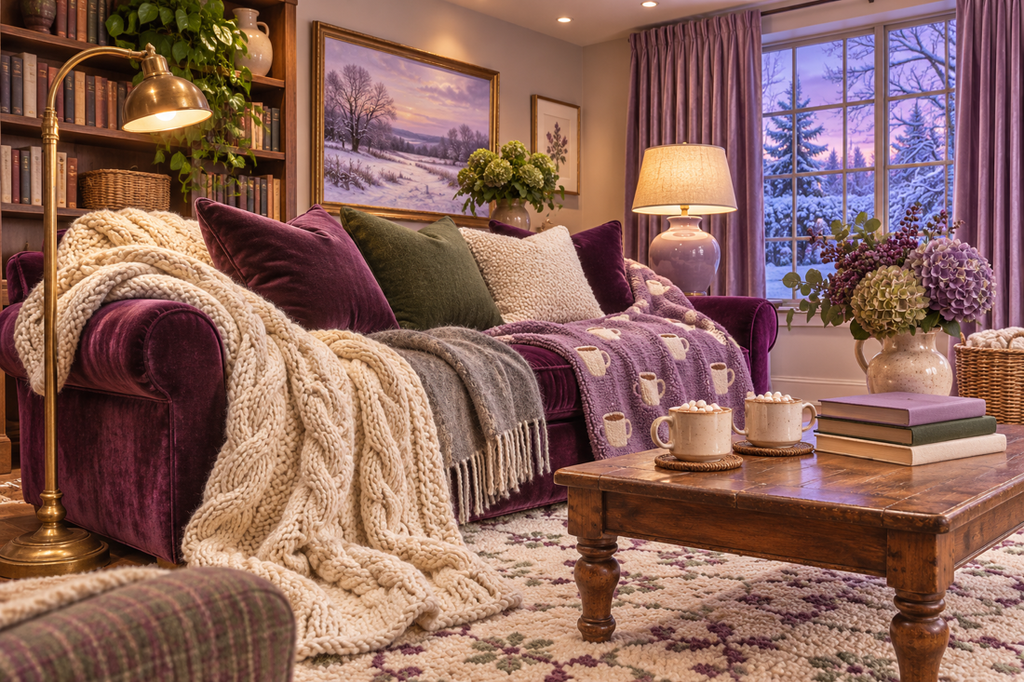
Three things are worth checking before you buy:
- Fiber: Wool and down are natural insulators. Cotton is breathable and easy to wash. Polyester fleece and sherpa are warm and affordable but breathe less, so some people overheat under them.
- Surface: Brushed, napped or plush surfaces like flannel, chenille, velvet and sherpa hold a layer of warm air against your skin.
- Weight and loft: Heavier flannel, thicker knits and higher-loft comforters trap more air. Heavier isn’t always better, though, especially if you sleep warm.
The goal isn’t to make every room as warm as possible. It’s to make the places you rest feel so comfortable that you’d rather stay there than go nudge the thermostat.
Wrap Up in Wool
Wool is one of the warmest and most forgiving winter textiles you can bring into your home. It holds heat well, breathes so you’re less likely to overheat, and keeps working through long winter evenings.
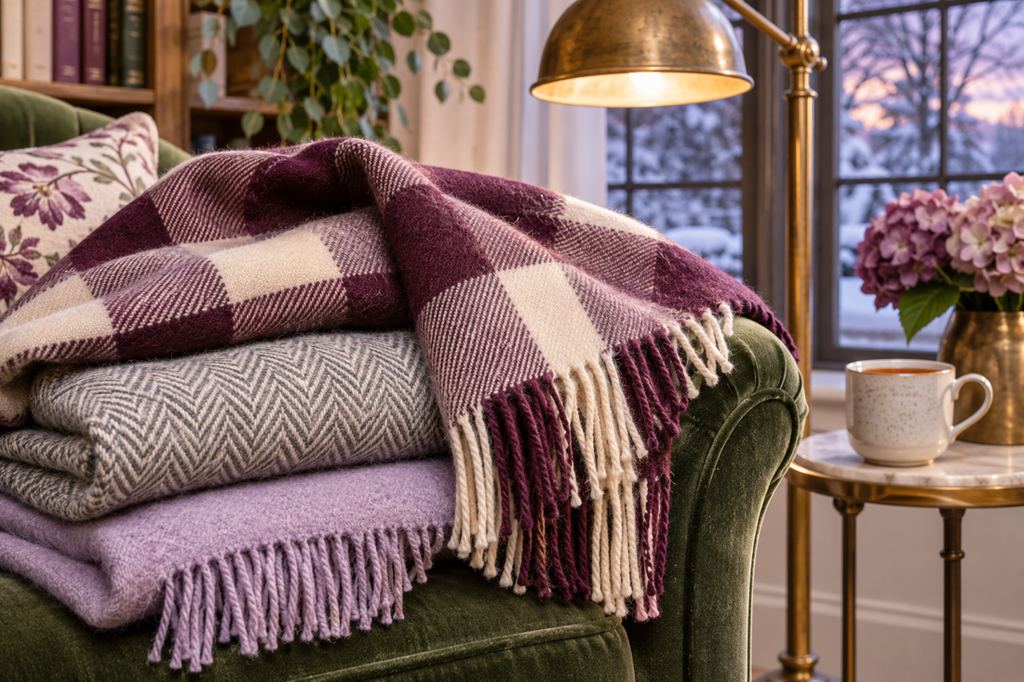
Why does wool feel warmer than other blankets?
Each wool fiber has a natural crimp that creates tiny pockets of air, and those pockets hold your body heat. Wool can also take in moisture without feeling damp, so you stay warm without getting clammy.
A good wool throw is the kind of blanket you reach for every night. Drape one over the back of the sofa, fold one at the foot of the bed or keep one in a basket by your reading chair. Wool also resists flame better than most synthetics, which is a nice bonus near a fireplace or space heater.
If you’ve avoided wool because it feels scratchy, look for merino, lambswool or a wool blend. They’re much softer against bare skin than old-fashioned camp blankets.
Where Wool Works Best
- A throw on the sofa or reading chair
- An extra layer at the foot of the bed
- A blanket in the guest room for visitors who run cold
- A small lap blanket for the home office
Homey Hygge Tip
Try the touch test before you buy: rub the blanket against the inside of your wrist. If it feels itchy there, it’ll feel itchy on your neck too.
Switch to Flannel Sheets
Flannel sheets are the easiest bedroom upgrade for winter. They feel warm the moment you climb into bed, instead of making you wait for crisp, cold cotton to heat up.
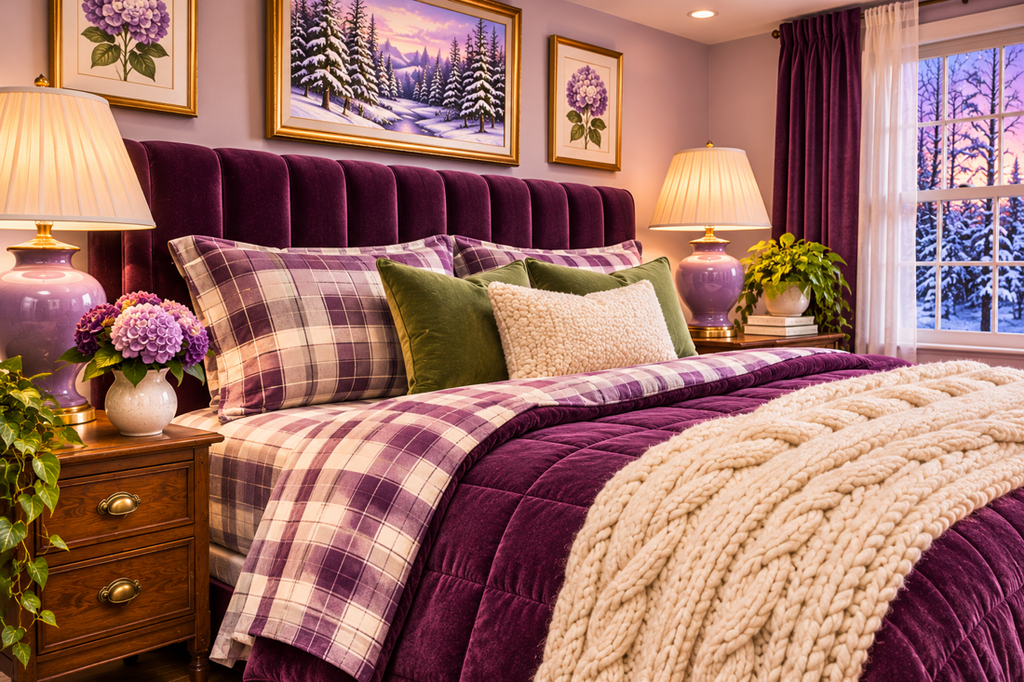
What makes flannel warmer than regular sheets?
Flannel is usually cotton that’s been brushed to raise a soft, fuzzy nap. Those raised fibers trap a layer of warm air against your skin.
Flannel is measured by weight rather than thread count, usually in ounces per square yard. Heavier flannel feels warmer, and around 5 to 6 ounces is a comfortable range for most winter beds. Sheets brushed on both sides tend to feel warmer than those brushed on one side.
If you sleep hot, a lighter flannel still gives you that cozy first touch without leaving you kicking off the covers at 2 a.m. Some pilling is normal with any flannel, but washing it separately and following the care label helps it stay soft longer.
What to Look For in Flannel Sheets
- 100% cotton for breathability
- A weight of about 5 to 6 ounces for winter warmth
- Brushing on both sides for extra softness
- Pockets deep enough for your mattress
Homey Hygge Recommendation
Keep one flannel set on the bed and one in the closet from November through March. Changing sheets is much nicer when the clean set is just as cozy as the one coming off.
For more ways to make your bedroom feel warm and restful, see our guide to hygge bedroom ideas for a peaceful, cozy retreat.
Choose a Comforter Made for Winter
Your comforter does most of the work of keeping you warm at night, so it’s worth making sure yours is up to the job. A thin, flattened comforter can make even flannel sheets feel cold.

Is a down or down alternative comforter warmer?
Down usually gives more warmth for its weight and feels lofty and plush. Down alternative is less insulating but costs less, is easier to wash and is a better fit for allergies or anyone who avoids animal products.
With down, look at fill power, which measures how much space an ounce of down fills. According to the Sleep Foundation, all-season down comforters usually fall between 600 and 700, and above 700 is considered high. Higher fill power traps more heat, so it suits cold bedrooms and people who are always chilly.
Down alternative comforters are labeled by weight instead, often as lightweight, all-season or extra warmth. If yours has gone flat and lumpy, a new one can make a bigger difference than any other bedding change on this list.
Comforter Warmth at a Glance
- Always cold: high fill power down or an extra-warm down alternative
- Somewhere in the middle: all-season down around 600 to 700 fill power
- Sleeps hot: a lighter comforter with a wool or knit blanket you can add or kick off
- Allergies: a machine-washable down alternative
Homey Hygge Tip
Fluff your comforter in the dryer on low with a couple of clean tennis balls once a month. It brings back the loft that keeps you warm.
Pile On Chunky Knit Blankets
A big, chunky knit blanket is the most hygge thing you can put on a sofa. It adds warmth, texture and that soft, lived-in look that makes a room feel inviting.

How long should a sofa blanket be?
Long enough to cover you from shoulders to toes while you’re stretched out. For most adults that means at least 60 inches long, and taller people will want more.
I’m tall, and I learned the hard way that a standard throw leaves either my shoulders or my feet out in the cold. Now I look for long blankets first and pretty ones second. It makes a real difference on a winter movie night.
Cable knits, chunky hand-knits and crochet blankets all count here. Crochet blankets are especially good at layering because they add color and pattern without much bulk, so they sit nicely on top of a solid knit.
Knit Blankets Worth Making Room For
- A long cable-knit throw for the sofa
- A crochet or granny-square blanket for color and pattern
- A chunky knit at the foot of the bed
- A smaller knit lap blanket for a reading chair
Homey Hygge Recommendation
Keep your knit blankets where people actually sit. A blanket folded in a closet does nothing on a cold evening, but one draped over the sofa arm gets used every night.
For more ideas on making your sofa the coziest spot in the house, see our guide to hygge living room ideas for a cozy, inviting space.
Add Soft Chenille Throws
Chenille is the blanket you can’t stop touching. Its velvety, tufted surface feels plush and warm, and it drapes beautifully over a chair or the end of a bed.

Is chenille warm enough for winter?
Yes, especially in a thicker weave. The soft, raised pile holds warm air the same way flannel does, and chenille throws tend to be heavier than they look.
Chenille is also where you can have a little fun. It comes in every color and plenty of playful prints, and a blanket covered in coffee mugs or dogs makes a room feel like someone actually lives there. As a dog lover, I’ll always reach for the blanket with dogs on it first.
Look for chenille that feels dense rather than thin and slippery, and check the care label. Many chenille throws are machine washable on a gentle cycle, which makes them a smart choice for everyday use.
Chenille Details to Look For
- A dense, heavy weave rather than a thin one
- A generous size, at least 50 by 60 inches
- Machine-washable care
- A color or print that makes you smile
Homey Hygge Tip
Pair a smooth chenille with a chunky knit on the same sofa. The contrast in texture makes both look richer, and you get two kinds of warmth in one spot.
Bring In Velvet for Warmth You Can See
Velvet makes a room look warm before you even touch it. Its deep pile catches the light and adds richness to pillows, upholstery and curtains, which is exactly what a gray winter day needs.
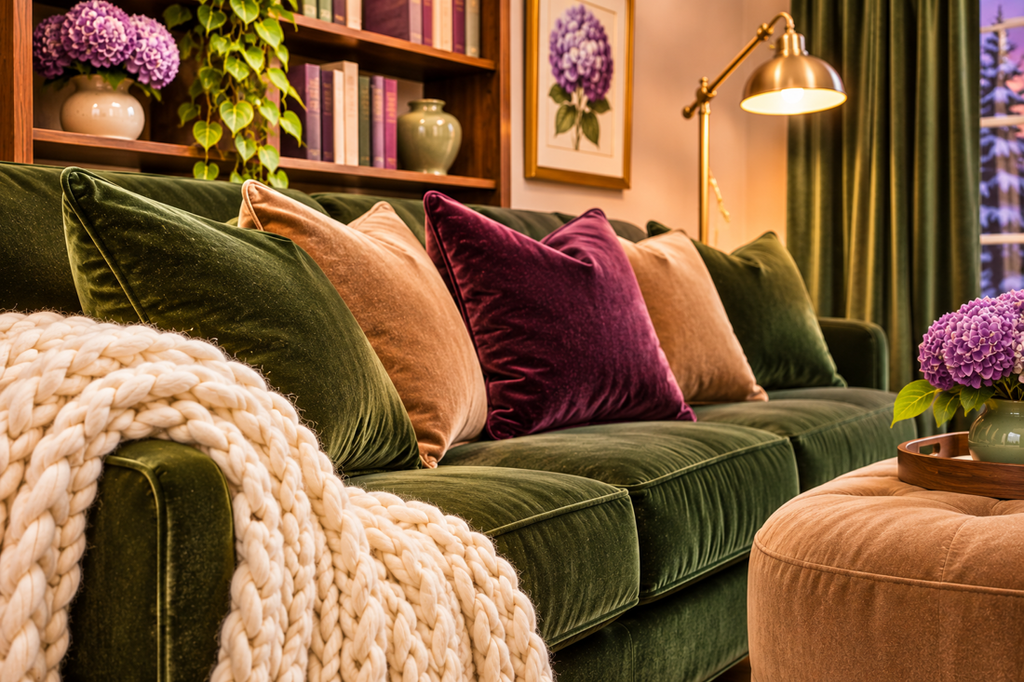
Is velvet practical for everyday living?
Performance velvet, usually made from polyester, is surprisingly durable and easy to clean. Cotton velvet feels softer but marks more easily, so it’s better for pillows than for a sofa the dog naps on.
You don’t need a velvet sofa to get the effect. A few velvet pillows in a deep, cozy color can change the whole feel of a room. Plum, emerald, rust, navy and mustard all look especially warm in winter light, but the best color is the one you love living with.
Velvet also works well at the windows. Heavy velvet curtains add a layer of insulation and soften echoes in a room, which makes a space feel quieter and more enclosed on long winter nights.
Easy Ways to Add Velvet
- Two or three velvet throw pillows on the sofa
- A velvet ottoman or footstool
- Velvet curtains in the living room or bedroom
- A velvet headboard or bench at the foot of the bed
Homey Hygge Recommendation
Start with pillows. They’re the easiest way to test a velvet color in your home before committing to anything bigger.
For help choosing warm colors that feel right in your home, see our guide to the best hygge color palettes for a cozy home.
Keep Sherpa and Fleece for Easy Everyday Comfort
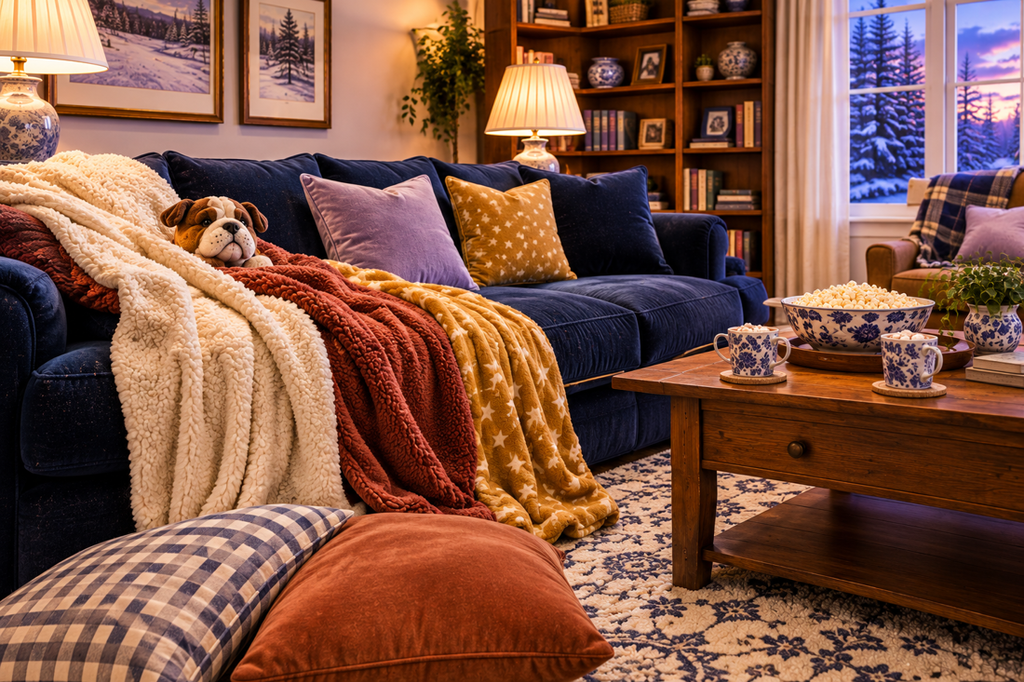
Sherpa and fleece are the hardworking blankets of winter. They’re warm, soft, inexpensive and easy to wash, which makes them perfect for kids, pets and everyday snuggling.
Are fleece and sherpa blankets breathable?
Not as much as wool or cotton. Most are made from polyester, which traps heat well but doesn’t let moisture escape as easily, so some people feel too warm under them overnight.
That’s why sherpa and fleece shine on the sofa, in the car and at the kids’ movie night rather than as your main bedding. A sherpa-lined throw gives you a cloud-soft side for snuggling and a smoother side that looks a little more polished on the back of a chair.
They also make sense anywhere a blanket is likely to get muddy paws, spilled cocoa or dragged across the floor. Toss them in the wash, and they’re ready for the next cozy night.
Best Uses for Sherpa and Fleece
- Kids’ rooms and family movie nights
- A dog’s favorite spot on the sofa
- A blanket for the car or a cold basement family room
- An extra layer on top of the bed on the coldest nights
Homey Hygge Tip
Wash fleece and sherpa in cool water and skip the fabric softener. It helps the fibers stay fluffy instead of matting down.
Hang Heavier, Lined Curtains
Your windows may be quietly stealing the warmth from every room. Heavier, lined curtains are one of the few textiles that can make a home warmer and help with your heating bill at the same time.

Do thermal curtains really help keep a room warm?
They can. Thick, tightly woven, lined curtains slow the heat moving from a warm room to a cold window, and they block the chilly drafts you feel when you sit nearby.
According to the U.S. Department of Energy, heat gain and loss through windows accounts for about 30% of the energy used to heat and cool a home. The Energy Department also notes that cellular shades can reduce window heat loss by at least 40% when the heat is running, so pairing shades with curtains gives you even more help.
For curtains, more layers mean more warmth. Look for a thermal or interlined lining, choose a thick fabric like velvet, wool blend or heavy cotton, and hang them wide and long so they cover the whole window frame. Open them on sunny days to let the light in, and close them as soon as the sun goes down.
Curtain Details That Add Warmth
- A thermal, blackout or interlined lining
- Thick fabric like velvet, wool blend or heavy cotton
- Panels that reach the floor and extend past the window frame
- A ceiling-mounted or wraparound rod to reduce gaps at the top and sides
Homey Hygge Recommendation
Put your curtains on a daily rhythm: open in the morning, closed at sunset. It’s a small habit that makes your rooms feel warmer every evening.
Layer a Thick Rug Over Cold Floors
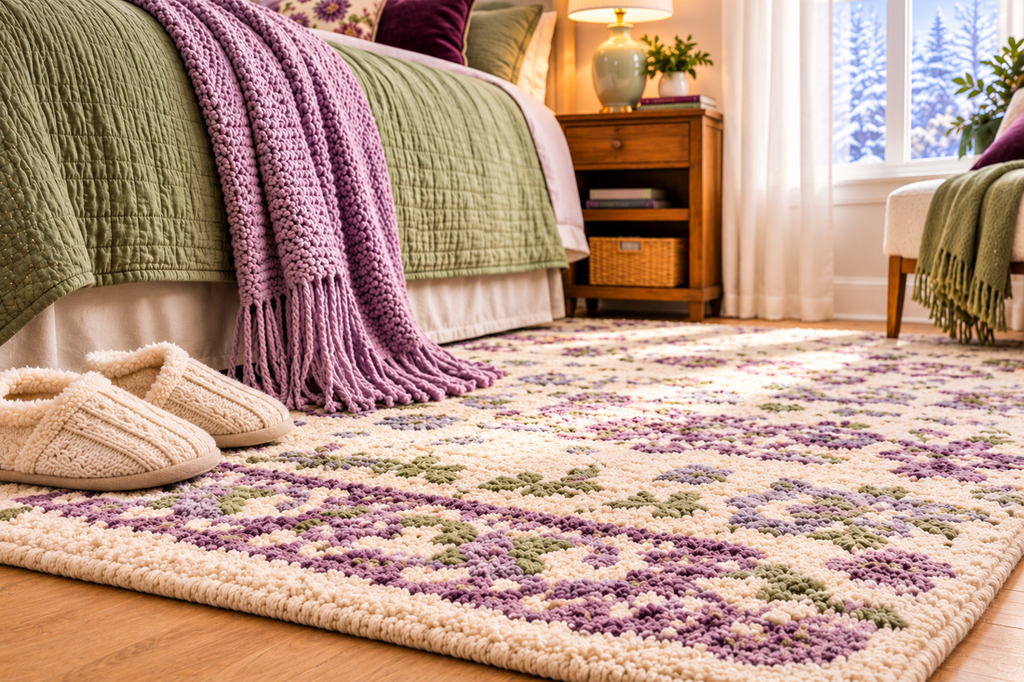
Cold floors can make a whole room feel chilly, no matter how warm the air is. A thick rug with a good pad underneath gives your feet somewhere warm to land and makes the room feel cozier right away.
Do rugs actually make a room warmer?
Rugs mostly change how warm a room feels rather than raising the air temperature. They slow the heat your body loses to a cold floor, which is often enough to make you comfortable without turning up the heat.
Wool rugs are a favorite for winter because they’re dense, naturally insulating and durable. Plush or shag rugs feel especially cozy in bedrooms, while a flatweave layered over a larger rug adds warmth and pattern in a living room.
Don’t skip the rug pad. A thick felt or felt-and-rubber pad adds cushioning and an extra layer between you and the floor, and it keeps the rug from sliding. It’s one of those things nobody sees that everyone notices.
Where a Rug Helps Most
- Beside the bed, so your first step in the morning isn’t on cold wood or tile
- Under the sofa and chairs in the living room
- In front of the kitchen sink, where you stand the longest
- In a basement family room or over a concrete slab
Homey Hygge Tip
If a full-size rug isn’t in the budget, start with a runner beside the bed. It’s the spot where cold floors bother you most.
For more ways to warm up every room this season, see our cozy winter decor ideas inspired by hygge.
Add a Heated Blanket Where You Need Extra Warmth
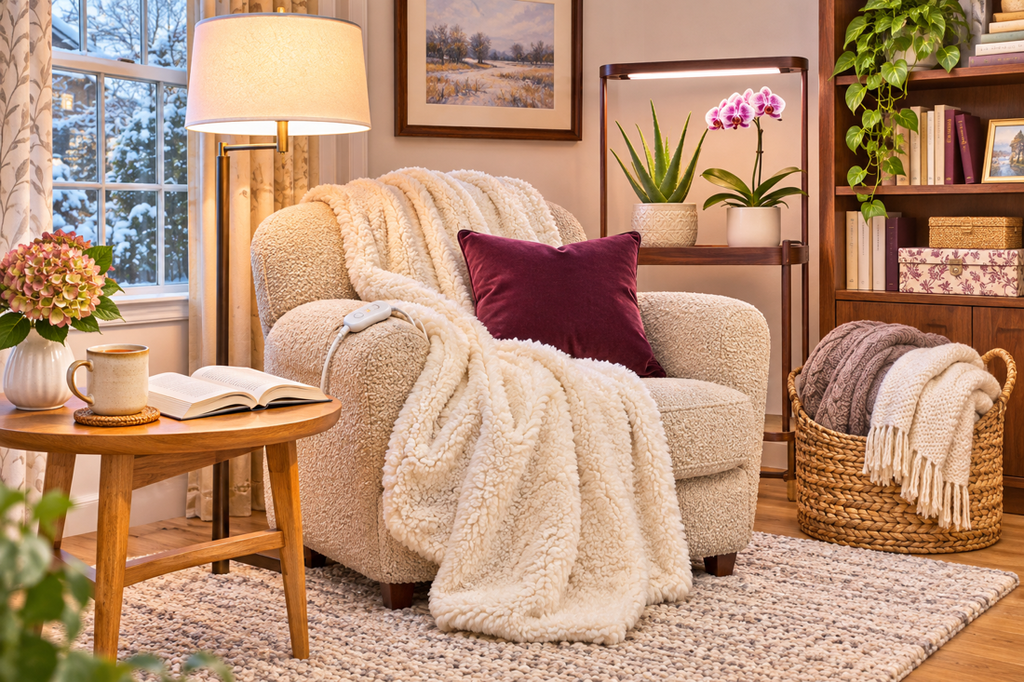
A heated blanket is the shortcut to instant warmth on the coldest nights. It’s especially helpful in a chilly reading corner, a drafty bedroom or for anyone who’s always cold.
Are heated blankets safe to use?
Modern heated blankets are generally safe when you use them as directed. The Electrical Safety Foundation recommends turning them off when you leave the room or go to sleep, keeping them flat and unfolded while in use, and replacing any blanket with a damaged cord.
My reading nook has a heated blanket, and on a cold evening it’s the first thing I reach for. It turns a regular chair into the warmest seat in the house, without heating the whole room.
A heated throw is often all you need. Look for one with an automatic shut-off timer and several heat settings, and choose a soft cover like sherpa or plush fleece so it’s cozy even when it’s switched off.
Heated Blanket Safety Checklist
- Turn it off when you leave the room or go to sleep.
- Don’t fold it or pile other blankets, pillows or pets on top while it’s on.
- Don’t use it with a heating pad at the same time.
- Replace it if the cord is cracked, frayed or charred.
- Choose a blanket with an automatic shut-off.
Homey Hygge Recommendation
Warm the bed with a heated blanket for 15 to 20 minutes before you climb in, then switch it off. You get a toasty bed without sleeping on a heated blanket all night.
For more ideas on making a cozy corner of your own, see our guide to creating a cozy reading nook in any space.
Make It Work in Your Home
The easiest way to use winter textiles is room by room, starting with the places you spend the most time. Think about where you feel cold, then add warmth right there.
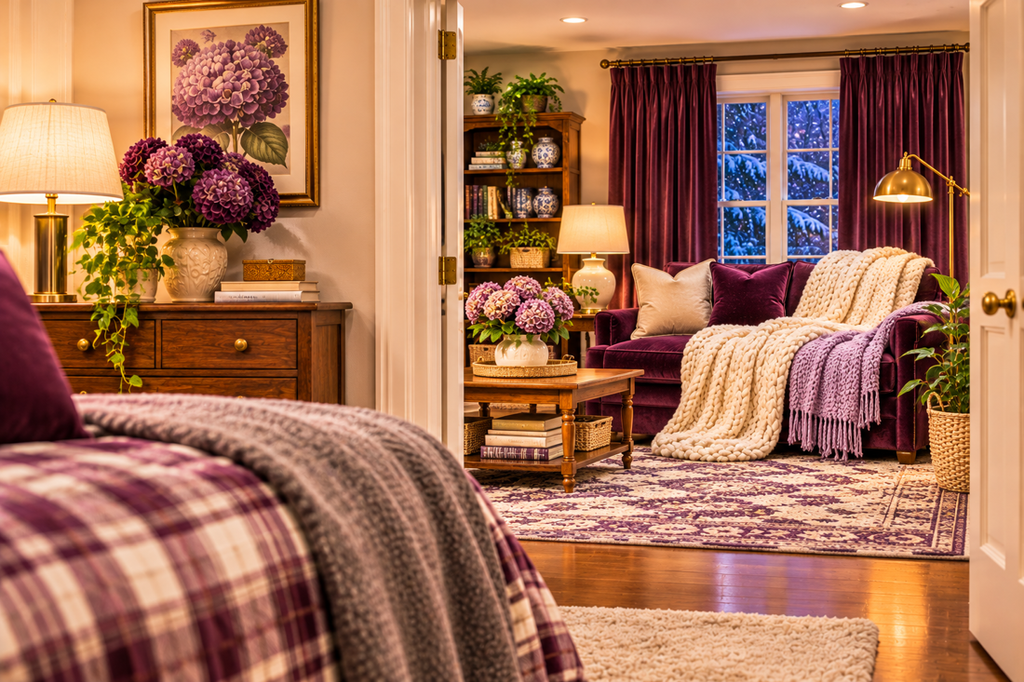
You probably already own some of these pieces. Before you buy anything new, gather every blanket, throw and spare pillow in the house and put them where they’ll actually get used. A blanket rescued from the linen closet counts as a winter upgrade.
Winter Textiles Room by Room
- Living room: a long chunky knit and a chenille throw on the sofa, velvet pillows, a thick rug with a pad and lined curtains
- Bedroom: flannel sheets, a warm comforter, a wool blanket at the foot of the bed and a rug beside the bed
- Reading nook: a heated throw, a soft lap blanket and a small rug under the chair
- Kids’ rooms and family spaces: sherpa and fleece throws that can go straight into the wash
- Guest room: an extra wool blanket and flannel sheets so visitors never have to ask
Homey Hygge Tip
Sit in each room for a few minutes on a cold evening and notice where you feel the chill. It’s usually near a window or over a bare floor, and that’s where your first new textile should go.

Free 7-Day Printable
Make Your Home Feel Cozier in 7 Days
A warm blanket is a great start. The free 7-Day Homey Hygge Home Reset walks you through one small, doable step a day to make your whole home feel warmer, calmer and more like you, and none of it starts with shopping.
Cozy emails, no clutter. Unsubscribe anytime.
Mistakes to Avoid With Winter Textiles
Most winter textile mistakes come from buying for looks instead of use. A blanket that’s too short, too scratchy or too precious to touch won’t make your home any warmer.

What Usually Goes Wrong
- Buying throws that are too small: if a blanket can’t cover you from shoulders to toes, it’ll end up folded on the sofa arm looking pretty and doing nothing.
- Choosing heavy synthetics for bedding: polyester fleece is lovely on the sofa, but it can leave hot sleepers sweaty at night.
- Skipping the rug pad: a rug without a pad slides, wears faster and feels thinner underfoot.
- Hanging curtains too short or too narrow: gaps around the window let cold air pour into the room.
- Over-layering every surface: when every chair has three blankets and four pillows, sitting down becomes a small excavation project. Two layers per seat is plenty.
Care Tips to Keep Them Cozy
- Wash wool in cool water on a wool or hand-wash cycle and lay it flat to dry, or follow the label for dry cleaning.
- Wash flannel separately from towels and other lint-heavy items to reduce pilling.
- Fluff down comforters regularly and use a duvet cover so you rarely need to wash the comforter itself.
- Skip fabric softener on fleece and sherpa to keep them fluffy.
- Air out stored blankets for a day before the first cold night of the season.
Shop the Winter Textiles
- A long wool or wool-blend throw
- A brushed cotton flannel sheet set
- A down or down alternative comforter for winter
- A long chunky knit blanket
- A soft chenille throw in a fun print
- Velvet throw pillow covers
- A sherpa or fleece throw for everyday use
- Thermal or lined curtain panels
- A wool rug and a felt rug pad
- A heated throw with an automatic shut-off
Frequently Asked Questions About Winter Textiles
What is the warmest blanket material?
Wool and down are among the warmest natural materials because they trap air so well. For a blanket you’ll use every day, wool is hard to beat, while down is best inside a comforter.
Are flannel sheets warmer than regular cotton sheets?
Yes. Flannel is brushed to create a soft nap that traps warm air, so it feels warm the moment you get into bed. Regular percale or sateen sheets feel cooler and crisper.
Is wool too itchy to use as a blanket?
Not always. Merino, lambswool and wool blends are much softer than traditional wool. Test a blanket against the inside of your wrist before you buy it.
Do thermal curtains really make a difference?
They can. Thick, lined curtains slow heat loss and block drafts from the window, especially when you close them at night. Pairing them with cellular shades helps even more.
Can I leave a heated blanket on all night?
The Electrical Safety Foundation recommends turning a heated blanket off when you go to sleep. Use it to warm the bed beforehand, then switch it off and rely on your comforter and flannel sheets overnight.
Wrap Your Home in Winter Comfort

Winter textiles are one of the simplest ways to make your home feel warmer, softer and more welcoming. Wool, flannel and a good comforter keep you warm where you rest. Knits, chenille, velvet and sherpa add comfort and texture where you gather. Heavier curtains, thick rugs and a heated blanket take care of the cold spots.
You don’t have to change everything at once. Start with the bed or the sofa, add one or two pieces that solve your biggest winter complaint and build from there. The best winter textiles aren’t the most expensive ones. They’re the ones you actually use every cold evening.
Continue Creating Your Homey Hygge Home
Now that your textiles are ready for the cold, see our cozy winter decor ideas inspired by hygge to make every room feel warm and bright all season.