
A hygge bedroom is the one room in the house built entirely around rest. It is where the day ends and the next one begins, so the way it looks, feels and lights up in the evening has more effect on your everyday comfort than almost any other space you own.
Hygge bedroom ideas are often shown as white sheets, bare walls and a single candle on the nightstand. That look can be lovely, but it is not a requirement, because hygge is a feeling rather than a style.. A bedroom with a plum quilt, a big chenille throw, a stack of library books and a lamp you dim every night can be every bit as hygge, and probably more pleasant to come home to.
The Homey Hygge approach is simple: a cozy bedroom should help you sleep well and feel like yours. That means bedding that keeps you comfortable all night, lighting made for the evening, color you genuinely enjoy and just enough order that the room feels calm instead of crowded. It’s the same thinking behind a cozy, welcoming hygge home, brought into the room where you rest.
TL;DR: How to Create a Hygge Bedroom
A hygge bedroom combines real comfort with real personality. Layer breathable bedding and generous blankets, keep the room cool and dark enough for sleep, light it with dimmable bedside lamps instead of a bright overhead fixture, and choose calming colors you love. Give each nightstand a job, clear the clutter without stripping out what makes the room yours, keep screens away from the bed, and use scent gently and safely.
11 Hygge Bedroom Ideas for a Peaceful, Cozy Retreat
These ideas start with the bed, because that is where you spend the most time, and work outward to the lighting, color, storage and small rituals that shape how the room feels. You don’t need to tackle all of them at once. Even two or three changes can make the room noticeably easier to relax in.
Hygge Bedroom Ideas at a Glance
- Make the bed the heart of the room.
- Choose bedding that keeps you comfortable all night.
- Consider a weighted blanket for extra comfort.
- Light the bedroom for the evening.
- Choose calming color you actually love.
- Give each nightstand a job.
- Clear the clutter, keep the personality.
- Create a small reading corner.
- Give screens a bedtime.
- Dress the windows for rest.
- Use scent gently and safely.
Make the Bed the Heart of the Room
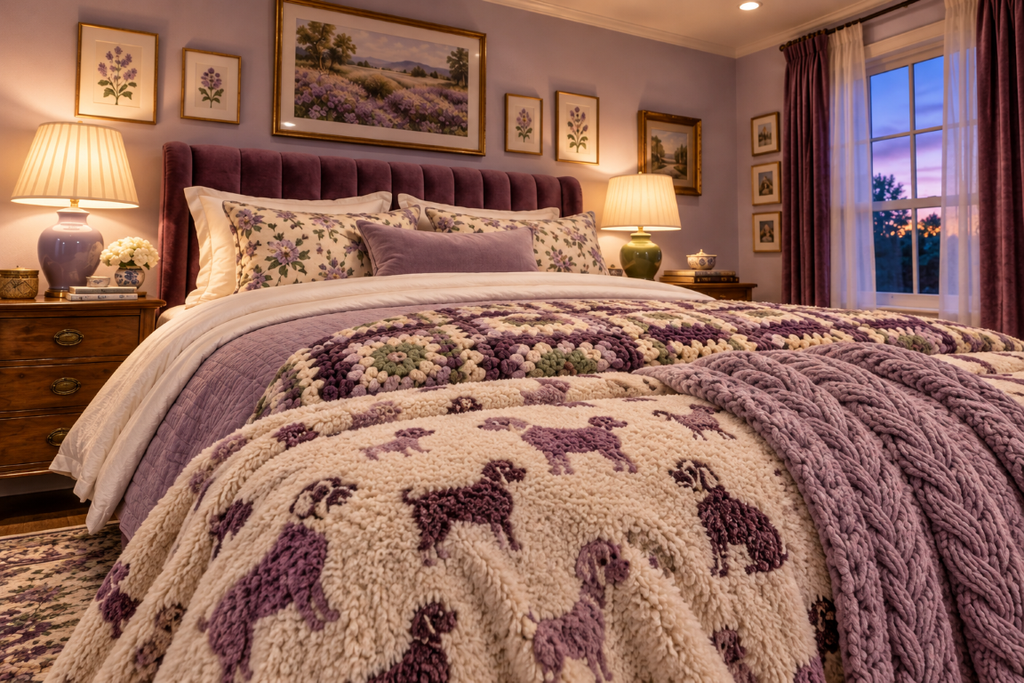
The bed is the center of a hygge bedroom, so it deserves the most attention and the best layers. A well-dressed bed with soft sheets, a quilt or duvet, plenty of pillows and a generous throw makes the whole room feel inviting before you even turn on a lamp.
Does a hygge bed need lots of pillows?
It needs enough pillows to be comfortable, not enough to require a removal plan every night. Two sleeping pillows per person plus one or two decorative ones is usually plenty. If you read in bed, a firm pillow or wedge that supports your back will earn its place more than a row of shams.
Think of the bed in layers. Sheets you enjoy touching come first, then a quilt, coverlet or duvet, then a throw or folded blanket across the foot of the bed that you can pull up on a chilly night. Each layer should be something you would actually use, not only something that photographs well.
Size matters too, especially if you are tall. A throw that stops at your ankles is not doing its job, so look for long blankets and oversized throws that cover you from shoulders to toes. I’m tall, so long blankets are not optional in our house, and the big, soft ones are always the first to be claimed.
This is also where personality comes in. A chenille throw, a crochet blanket from a family member or a cozy knit with coffee mugs or dogs on it tells you this is your room, not a hotel. You don’t need ten of them on the bed; one or two you love, with a spare in a basket nearby, is enough.
Bed Layers Worth Building
- Base: soft, breathable sheets in cotton, linen or a blend
- Middle: a quilt, coverlet or duvet you can add or remove with the season
- Top: a long, generous throw folded across the foot of the bed
- Pillows: sleeping pillows first, then one or two decorative pillows in a color or pattern you love
- Underfoot: a soft rug or runner where your feet land in the morning
Homey Hygge Tip
Before buying a new throw, lie down and measure yourself against the blankets you already own. If you are tall, look for throws labeled oversized or measuring at least 70 inches long so they actually reach your feet.
Choose Bedding That Keeps You Comfortable All Night
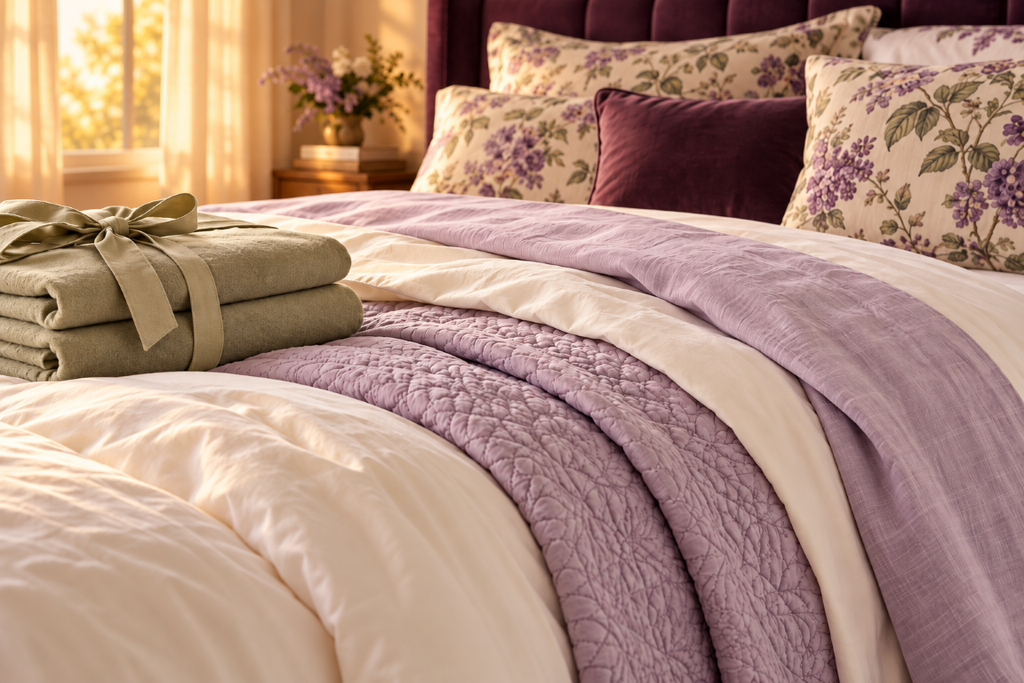
Cozy should never mean overheated. Breathable bedding and a bedroom kept on the cool side help you stay comfortable through the night, while extra layers let you warm up without trapping heat.
What is the best bedroom temperature for sleep?
The Sleep Foundation suggests a bedroom between about 60 and 71°F, with many experts favoring the cooler end of that range. Most people find something around 65°F comfortable. The best setting is the one that lets you sleep without waking up too warm or too cold.
Hygge is often imagined as heavy wool and roaring fires, but a bedroom that is too warm works against sleep. The trick is to keep the room comfortably cool and let the bedding do the warming. That way you can add or remove a layer instead of fighting the thermostat at 2 a.m.
Natural fibers like cotton and linen tend to breathe well, which makes them a good base layer for most people. Flannel and jersey sheets feel wonderful in winter, while percale and linen keep things crisp in warmer months. If you share the bed with someone who runs hotter or colder than you do, separate blankets on each side can save a lot of nightly negotiation.
Fresh bedding is part of the comfort too. The Sleep Foundation recommends washing sheets and pillowcases about once a week, and blankets and comforters every two to three months.
Cozy Considerations
- Warm weather: cotton percale, linen, a lighter quilt
- Cool weather: flannel, jersey, a down or down-alternative duvet
- Year-round: a breathable base with layers you can add or remove
- Shared beds: separate throws for people who sleep at different temperatures
- Freshness: a second set of sheets so the bed is never bare on laundry day
Homey Hygge Recommendation
Keep a seasonal bedding swap on the calendar, once in spring and once in fall. Trading a heavier duvet for a quilt (and back again) keeps the bed comfortable and gives the room a fresh look twice a year without buying anything new. When the holidays arrive, a plaid flannel set or a quilt in deeper jewel tones can carry your hygge Christmas decor into the bedroom without adding clutter. For the rest of the house, see our cozy winter decor ideas.
Consider a Weighted Blanket for Extra Comfort
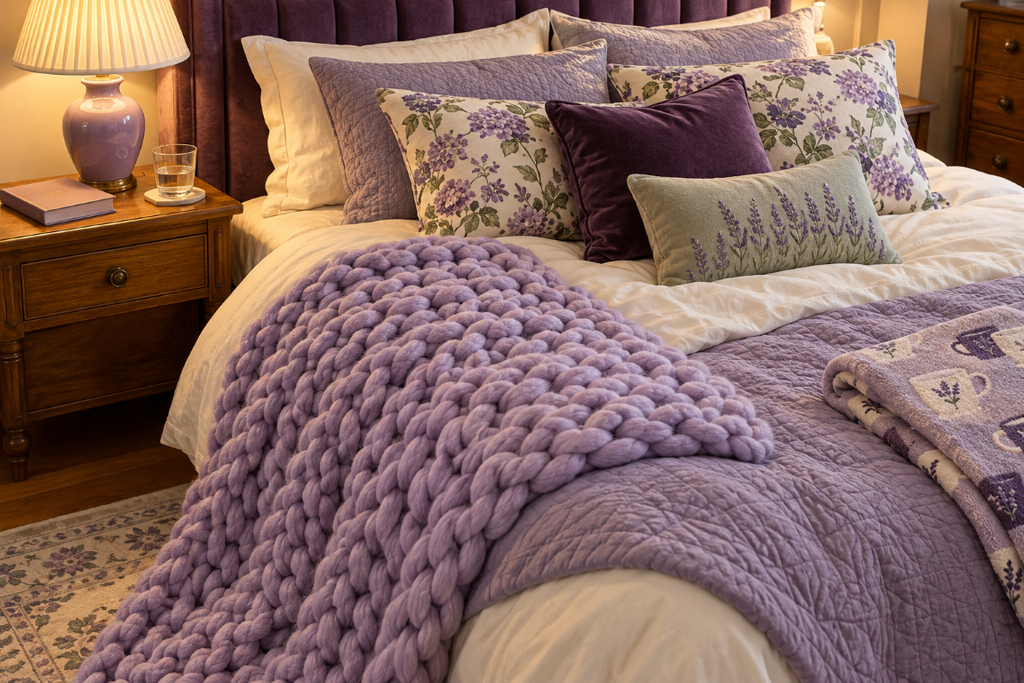
A weighted blanket adds gentle, even pressure that many people find calming at bedtime. Research suggests weighted blankets may help some adults with insomnia, though they are a personal preference rather than a requirement for a hygge bedroom.
How heavy should a weighted blanket be?
The Sleep Foundation’s rule of thumb is about 10% of your body weight, though preferences range from about 5% to 12%. Start lighter if you are unsure. You should be able to move freely and lift the blanket off yourself easily.
In a 2020 randomized trial from Sweden’s Karolinska Institutet, published in the Journal of Clinical Sleep Medicine, adults with insomnia and a psychiatric condition who used a weighted chain blanket for four weeks reported much greater improvement in insomnia severity than a group using a light blanket. The participants also reported less daytime fatigue, anxiety and depression. That is a specific group, so it is not a guarantee for everyone, but it is encouraging for anyone curious.
Weighted blankets can run warm, so look for breathable covers or knit styles with open weaves. They also tend to be smaller than a regular comforter, designed to cover your body rather than drape over the sides of the bed. Many people use one as a top layer on their own side, with the regular bedding underneath.
Things to Try
- Try one on the sofa for an evening before committing to it in bed
- Choose a removable, washable cover
- Look for chunky knit or cooling fabrics if you sleep warm
- Pair it with a lighter blanket so you have options during the night
Homey Hygge Tip
Weighted blankets aren’t right for everyone. The Sleep Foundation advises talking with a doctor first if you have breathing problems, sleep apnea, low blood pressure, type 2 diabetes or a respiratory condition, and checking with a physician before choosing one for a child.
Light the Bedroom for the Evening
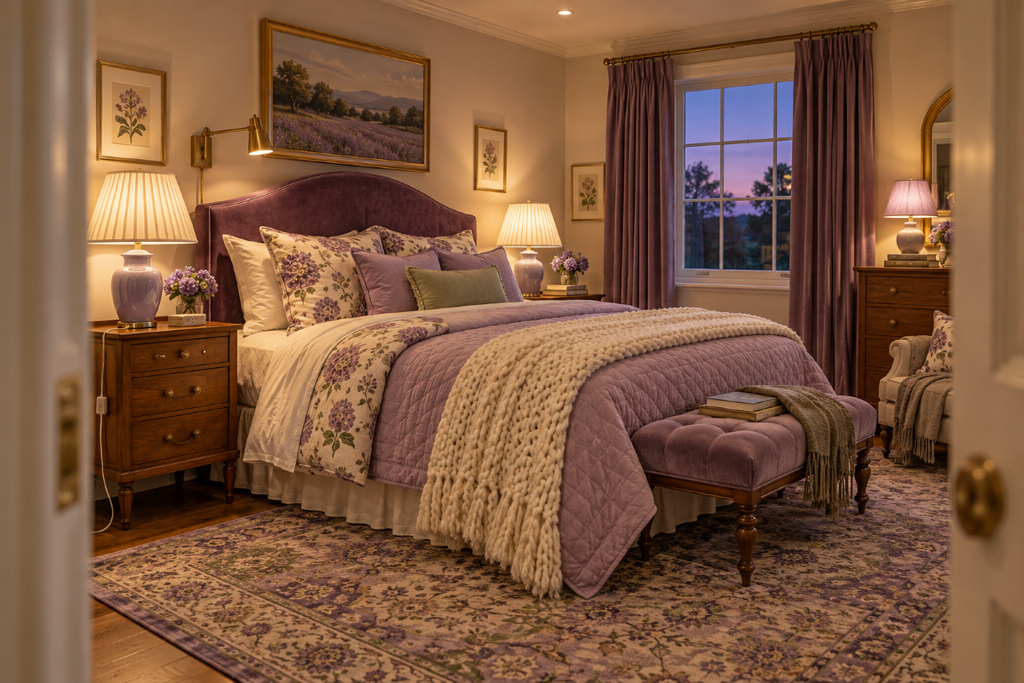
A hygge bedroom is lit for winding down, not for full daytime brightness. Dimmable bedside lamps and warm, low light sources let the room soften as bedtime gets closer, while overhead lights handle the practical tasks.
What color light is best for a bedroom at night?
Warm white light, around 2700K or lower, feels softer and more relaxing than cool white or daylight bulbs. Harvard Health notes that blue light at night is especially disruptive to sleep and suggests dim red lights for night lights. Many smart bulbs let you shift to warmer tones as the evening goes on.
This is the part of the bedroom I have changed most in my own home. Lamps with built-in dimmers and color-changing, adjustable smart bulbs sit on the nightstands in our bedroom, and I use them mostly in the evening because I enjoy natural sunlight during the day. Being able to turn the light down gradually makes the room feel ready for rest without plunging it into darkness.
Overhead lighting still has a place. Recessed lights keep the ceiling clean and give you bright, even light for making the bed, folding laundry or finding the other sock. Put them on a dimmer and you can bring them down to a soft glow, then let the bedside lamps take over for the evening. For more on layering lamps, choosing bulbs and using dimmers, see our guide to hygge lighting.
If you are tall, or simply tired of ducking, recessed lighting has another advantage: nothing hangs low enough to bump into. It’s a quiet, practical choice that lets the lamps and the rest of the room take center stage.
Bedroom Lighting Layers
- Overhead: recessed lights on a dimmer for practical tasks
- Bedside: a lamp on each nightstand with a dimmer or adjustable smart bulb
- Reading: a focused lamp or wall-mounted reading light near the pillows
- Night light: a dim, warm or red-toned light for middle-of-the-night trips
- Accent: a small lamp on a dresser or shelf for a gentle evening glow
Homey Hygge Recommendation
Choose bedside lamps tall enough that the bottom of the shade sits around shoulder height when you are sitting up in bed. That puts the light where you need it for reading without shining straight into your eyes.
Choose Calming Color You Actually Love
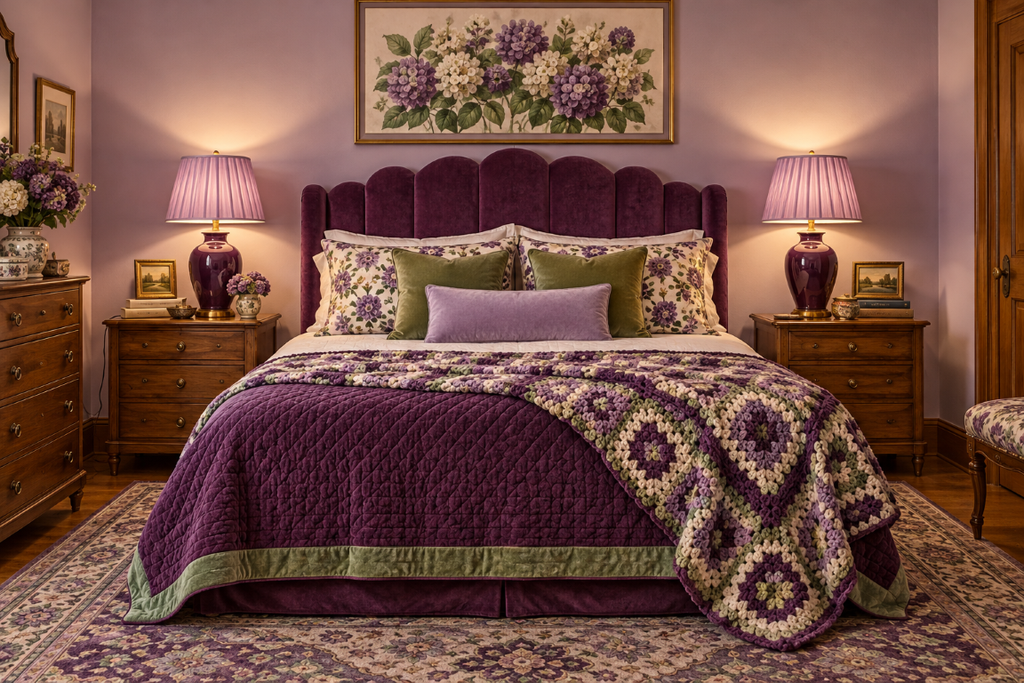
The best bedroom colors are the ones that make you feel calm and happy, not only the ones labeled restful. Soft, warm tones work well on walls, while richer colors can come through bedding, headboards, rugs and art.
Do hygge bedrooms have to be neutral?
No. Hygge is a feeling, not a color palette. A plum, lavender or sage bedroom can feel just as peaceful as a beige one, as long as the colors feel comfortable to you and the room isn’t visually busy.
Bedrooms are a great place to experiment with color because you are mostly seeing them in soft, evening light. Deeper shades like plum, aubergine or dusty rose can feel wrapped and cozy at night, while lighter tones like lavender, warm ivory or pale sage stay airy during the day.
If painting the walls feels like too big a commitment, start with the bed. A colorful quilt, patterned pillowcases or an upholstered headboard can change the whole mood of the room. A rug or a favorite piece of art can pull the palette together.
The Sleep Foundation suggests soft, warm colors for a calming bedroom and recommends adding color through bedding, rugs or art if you can’t repaint. That leaves plenty of room for personal taste.
Easy Ways to Add Color
- A quilt or duvet cover in a rich, saturated shade
- Patterned pillowcases or shams that pick up an accent color
- An upholstered or painted headboard
- Lampshades in a warm, tinted fabric
- A rug that grounds the bed with color and pattern
- Framed art or family photos above the dresser
Homey Hygge Tip
Test paint samples at night, not only during the day. Turn on the bedside lamps you actually use and look at the swatches in that light. A color that looks perfect at noon can feel completely different at 9 p.m., which is when you will see it most.
Give Each Nightstand a Job
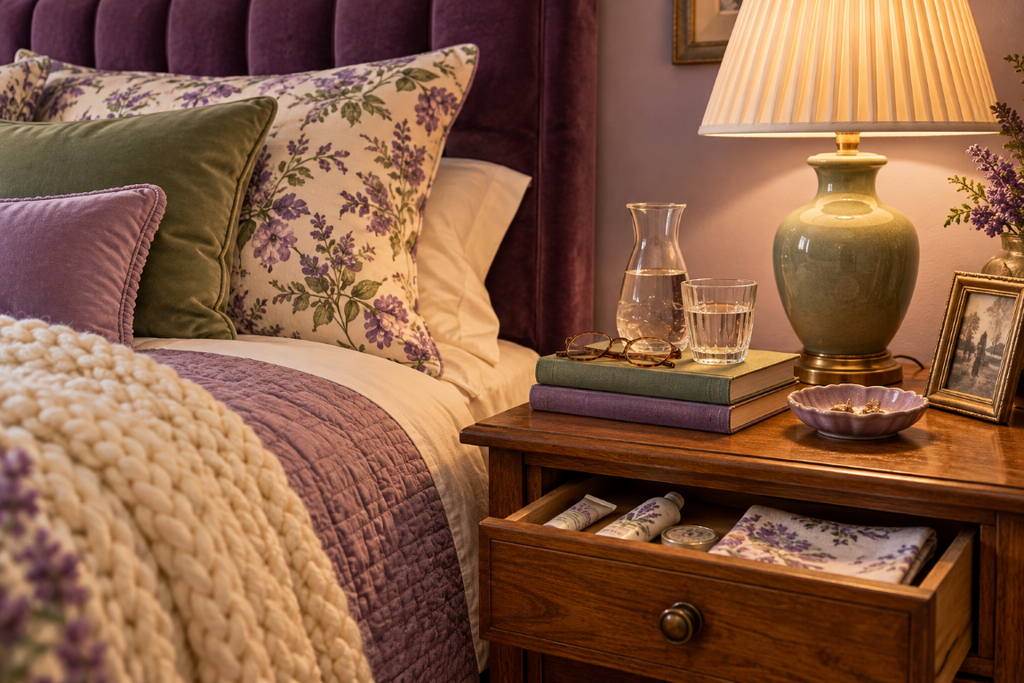
A nightstand works best when it holds what you actually use at bedtime and hides the rest. A lamp, a book, a glass of water and a place for your glasses or phone are usually enough.
Do both nightstands need to match?
No. Mismatched nightstands can make a bedroom feel more collected and personal. Keeping them roughly the same height, or using matching lamps, will help the room still feel balanced.
A crowded nightstand is one of the fastest ways to make a bedroom feel chaotic. Lotion, receipts, chargers, three half-read books and a mug from Tuesday can pile up quickly. The goal is not to make it bare, but to make it useful.
Drawers and lower shelves help a lot. They give the things you need nearby a home, so only the lamp and a few favorite objects sit on top. A small tray can corral smaller items, and a pretty dish can hold jewelry or reading glasses.
If your space is tight, a wall-mounted shelf or a narrow table can do the same job. What matters is that you can reach what you need without getting out of bed.
What to Keep Within Reach
- A dimmable lamp
- The book you are actually reading
- Water in a glass or carafe with a lid
- Reading glasses or a small dish for jewelry
- Lip balm, hand cream and tissues tucked in a drawer
- A charging spot for your phone (ideally across the room, see Give Screens a Bedtime)
Homey Hygge Recommendation
Choose nightstands with at least one drawer. Open shelves look lovely in photographs, but a drawer is what keeps the top clear and the room calm in real life.
Clear the Clutter, Keep the Personality
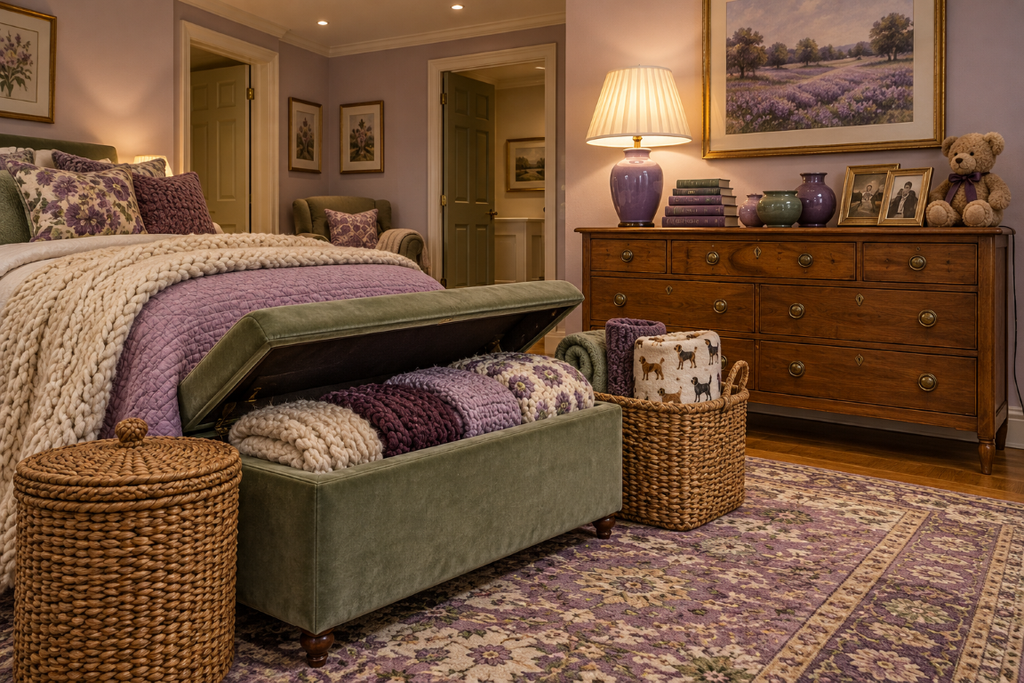
A calm bedroom has room to breathe, but it does not have to be empty. Clearing surfaces and floors reduces visual noise, while a few meaningful objects keep the room personal and warm.
Can clutter really affect sleep?
It can for some people. The Sleep Foundation notes that visual clutter can create stress, which is a known barrier to good sleep. Researchers at St. Lawrence University also found that people at risk of hoarding disorder reported more sleep problems, possibly because cluttered bedrooms can make the bed itself less comfortable to use.
There is a difference between clutter and personality. Clutter is the laundry chair, the unopened mail and the pile of things that don’t have a home yet. Personality is the framed photo of your family, a stuffed animal perched on the dresser, a stack of favorite books and the blanket your aunt made.
The goal is to keep the second and give the first somewhere else to go. Closed storage, under-bed bins and a hamper with a lid can take care of the everyday overflow. That leaves the surfaces free for the things that make you smile when you walk in.
A quick five-minute reset before bed can make a big difference. Put clothes away, clear the nightstand and fold the throw across the foot of the bed. Waking up to a calm room is a small, daily pleasure.
Storage That Keeps the Room Cozy
- Under-bed bins or drawers for off-season bedding
- A lidded hamper or basket for laundry
- A storage bench at the foot of the bed for extra blankets
- Closed dresser drawers instead of open bins on display
- A decorative basket for throws you rotate in and out
Homey Hygge Tip
Try the doorway test. Stand in the bedroom doorway and notice the first three things your eyes land on. If any of them are clutter rather than something you love, start there.
Create a Small Reading Corner
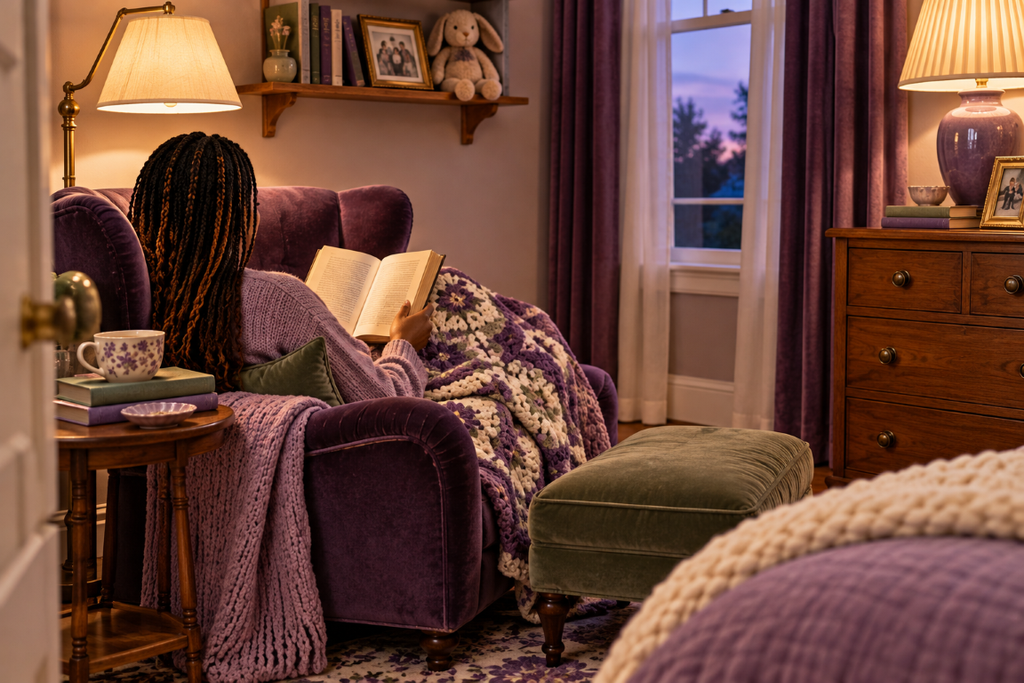
A reading corner gives the bedroom a place to unwind that isn’t the bed. A comfortable chair, a good lamp and a small table can turn an unused corner into the coziest spot in the house.
How much space does a bedroom reading corner need?
Less than you might think. A corner about 4 feet by 4 feet can hold a small armchair, a floor lamp and a side table. Even a window seat or a bench with a few pillows can work.
Reading in a chair rather than in bed can help some people separate winding down from actually sleeping. It also gives you a cozy place to sip morning coffee, write in a journal or color before the rest of the house wakes up.
Choose seating you genuinely want to sit in. A chair that looks beautiful but hits your back in the wrong place won’t get used. Pair it with a lamp that lights the page clearly and a small table for a mug, and drape a throw over the arm for cooler evenings.
If your bedroom is small, think vertical. A wall-mounted reading light and a narrow shelf can create a reading spot without taking up much floor space. If there’s truly no room, a reading corner in the living room works just as well; our hygge living room ideas show how to set one up.
Reading Corner Essentials
- A comfortable chair or loveseat that suits your height
- A floor or table lamp with a warm, dimmable bulb
- A small side table for a drink and your current book
- A throw draped over the arm
- A footstool or ottoman, if there’s room
Homey Hygge Recommendation
If you are tall, sit in a chair before buying it and check that the seat depth and back height actually support you. A chair that fits your body is the difference between a corner you visit once and a corner you use every day.
Give Screens a Bedtime
Keeping screens out of the bed helps the bedroom stay a place for rest. Charging your phone across the room and switching to a book, journal or conversation in the last hour of the evening can make winding down easier.
How long before bed should you stop using screens?
Harvard Health suggests avoiding bright screens for two to three hours before bed, while the Sleep Foundation recommends at least an hour. Even small changes, like dimming your screen or using a night mode, can help if you aren’t ready to give them up entirely.
Screens give off blue light, which Harvard Health notes can suppress melatonin, the hormone that helps signal sleep. They also tend to keep our minds busy with news, messages and one more episode. Giving them a set bedtime helps the room do what it is meant to do.
This doesn’t mean banning the TV or your phone forever. It means deciding where screens belong. A charging station on the dresser or in the hallway keeps the phone out of reach, and an old-fashioned alarm clock can take over waking duties.
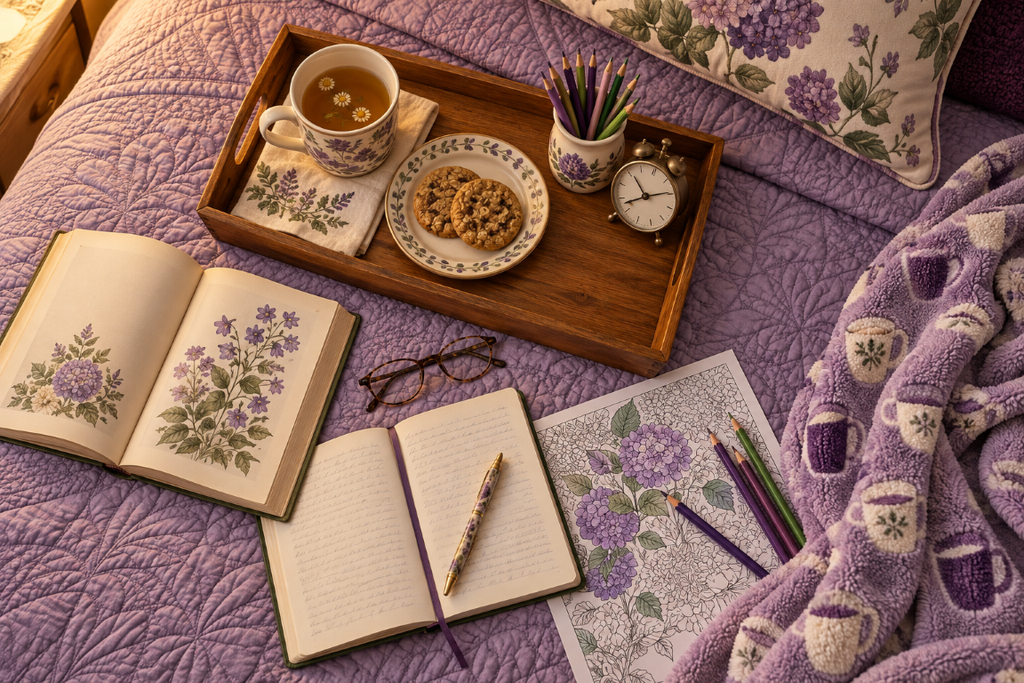
What replaces the screen is the hygge part. A book, a coloring page, a journal, a cup of herbal tea or a slow conversation can become an evening ritual you actually look forward to.
Screen-Free Ways to Wind Down
- Reading a few chapters by lamplight
- Coloring or journaling in bed or your reading corner
- Stretching or a few minutes of quiet breathing
- Talking through the day with your partner
- Listening to calm music or an audiobook with the screen off
Homey Hygge Tip
Put your phone charger somewhere you have to stand up to reach. If you can’t scroll from the pillow, you’re far more likely to pick up the book on the nightstand instead.
Dress the Windows for Rest
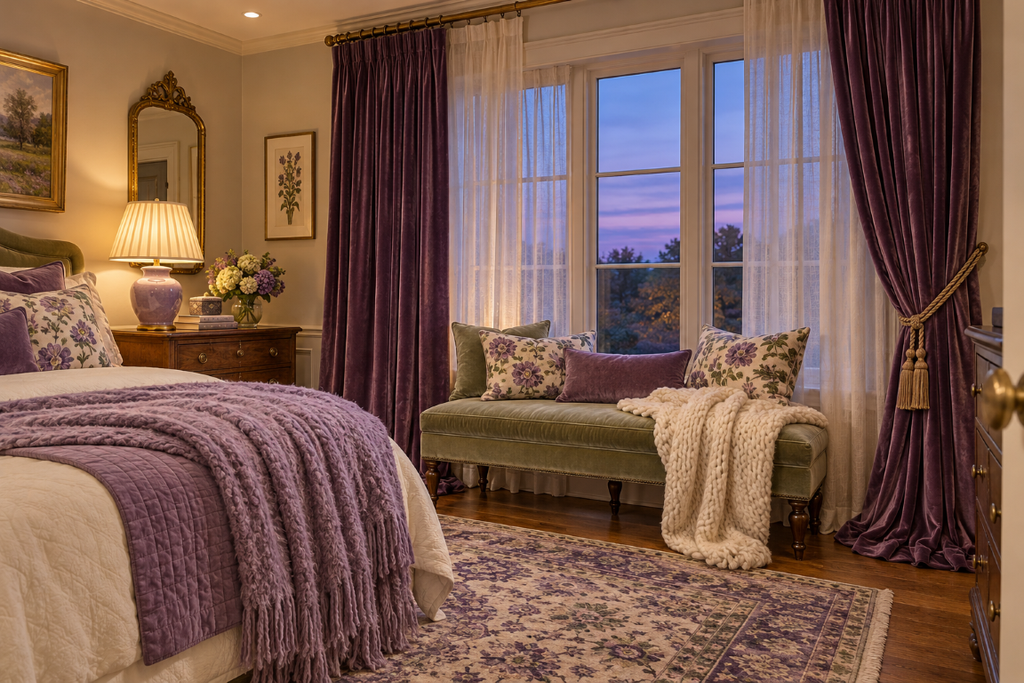
Good window treatments let you control the light at both ends of the day. Layering blackout or room-darkening curtains with lighter sheers gives you a dark room for sleep and soft daylight when you want it.
Do you need blackout curtains in a hygge bedroom?
Not always, but they help if streetlights, early sunrises or a neighbor’s porch light reach your room. The Sleep Foundation recommends keeping the bedroom as dark as possible at bedtime and suggests blackout curtains when outside light is strong.
Windows can do a lot for the feel of a bedroom. Full-length curtains hung high and wide make the ceiling feel taller and the room more finished, and a soft fabric adds warmth and texture.
Layering is the most flexible approach. Sheer or light linen panels let daylight in while keeping some privacy, and room-darkening curtains or a lined Roman shade close over them at night. This is especially helpful if you love natural light during the day but need darkness to sleep.
Color and pattern work well here too. A curtain in plum, sage or a soft floral can carry color around the room without adding anything to the floor or surfaces.
Window Options Worth Considering
- Room-darkening or blackout lined curtains
- Sheer panels layered behind heavier drapes
- Lined Roman shades for a tailored look
- Cellular shades for light control and insulation
- Curtain rods mounted several inches above the window frame
Homey Hygge Recommendation
If you’re not ready to replace curtains you love, add a blackout liner behind them. Most attach with simple hooks, so you keep your favorite fabric and gain a darker room.
Use Scent Gently and Safely
Scent can make a bedroom feel calm and welcoming, but a little goes a long way. Choose soft, pleasant fragrances and flame-free options in the bedroom, where it’s easy to doze off.
Are candles safe in the bedroom?
Candles are the traditional symbol of hygge, but bedrooms are where many candle fires begin. The NFPA reports that roughly one-third (37%) of home candle fires started in bedrooms, and falling asleep was a factor in 10% of home candle fires. Flameless candles, diffusers and wax warmers give you the glow and fragrance without an open flame.
The best bedroom scents are the ones that help you relax. Lavender is the scent most often studied for relaxation, but floral fragrances aren’t for everyone. Citrus, soft woods and warm spices can feel just as comforting.
I’m allergic to traditional candles and can’t do most floral scents, so I stick with citrus, some woodsy and spice scents, and I’m exploring other wax options. If you are sensitive to fragrance, it is worth starting with very small amounts and choosing products with simple, clearly listed ingredients.
Scent also comes from the everyday. Fresh sheets, an open window on a mild morning and a cup of tea on the nightstand are all part of how a bedroom feels.
Gentle Ways to Add Scent
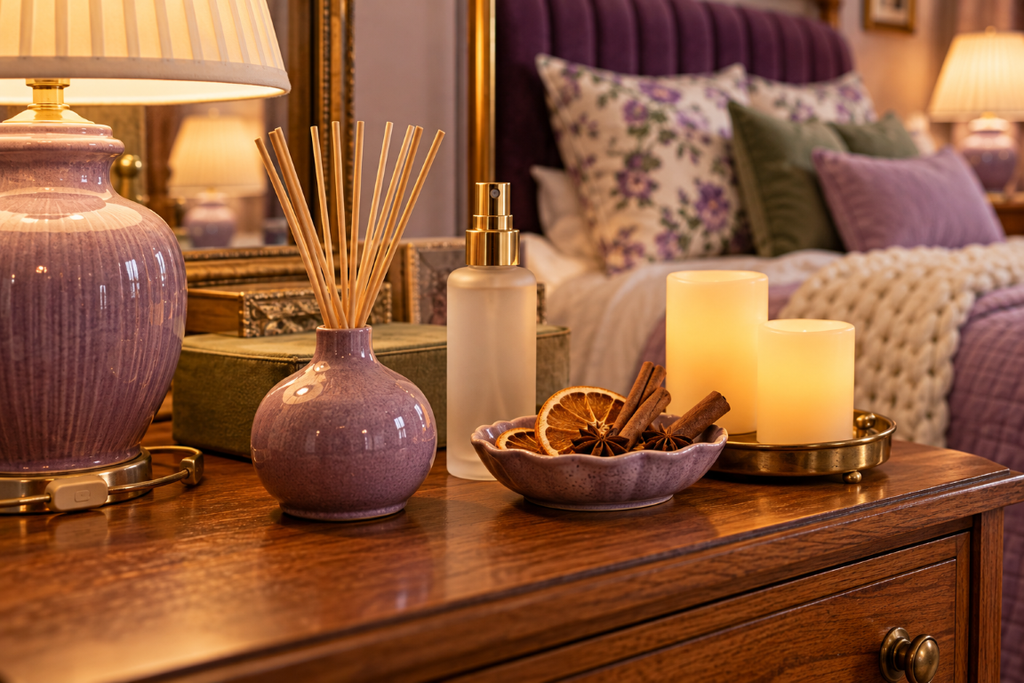
- A reed diffuser on the dresser, away from the bed
- A linen spray on pillows before bed
- A flameless wax warmer with an automatic shut-off
- Freshly washed sheets dried outdoors when the weather allows
- A small bowl of dried citrus peel or cinnamon sticks
Homey Hygge Tip
If you love the look of candlelight, use flameless candles with a timer. Set them to turn off on their own so you can drift off without worrying about blowing anything out.
Frequently Asked Questions About Hygge Bedrooms
What makes a bedroom hygge?
A bedroom is hygge when it feels comfortable, personal and easy to relax in. Soft, layered bedding, warm and dimmable lighting, calming color and a few meaningful objects all help. There is no single look; the feeling is what counts.
How can I make my bedroom cozy on a budget?
Start with what touches you most: a new throw, fresh pillowcases or a warmer light bulb. Rearranging the furniture, clearing the nightstand and moving a favorite chair into a corner cost nothing. Thrift stores and estate sales are also good places to find quilts, lamps and frames with character.
Can a small bedroom be hygge?
Yes. Small bedrooms often feel cozy naturally. Focus on a comfortable bed, wall-mounted or bedside lighting and smart storage like under-bed bins so the floor stays clear.
Should a hygge bedroom have a TV?
That’s a personal choice. If you keep one, consider placing it inside a cabinet or setting a time each night to turn it off. Many people find the bedroom feels calmer when the TV lives in another room.
Is it okay to let pets sleep in a hygge bedroom?
For many households, a dog or cat curled up nearby is part of what makes the bedroom feel like home. A washable throw at the foot of the bed or a cozy pet bed beside it can keep everyone comfortable. If pets wake you often or trigger allergies, a bed of their own in the room may be the better compromise.
What colors are best for a hygge bedroom?
Soft, warm colors tend to feel calming, but the best choice is one you genuinely love. Plum, lavender, dusty rose, sage and warm ivory all work well, especially when you see them in warm evening lamplight.
Build a Bedroom You Look Forward to Returning To
A hygge bedroom isn’t about getting every detail right. It is about making the room where you start and end each day feel like a soft place to land.
That usually begins with the bed: breathable sheets, a long blanket that actually reaches your toes and pillows that support the way you sleep and read. From there, the room grows around you, with lamps you can dim, colors you love seeing in evening light and nightstands that hold what you need.
The quieter changes matter too. Clearing what doesn’t belong, giving screens a bedtime and choosing scents and lights that let you drift off without worry all help the room do its most important job, which is helping you rest.
Most of all, a hygge bedroom should look like the person who sleeps in it. Your favorite quilt, a stuffed animal on the dresser, the books stacked by the bed and the dog curled up at your feet are not clutter to apologize for. They are the reason the room feels like home.
Continue Creating Your Homey Hygge Home
Lighting does more to change how a bedroom feels in the evening than almost anything else. To learn how to layer lamps, choose warm bulbs and use dimmers throughout your home, read Hygge Lighting: How to Create a Warm, Cozy Glow at Home next.